


Custom Development
Alcohol Delivery Market Share and Trends: Size, Growth, & Business Opportunities
7 Apr 2026
In healthcare, time and cash flow are tightly connected.
Yet for many clinics, handling insurance claims still feels slow and frustrating. Denied claims, paperwork, and processing delays can easily disrupt billing operations and delay reimbursements.
This is where medical claims processing software helps.
These platforms automate claim submissions, reduce manual errors, and track claim status in real time. The result is smoother workflows and faster payments.
In this guide, we’ll explore the best medical claims processing software solutions, key features to consider, and how the right tool can help healthcare providers simplify billing and improve revenue cycle efficiency.
With insurance rules constantly changing and patient volumes increasing, handling claims manually can slow operations and increase the risk of errors.
Here’s how the right medical claims processing software can make a measurable difference:
Modern claims processing software healthcare platforms automate claim submissions to insurers, helping providers reduce processing time and accelerate reimbursements.
Built-in validation checks identify incorrect codes, missing information, or mismatched patient data before submission, reducing the risk of claim rejections.
Healthcare regulations and payer requirements change frequently. A reliable healthcare claims management software system stays up to date with coding rules and compliance standards.
Faster approvals and fewer denials mean quicker payments, helping clinics maintain steady revenue cycles.
When billing and insurance claims are processed efficiently, patients receive clearer billing updates and experience fewer disputes or delays.
Adopting automated medical claims processing software helps healthcare providers simplify submissions, reduce denials, and improve revenue cycle efficiency.
The right medical claims processing software can significantly improve billing accuracy and reimbursement speed.
Here’s a quick overview of the leading solutions used by clinics and hospitals today.
| Software | Best For | Key Capabilities | Deployment | Pricing Model |
| Kareo Billing (Tebra) | Small clinics and practices | Automated claim submission, billing workflows, reporting dashboards | Cloud | Custom pricing |
| AthenaCollector | Mid-size to large clinics | Claims automation, eligibility verification, revenue cycle analytics | Cloud | Percentage of collections |
| AdvancedMD | Hospitals and large healthcare providers | EHR integration, automated billing workflows, financial reporting | Cloud | Starts around $299 per provider per month |
| Waystar | Healthcare networks and enterprise systems | Intelligent claim automation, denial prevention, analytics tools | Cloud | Custom pricing |
| PracticeSuite | Mid-size practices | Claim management, EHR integration, patient scheduling tools | Cloud | Custom pricing |
| CollaborateMD | Small to mid-size clinics | Real-time claim submission, mobile billing tools, eligibility verification | Cloud | Starts around $235 per month |
| DrChrono | Small practices and mobile-first clinics | EHR integration, claim automation, mobile billing access | Cloud | Tiered plans |
| NextGen Healthcare | Hospitals and specialty practices | Revenue cycle automation, denial management, EHR integration | Cloud | Custom pricing |
*Note: Pricing and feature details are based on publicly available information from vendor websites and may change over time.*
Now, let’s explore the detailed breakdown of each solution to determine which one best fits your clinic’s billing workflow.

Kareo Billing, now part of Tebra, is a cloud-based medical claims processing software designed to help small healthcare practices manage billing and insurance claims more efficiently.
The platform automates claim submissions, payment posting, and patient invoicing, reducing administrative workload and improving revenue cycle operations.
With an intuitive interface and built-in compliance support, Kareo simplifies workflows for clinics that want faster claim processing without complex setup.
Key Features
| Pros | Cons |
|---|---|
| Easy-to-use interface for billing teams | Limited customization for large hospitals |
| Automated claim submission and tracking | Advanced analytics features are basic |
| Strong integration with EHR and practice management tools | Pricing transparency is limited |
Best For
Small- to mid-sized clinics that want reliable medical billing claims processing software with simple setup and automation for everyday billing tasks.
Pricing
Tebra offers custom pricing based on practice size and billing requirements. Users can check the official website for more detailed information.

AthenaCollector is a cloud-based medical claims processing software designed to streamline billing and revenue cycle operations for healthcare providers.
The platform helps clinics manage claim submissions, automate eligibility checks, and track reimbursements through an integrated billing system.
As a part of the athenahealth ecosystem, it combines claims management software with practice management tools, helping hospitals and medical centers improve claim accuracy and reduce denials.
Features
| Pros | Cons |
| Strong automation for claims billing workflows | Pricing model based on collections may be costly for smaller clinics |
| Deep integration with the athenahealth ecosystem | Limited flexibility outside the athenahealth platform |
| Real-time eligibility checks reduce claim denials | Setup may require onboarding support |
Best For
Mid-size to large clinics and healthcare networks looking for scalable healthcare claims management software with strong automation and payer rule updates.
Pricing
Athenahealth uses a percentage-based pricing model, typically 4% to 8% of a provider’s monthly collections, depending on services and claim volume.
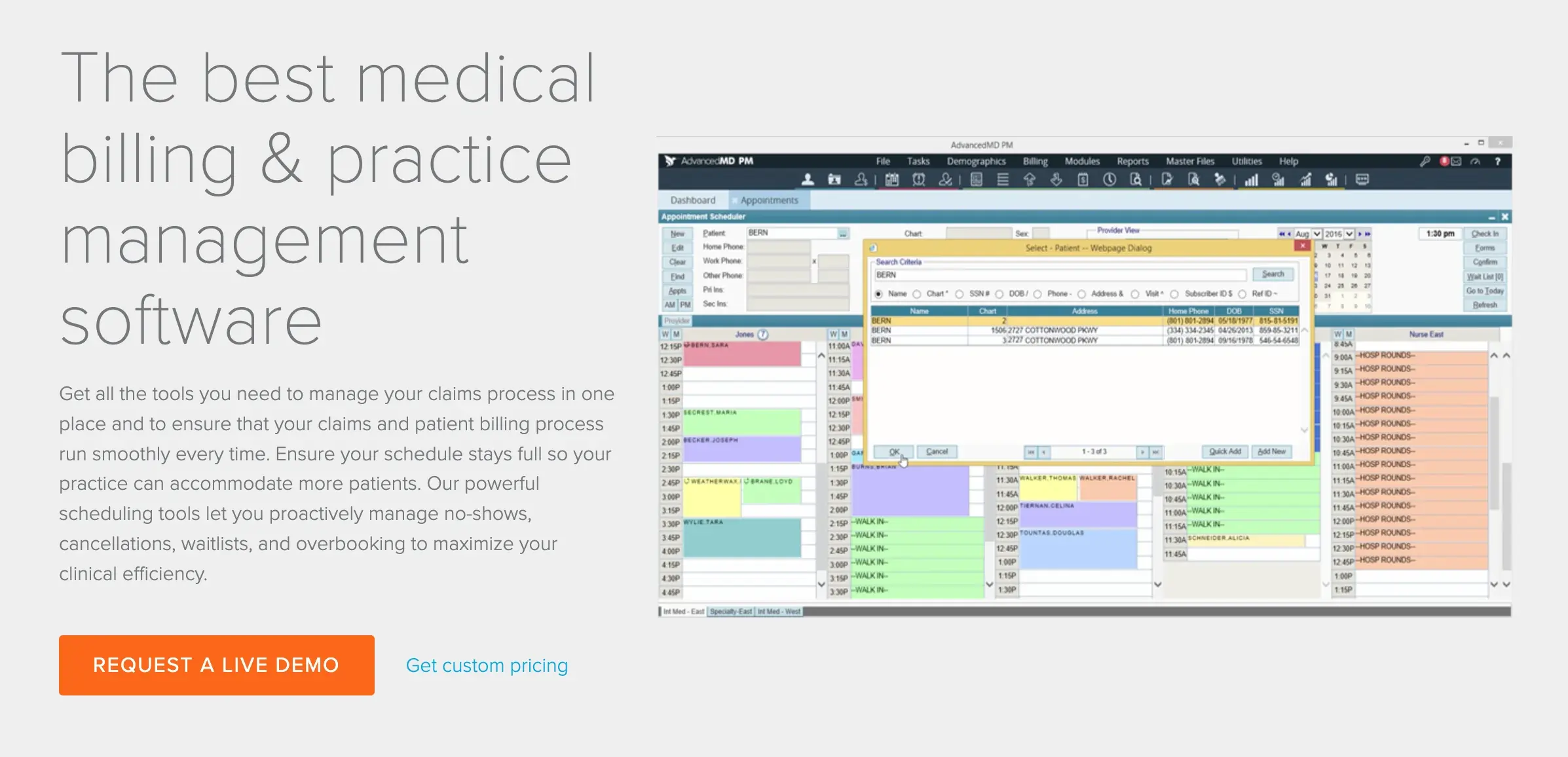
AdvancedMD is a cloud-based medical claims processing software that combines billing, EHR, and practice management tools into a single platform.
It helps healthcare providers automate claim submissions, verify insurance eligibility, and manage revenue cycle operations more efficiently.
With scalable features and automation tools, AdvancedMD supports clinics and hospitals that handle complex medical claims processing.
Features
| Pros | Cons |
| Strong automation for claims billing software workflows | Pricing can increase with additional modules |
| Integrated EHR, billing, and practice management tools | Learning curve for new users |
| Advanced analytics for revenue cycle optimization | Setup may require onboarding support |
Best For
Hospitals and large clinics are seeking scalable medical billing claims-processing software with integrated EHR and revenue cycle management capabilities.
Pricing
AdvancedMD follows a custom pricing model based on practice size, selected modules, and claim volume. To receive exact pricing details, providers need to request a quote or fill out the form on the AdvancedMD website.
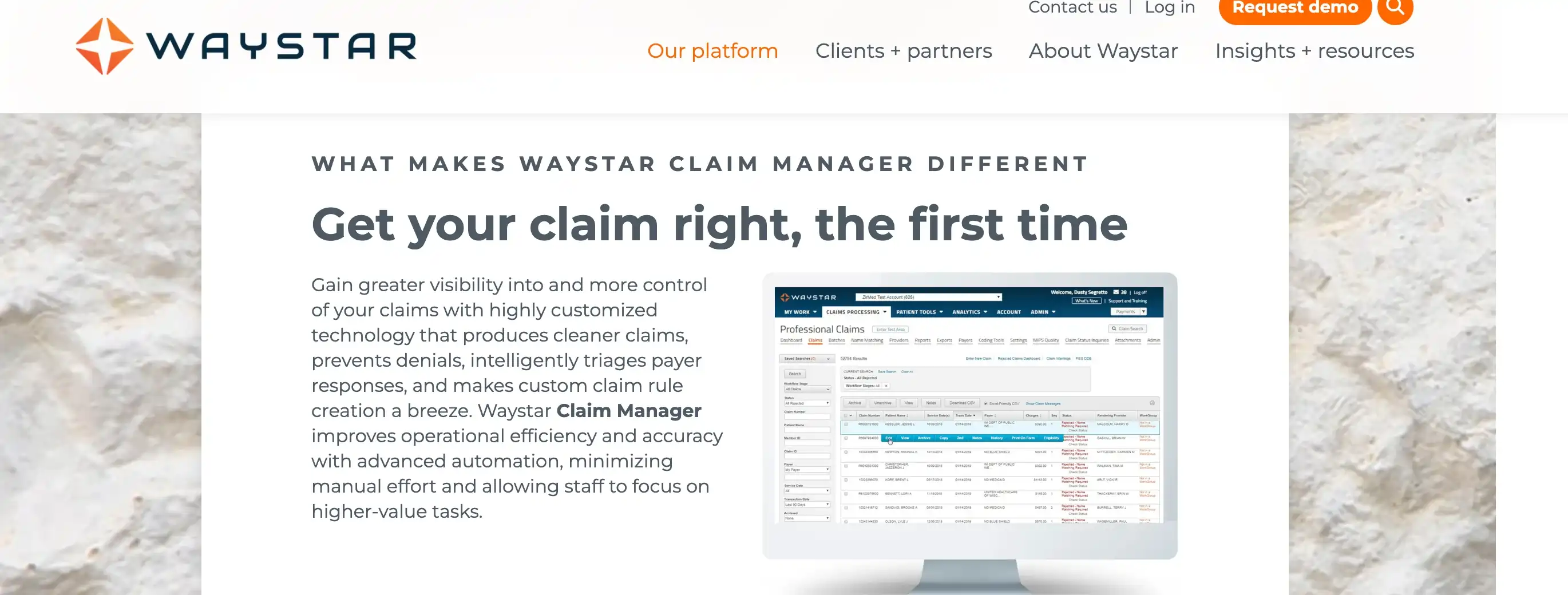
Waystar is a cloud-based medical claims processing software built for large healthcare systems and enterprise revenue cycle operations.
The platform uses intelligent automation to manage claim submissions, monitor claim status, and reduce denials across complex billing workflows.
With advanced analytics and strong integrations, Waystar supports large-scale healthcare claims management software operations.
Features
| Pros | Cons |
| Advanced automation for complex claims billing software workflows | Pricing transparency is limited |
| Strong analytics for revenue cycle optimization | May be complex for small clinics |
| Seamless integration with EHR and hospital systems | Implementation may require dedicated IT support |
Best For
Large healthcare networks and hospital systems require scalable insurance claims processing software and advanced automation for high claim volumes.
Pricing
Waystar offers custom pricing based on organization size, claim volume, and selected modules, with costs provided upon request.
PracticeSuite is a cloud-based medical claims processing software that combines billing, EHR, and patient engagement tools into one platform.
It helps clinics automate claim submissions, manage patient records, and streamline revenue cycle workflows.
With flexible customization and automation features, PracticeSuite supports healthcare providers looking for reliable claims management software for everyday billing operations.
Features
| Pros | Cons |
| Flexible claims billing software with strong customization | Interface may feel dated compared to newer platforms |
| Integrated EHR and billing tools in one platform | Advanced analytics features are limited |
| Automated claim edits help reduce denials | Setup may require onboarding support |
Best For
Mid-sized clinics are looking for flexible medical claims management software that combines billing, scheduling, and insurance claims processing software tools.
Pricing
PracticeSuite offers customizable pricing based on modules and practice size, with plans typically provided upon request.
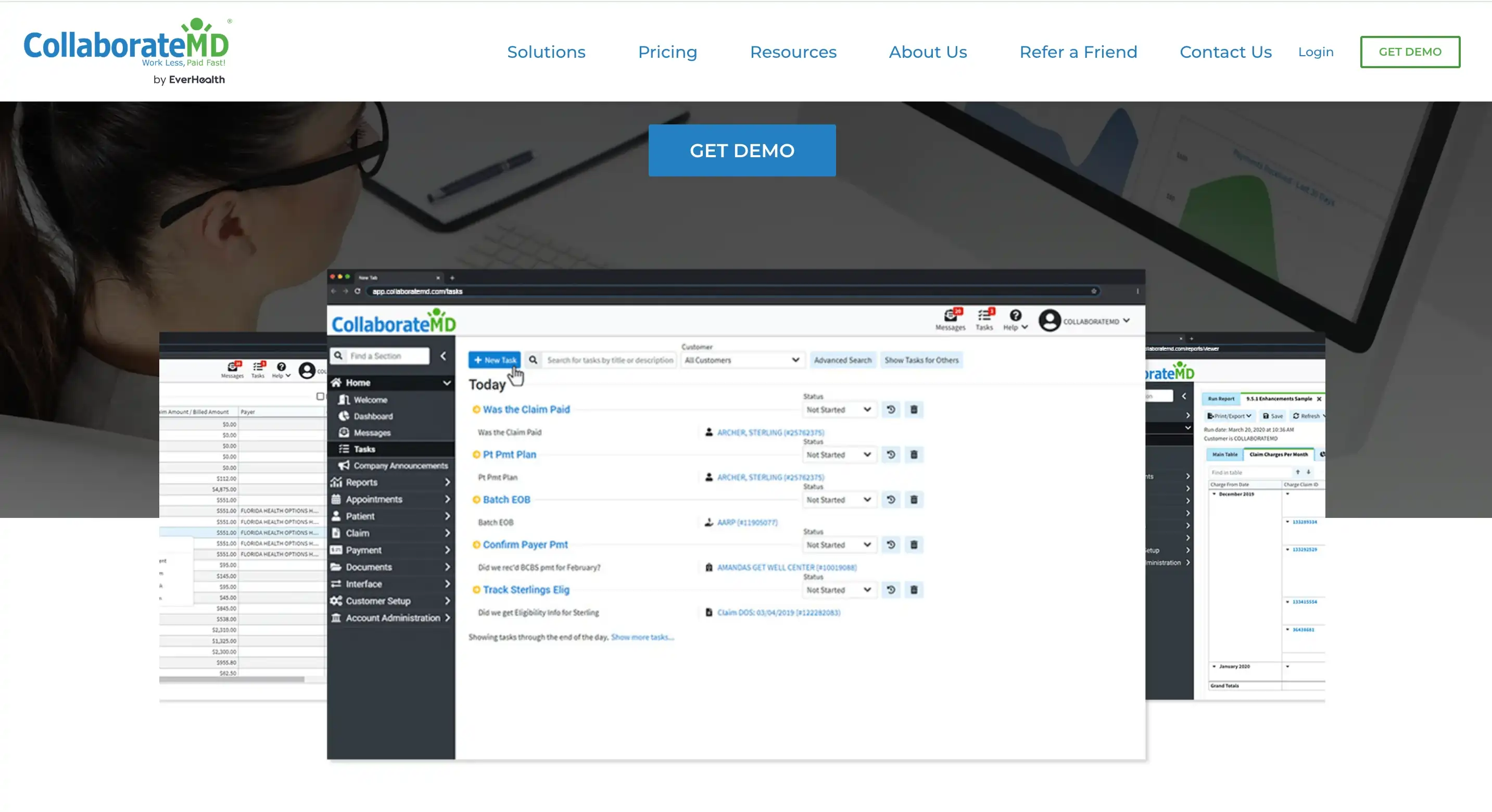
CollaborateMD is a cloud-based medical claims processing software designed to help clinics manage billing, claim submissions, and practice workflows efficiently.
The platform supports real-time claim submission, automated eligibility checks, and mobile access, helping providers streamline insurance submissions for clinics and improve billing accuracy.
Features
| Pros | Cons |
| Real-time claim submission improves billing efficiency | Limited customization compared to enterprise platforms |
| Mobile access supports remote workflow management | Advanced integrations may require additional setup |
| Built-in edits help reduce claim errors | Reporting depth may be limited for large systems |
Best For
Small- to mid-size clinics looking for flexible claims processing software that healthcare teams can use for billing automation and mobile claim management.
Pricing
CollaborateMD offers custom pricing based on practice size and feature requirements; details are available upon request.
DrChrono is an all-in-one EHR and medical claims processing software platform built for modern healthcare practices. It helps clinics automate claim submissions, manage billing workflows, and track reimbursements through integrated dashboards.
With strong mobile capabilities and customizable billing profiles, DrChrono supports providers looking for efficient medical claims management software.
Features
| Pros | Cons |
| Mobile-first platform ideal for modern clinics | Pricing can increase with additional modules |
| Integrated EHR and billing workflows | Limited customization for very large hospitals |
| Automated claims and denial tracking | Some features are tied to the iOS ecosystem |
Best For
Small practices and digital-first clinics are seeking integrated medical billing and claims processing software with robust mobile access.
Pricing
CollaborateMD offers web-based billing solutions starting at $235 per month for billing services and lab workflows. Pricing for additional modules and features is provided through a custom quote based on practice needs.
NextGen Healthcare offers an enterprise-grade medical claims processing software platform designed to support revenue cycle management for clinics, hospitals, and specialty practices.
The platform combines billing automation, EHR integration, and insurance claims processing software capabilities to help providers manage claim submissions and reduce denials.
Its tools support end-to-end medical claims management systems used by healthcare organizations handling high claim volumes.
Features
| Pros | Cons |
| Strong claims management software for enterprise healthcare systems | Implementation may require dedicated onboarding |
| Integrated EHR and billing platform | Pricing transparency is limited |
| Advanced revenue cycle analytics | Can be complex for smaller clinics |
Best For
Hospitals, specialty practices, and healthcare networks need scalable medical billing claims processing software with integrated revenue cycle management.
Pricing
NextGen Healthcare offers custom pricing based on organization size, modules, and claim processing requirements; details are available upon request.
And there you have it, some of the most widely used medical claims processing software solutions available in the market.
Choosing the right medical claims processing software depends on features that simplify claim submission, reduce denials, and improve billing efficiency.
Have a look at the key features that make the processing reliable for healthcare billing teams.
| Feature | Why It Matters |
| Claims Tracking and Real-Time Status Updates | Monitor claim progress from submission to approval, helping staff track issues and respond quickly. |
| Automatic Error Checking | Built-in validation identifies coding errors, missing data, and mismatches in patient details before submission. |
| EHR and Billing System Integration | Seamless integration with EHR and billing platforms reduces duplicate entries and improves workflow accuracy. |
| Reporting and Analytics Tools | Insights into denial rates, claim success, and payment timelines support better revenue cycle decisions. |
| User-Friendly Interface | Simple dashboards and intuitive navigation reduce training time for billing teams and improve productivity. |
| Eligibility Verification and Payer Rules | Automated eligibility checks and payer rule updates help reduce claim denials and improve approval rates. |
Selecting claims management software with these features helps healthcare providers streamline billing workflows and improve claim processing accuracy.
Healthcare providers handle sensitive medical and financial information daily, which protects patient data records.
Here are key security and compliance capabilities to evaluate when selecting a claims processing solution for hospitals or medical centers.
Claims platforms should use TLS or SSL encryption for data in transit and AES 256 encryption for stored data.
These encryption standards protect Protected Health Information and help meet HIPAA security requirements.
Why It Matters: Encryption ensures patient records and claim data remain secure when transmitted between systems, insurers, and healthcare providers.
Role-based access controls allow administrators to assign permissions based on job roles such as billing staff, administrators, or compliance officers.
This helps meet HIPAA minimum access requirements.
Why It Matters: Restricting access prevents unauthorized users from viewing or modifying claims data inside claims management software.
A compliant medical claims processing system should maintain detailed audit logs showing who accessed or modified claim records, along with timestamps and change history.
Why It Matters: Audit trails help healthcare providers maintain accountability and support regulatory audits or dispute resolution for hospital claim submissions.
Vendors offering insurance claims processing software should demonstrate HIPAA compliance through security policies, third-party audits, and breach response procedures.
Why It Matters: Working with a HIPAA-compliant platform protects patient data and ensures healthcare organizations meet federal regulatory obligations.
Healthcare claims platforms should host data in HIPAA-compliant data centers that offer strong uptime guarantees, disaster recovery systems, and secure infrastructure.
Why It Matters: Reliable hosting ensures medical claims software remains accessible while protecting patient and billing data from infrastructure failures.
In recent years, healthcare has become one of the most targeted industries for cyberattacks.
This underscores the importance of understanding why compliance and data protection are not optional but critical requirements for any modern medical claims processing platform.
Finding the right medical claims processing software depends on your workflow and billing needs and requirements for your business.
Let’s walk you through what to evaluate first.
| What to Evaluate | Why It Matters | What to Ask Vendors |
| Practice Size Fit | Different tools serve small clinics and large hospitals differently. | Does the platform scale for both hospital and smaller medical center claim submissions? |
| Budget and Growth | Flexible pricing helps practices grow without switching systems later. | Does the pricing adapt as claim volumes increase? |
| Ease of Use | A simple interface reduces staff training time and billing errors. | How quickly can billing teams start using the claims billing software? |
| System Integrations | Integration with EHR and scheduling tools improves workflow efficiency. | Does it connect with our EHR and other medical claims processing systems? |
| Customer Support | Reliable onboarding and support ensure smooth implementation. | What support and training are included after deployment? |
| Automation Capabilities | Automation helps reduce manual claim errors and speeds submissions. | Does the platform support automated claims and denial management? |
| Security and Compliance | Healthcare billing platforms must meet strict regulatory standards. | Is the platform HIPAA-compliant and secure for patient data? |
Selecting the right claims processing solution can significantly improve billing efficiency, reduce denials, and strengthen revenue cycle management for healthcare providers.
Tip for Readers:
If your practice needs custom billing workflows or integrations, a medical claims management software development company like AppsRhino can help build tailored solutions for claim processing.
Medical claims processing is rapidly evolving as healthcare organizations adopt smarter automation and AI-driven workflows.
In 2026 and beyond, AI-assisted claims processing automation, predictive denial management, and real-time eligibility verification are expected to become standard capabilities in modern medical claims processing software.
Technologies such as machine-learning-based coding suggestions, automated document extraction from clinical notes, and intelligent revenue-cycle analytics will further reduce manual effort and improve claim accuracy.
Healthcare providers are also moving toward fully integrated medical claims management systems that connect EHRs, billing systems, and payer networks into a single platform.
For organizations needing specialized workflows or integrations, companies like AppsRhino are helping build custom claims automation solutions that align with evolving healthcare billing and compliance requirements.
Investing in the right medical claims processing software can significantly improve how your clinic manages billing and reimbursements.
The right platform helps accelerate claim approvals, reduce billing errors, and ease the administrative workload on healthcare teams.
Whether you run a small practice or manage a large healthcare network, selecting a reliable claims management software can improve revenue cycle efficiency and overall operations.
Focus on solutions that offer strong automation, seamless integrations, and dependable support. Many platforms provide demos or trial access, making it easier to evaluate how well the system fits your workflow.
If your organization requires specialized workflows or integrations, teams like AppsRhino can also help build custom medical claims management solutions tailored to your operational and billing needs.
Custom Development
7 Apr 2026
Tell us what your business actually runs on today, and we will map what it takes to make it one system.