- Quick Overview: Hospital Management Software Cost
- What Does Hospital Management Software Typically Include
- Hospital Management System Software Cost by Deployment Model
- Hospital Management Software Cost by Modules
- How Hospital Size Impacts the Cost of Hospital Management
- Cost of Hospital Management Software in India
- Key Factors That Influence Hospital Management Software Pricing
- How the Cost of a Hospital Management System Is Estimated
- Costs Hospitals Often Forget When Planning HMS
- Custom vs. Off-the-Shelf Hospital Management Software Cost
- How Hospitals Can Reduce Hospital Management Software Cost
- Looking for a Trusted Partner to Build Your Hospital Management Software?
- Conclusion
- Frequently Asked Questions (FAQs)
Table of Contents

Hospital Management Software Cost: Factors & Full Breakdown 2026


Running a hospital or clinic is not easy. Every day brings a long list of moving parts: patients, appointments, lab tests, billing, medications, and staff coordination. When these processes are handled through scattered tools or manual work, things get messy fast. Delays increase.
Errors happen. Teams lose time on tasks that should be simple.
That is why many healthcare providers are investing in digital systems that bring everything together. But before making that move, one question matters most: what is the cost of hospital management software?
In this guide, we break down the cost of hospital management software, the key pricing factors, common cost ranges, and what hospitals in India can expect to spend. We will also look at how features, deployment model, customization, and integrations shape the final budget.
Quick Overview: Hospital Management Software Cost
• Hospital management software cost usually ranges from $20,000 to $500,000, depending on hospital size, modules, and deployment.
• In India, the cost of hospital management software ranges from ₹50,000 for clinics to ₹2 crore+ for large hospitals.
• The cost of hospital management software depends on modules, integrations, customization, and infrastructure.
• Common modules include patient management software, electronic health records, billing, pharmacy, and laboratory systems.
• Cloud, on-premise, and hybrid deployments significantly affect infrastructure and maintenance costs.
• Larger hospitals require stronger healthcare IT infrastructure and data security to support integrated operations.
What Does Hospital Management Software Typically Include
Before we dive into pricing, let’s understand what top hospital management software solutions actually include.
These core modules power most modern hospital information systems.
Patient Management Software
Handles patient registration, visit history, admissions, and discharge records in one place. It helps staff track patients smoothly without relying on scattered files.
Electronic Health Records and EMR Software
Stores medical history, diagnoses, prescriptions, and treatment notes digitally. Doctors and staff can quickly access accurate patient data across departments.
Hospital Billing Software
Manages invoices, payments, insurance claims, and billing workflows efficiently. This reduces manual errors and improves financial transparency in hospital operations.
Pharmacy Management System
Tracks prescriptions, medicine inventory, dispensing activity, and stock levels. It helps hospitals maintain proper medicine availability and avoid shortages.
Laboratory Information System
Supports test orders, sample tracking, and report generation for lab diagnostics. It improves coordination between doctors, lab technicians, and patients.
Appointment Scheduling System
Organizes doctor availability, patient appointments, and follow-ups. This helps reduce wait times and improve the patient experience.
Inventory and Procurement Management
Tracks medical supplies, equipment stock, and purchasing activities. Hospitals can maintain optimal inventory levels and efficiently manage vendor orders.
As you can see, hospital management software covers multiple operational areas.
The more modules and capabilities included, the higher the hospital management software cost tends to be.
Hospital Management System Software Cost by Deployment Model
Another factor that significantly affects pricing is the system's deployment. Let’s look at the common deployment models hospitals choose today.
Cloud-Based Hospital Management Software
Cloud-based systems are hosted online and accessed through the internet. Hospitals usually pay a monthly or yearly subscription, which lowers upfront investment.
This model works well for clinics and growing hospitals because it reduces infrastructure costs while still supporting modules such as patient management software and billing systems.
On-Premise Hospital Management System
On-premises systems are installed directly on the hospital’s own servers. This means hospitals must invest in hardware, security systems, and internal IT support.
While the initial setup is higher, many large hospitals prefer this model for greater control over healthcare data security and system infrastructure.
Hybrid Deployment
Hybrid deployment combines cloud services with on-premises infrastructure. Some data or modules run locally while others operate in the cloud.
Hospitals often choose this approach when they want flexibility while maintaining control over critical healthcare systems.
Each deployment model affects the overall hospital management system software cost. Along with infrastructure decisions, hospitals must also plan integrations, workflows, and long-term system scalability.
Working with experienced healthcare software teams like AppsRhino helps hospitals evaluate these factors early and design the right system architecture.
Hospital Management Software Cost by Modules
Most modern hospital information systems are built using modules. Hospitals can start with core capabilities and expand as operations grow.
Below is a typical module-level cost breakdown based on recent estimates of the healthcare software market.
| HMS Module | Estimated Cost |
| Patient management software | $3,000 – $12,000 |
| Electronic health records / EMR software | $20,000 – $90,000 |
| Hospital billing software | $5,000 – $25,000 |
| Pharmacy management system | $6,000 – $30,000 |
| Laboratory information system | $12,000 – $45,000 |
| Inventory management | $6,000 – $35,000 |
Smaller clinics may only need a few core modules.
Larger hospitals, however, typically combine multiple systems across departments, which significantly increases the overall hospital management software cost.
How Hospital Size Impacts the Cost of Hospital Management
Larger facilities often require stronger healthcare IT infrastructure, deeper system integrations, and interoperability standards like HL7 or FHIR to connect multiple departments and data sources.
This naturally increases the hospital management software cost.
| Hospital Size | Expected Budget | Typical System Scope | Impact on Cost |
| 50 Bed Hospital | $25k – $90k | Patient management, billing, appointment scheduling | Limited modules keep costs relatively lower |
| 100 Bed Hospital | $70k – $180k | EMR software, pharmacy management system, and lab integration | More modules and integrations increase implementation cost |
| 300 Bed Hospital | $180k – $450k | Multi-department systems, advanced reporting, interoperability | Complex workflows and integrations raise system cost |
| Enterprise Hospital Network | $450k – $1.2M+ | Full hospital ERP software across multiple facilities | Large-scale infrastructure and cross-hospital data systems significantly increase cost |
As hospitals expand, their systems must support more departments, users, and integrations. This growing complexity is one of the biggest reasons the hospital management software cost increases with scale.
Cost of Hospital Management Software in India
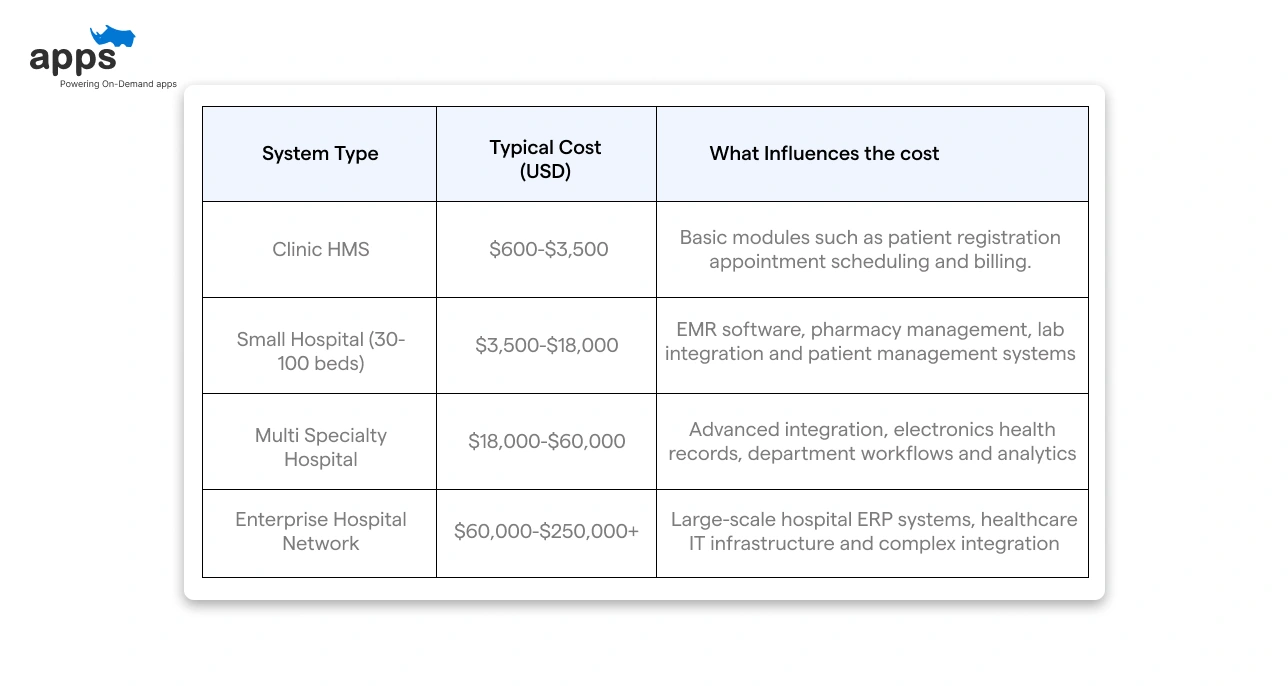
Costs can vary widely depending on the type and scale of the hospital.
Let’s understand the typical hospital management software cost in India across different healthcare setups.
| System Type | Typical Cost (USD) | What Influences the Cost |
| Clinic HMS | $600 – $3,500 | Basic modules such as patient registration, appointment scheduling, and billing |
| Small Hospital (30–100 beds) | $3,500 – $18,000 | EMR software, pharmacy management, lab integrations, and patient management systems |
| Multi-Specialty Hospital | $18,000 – $60,000 | Advanced integrations, electronic health records, department workflows, and analytics |
| Enterprise Hospital Network | $60,000 – $250,000+ | Large-scale hospital ERP systems, healthcare IT infrastructure, and complex integrations |
Understanding these ranges provides a clearer starting point for estimating the cost of hospital management software.
Next, let’s look at how different deployment models can further influence the overall pricing.
Key Factors That Influence Hospital Management Software Pricing
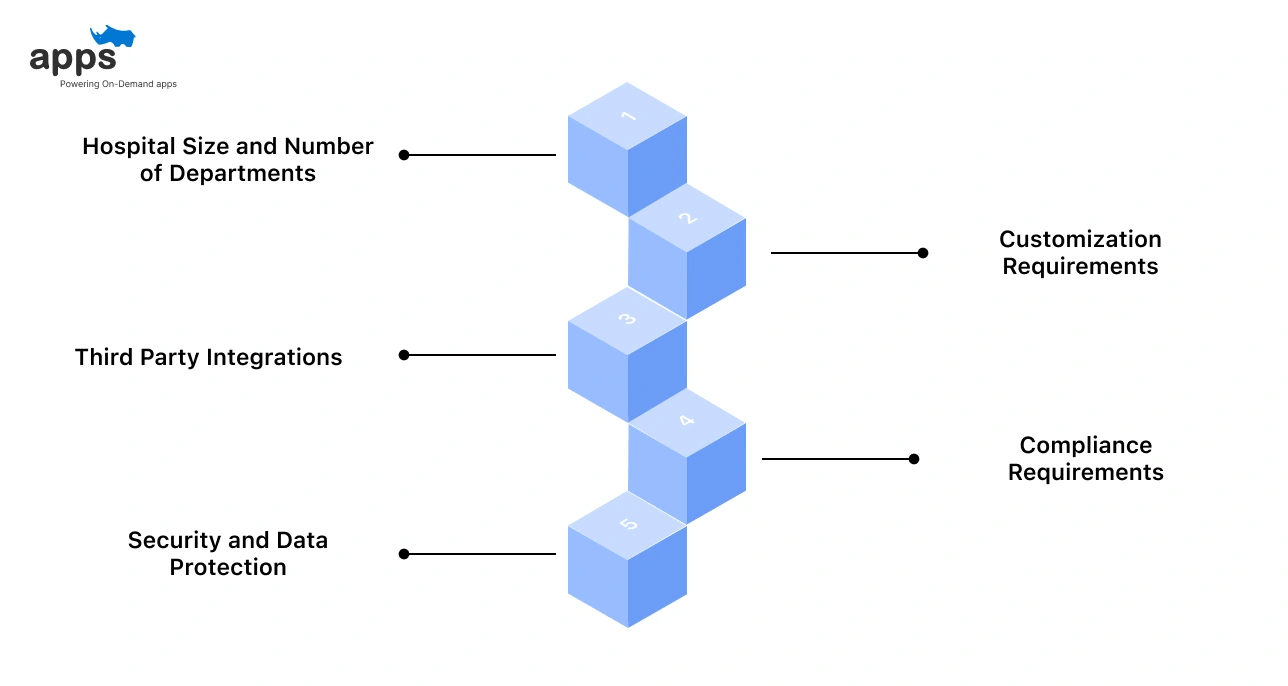
Several elements influence how much hospitals ultimately spend on their systems. Let’s look at the factors that most commonly shape the hospital management software cost.
Hospital Size and Number of Departments
Larger hospitals operate across multiple departments, such as pharmacy, laboratory, and inpatient care.
Managing these workflows requires a more extensive hospital information system.
Impact: More departments increase system complexity and implementation cost.
Customization Requirements
The importance of custom healthcare apps in hospitals is growing as facilities require custom workflows for admissions, billing, reporting, and internal operations.
Tailoring modules such as patient management software or EMR systems requires additional development effort.
Impact: Greater customization raises development time and overall project cost.
Third Party Integrations
Hospitals often connect their software with insurance systems, payment gateways, telemedicine platforms, or diagnostic tools.
These integrations help unify operations across different healthcare services.
Impact: Each integration adds configuration, testing, and maintenance costs.
Compliance Requirements
Healthcare systems must meet strict compliance standards, such as HIPAA, HL7 integration, and FHIR interoperability, to ensure secure data exchange.
Impact: Meeting compliance requirements increases development, security, and audit costs.
Security and Data Protection
Hospitals manage sensitive medical records through systems like electronic health records and billing platforms. Protecting this data requires strong healthcare data security measures.
Impact: Advanced security infrastructure adds to the total system investment.
Together, these factors shape the overall budget hospitals should expect when planning a modern healthcare management system.
How the Cost of a Hospital Management System Is Estimated
After looking at different pricing ranges, it helps to understand how the cost is actually calculated.
Most healthcare software projects are priced based on multiple components of development and implementation. Let’s take a look.
| Component | Estimated Cost |
| Planning and requirements analysis | $2k – $10k |
| UI UX design | $5k – $20k |
| Development | $30k – $200k |
| Integrations | $10k – $60k |
| Testing and quality assurance | $5k – $25k |
Planning defines system architecture, workflows, and requirements. Development then builds modules such as patient management software, hospital billing software, and electronic records. Integrations connect the platform with other hospital systems, while testing ensures reliability and security.
In simple terms, the hospital management software cost is typically estimated using a structure like this:
Hospital software cost = Base platform + modules + integrations + customization + compliance requirements
Understanding this breakdown helps hospitals plan budgets more realistically before starting implementation.
Costs Hospitals Often Forget When Planning HMS
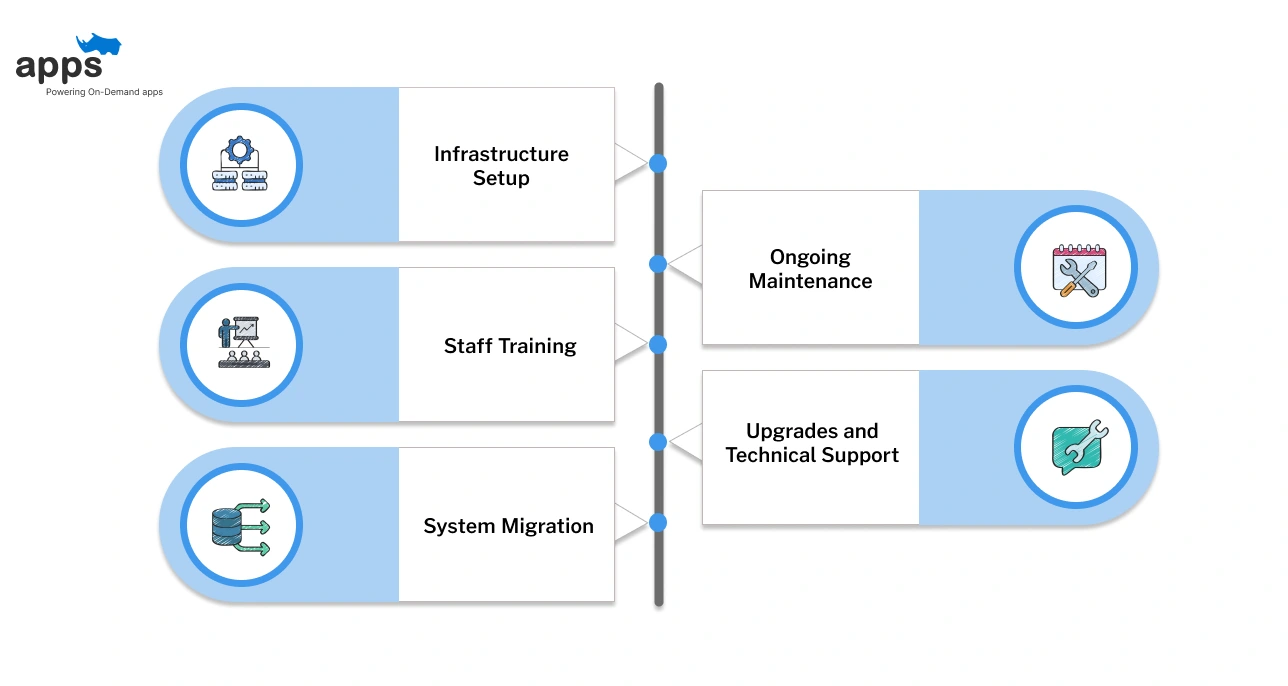
When estimating budgets, hospitals often focus only on development or software licensing.
However, several operational expenses also add to the total hospital management software cost.
Infrastructure Setup
Hospitals may need upgraded servers, secure networks, or stronger healthcare IT infrastructure to run the system efficiently.
Choosing scalable cloud systems can help reduce the need for heavy upfront infrastructure investments.
Staff Training
Doctors, nurses, and administrative teams need time to learn tools such as EMR software and digital billing systems.
Hospitals can reduce this cost by selecting platforms with simple interfaces and built-in training resources.
System Migration
Moving existing patient records and operational data into a new hospital information system requires planning and careful data mapping.
Structured migration tools and phased implementation can make this process smoother and less expensive.
Ongoing Maintenance
Software needs regular updates, performance monitoring, and technical support to keep workflows running smoothly.
Choosing vendors that offer bundled maintenance plans can help control long-term operational costs.
Upgrades and Technical Support
Hospitals often add modules, such as pharmacy or lab systems, as operations expand.
Planning modular implementations from the start can help manage future upgrades without drastically increasing the cost of hospital management software.
These operational expenses may not appear in the initial estimate, but they play an important role in the total cost of hospital management software over time.
Custom vs. Off-the-Shelf Hospital Management Software Cost
Before choosing a system, hospitals usually compare different implementation approaches. Each option affects flexibility, scalability, and the overall hospital management software cost.
Take a look at the table comparison for much clearer, deeper clarity.
| Factor | Custom HMS | Off the Shelf HMS | SaaS HMS |
| Cost Level | High | Medium | Low |
| Upfront Investment | High development cost | Moderate license cost | Very low upfront |
| Deployment Time | Long (6–18 months) | Moderate (1–3 months) | Fast (days to weeks) |
| Customization | Fully customizable | Limited customization | Minimal customization |
| Scalability | Highly scalable for large systems | Moderate scalability | Scales easily but within platform limits |
| Infrastructure Requirement | Requires strong healthcare IT infrastructure | Some infrastructure needed | Managed by vendor in the cloud |
| Integration Capability | Can support deep integrations and interoperability | Limited integrations | Depends on vendor capabilities |
| Control & Ownership | Full control over the hospital information system | Partial control | Vendor-controlled platform |
| Best For | Large hospitals and healthcare networks | Mid-size hospitals | Clinics and small healthcare facilities |
So Which Option Should Hospitals Choose?
Each approach has its place depending on hospital size, workflows, and long-term plans.
Let’s break it down.
Custom Hospital Management Software – Best when hospitals need full control and flexibility.
- Built around your workflows: The system is designed to support how your hospital operates, with support for complex processes and integrations.
- Scales as your hospital grows: Custom platforms can expand across departments and support systems like electronic health records and advanced reporting.
- Long-term flexibility: Many hospitals work with development partners such as AppsRhino to build scalable platforms that evolve with their operational needs.
Off-the-Shelf Hospital Management Software – A practical option for hospitals needing faster deployment.
- Ready-to-use modules: Pre-built systems typically include patient management software, billing, and scheduling tools.
- Faster setup: Hospitals can deploy the platform quickly without a long development cycle.
- Limited flexibility: Customization options may be restricted if hospitals require specialized workflows.
SaaS Hospital Management Software – A common choice for smaller healthcare facilities.
- Lower upfront investment: Hospitals pay a subscription instead of a large development cost.
- Minimal infrastructure setup: The vendor manages hosting, updates, and system maintenance.
- Platform limitations: Customization and integrations depend on what the provider allows.
In the end, the right choice depends on how much control, scalability, and flexibility a hospital needs as it grows.
How Hospitals Can Reduce Hospital Management Software Cost
Implementing a new system does not always mean a massive budget. With proper planning, hospitals can control software costs while still building a strong digital foundation.
1. Start with core modules
Begin with essential capabilities like patient management software, billing, and appointment scheduling.
Additional modules, such as pharmacy or lab systems, can be added later as operational needs grow.
2. Implement the system in phases
Rolling out the platform department by department makes adoption smoother and spreads the investment over time.
This phased approach also helps teams adapt to new healthcare workflow automation gradually.
3. Choose scalable architecture
A flexible hospital information system allows hospitals to add modules, integrations, and users without rebuilding the platform.
Scalable architecture prevents expensive system changes later.
4. Avoid unnecessary customization
Customization should solve real operational problems, not just preferences.
Using standardized workflows where possible keeps development simpler and lowers the overall cost of hospital management software.
5. Select cloud deployment where suitable
Cloud-based systems reduce infrastructure investment and simplify maintenance.
For many hospitals, this approach lowers upfront expenses while still supporting secure data management.
When hospitals plan carefully and prioritize the right features, they can build efficient systems without overspending.
A thoughtful approach helps balance operational needs with the long-term hospital management system software cost.
Looking for a Trusted Partner to Build Your Hospital Management Software?
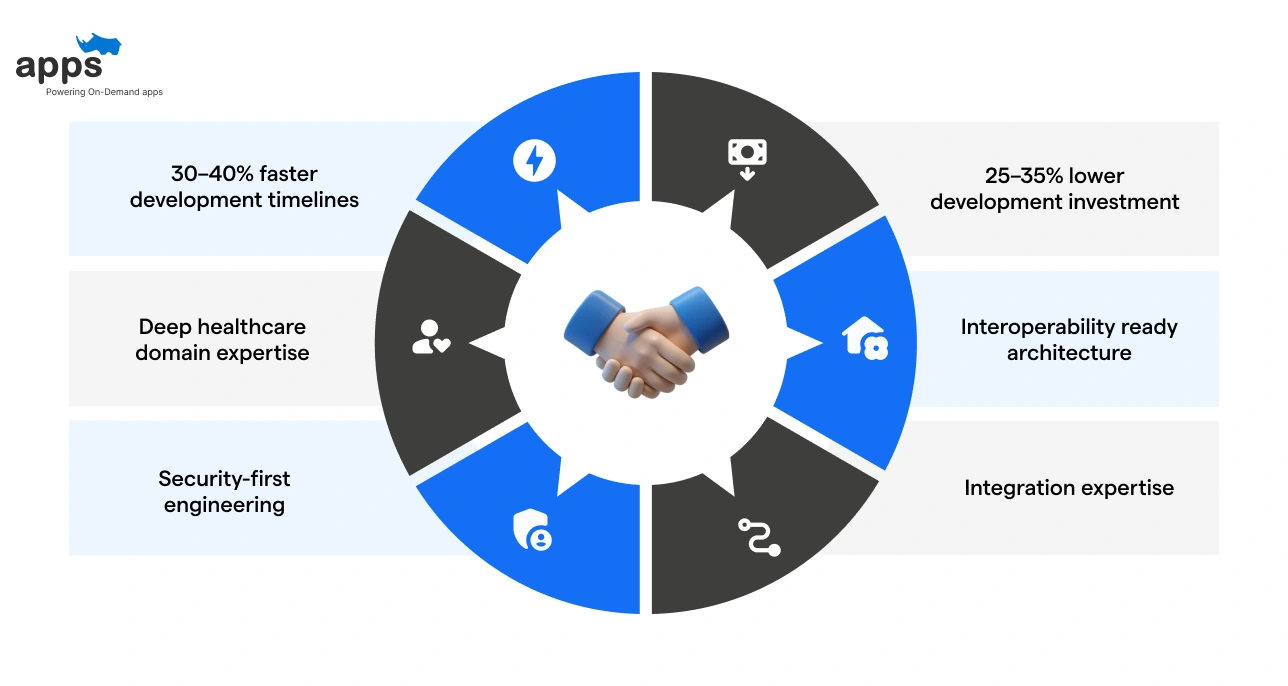
Building a hospital management app or software is not just a technology project. It directly affects how smoothly patient care, billing, diagnostics, and hospital operations run every day.
That’s where AppsRhino comes in. AppsRhino works with healthcare organizations to build reliable digital platforms while keeping the hospital management software cost practical and predictable.
- 30–40% faster development timelines using pre-built healthcare frameworks and modular architecture
- 25–35% lower development investment compared to traditional enterprise healthcare software builds
- Deep healthcare domain expertise across systems like electronic health records, hospital billing, and clinical workflows
- Interoperability ready architecture supporting standards such as HL7 integration and FHIR interoperability
- Security-first engineering aligned with modern healthcare data security and regulatory expectations
- Integration expertise connecting systems like pharmacy management systems, laboratory platforms, and insurance gateways
With AppsRhino, hospitals can implement a modern, custom hospital management software information system that improves daily operations while keeping long-term technology investments under control.
Conclusion
Modern hospitals cannot afford disconnected systems. From patient records to billing and pharmacy workflows, every department needs to operate in sync, and the right software makes that possible.
Understanding hospital management software cost helps decision-makers plan budgets with confidence and avoid unexpected expenses down the line.
Pricing depends on hospital size, required modules, deployment model, and compliance needs, so there is rarely a one-size-fits-all answer.
But cost should never be evaluated in isolation.
A well-implemented hospital information system improves coordination, strengthens data security, and supports long-term digital transformation. The right investment today builds the operational foundation your hospital needs tomorrow.
Frequently Asked Questions (FAQs)
How much does hospital management software cost?
Hospital management software costs typically range from $20,000 to $500,000, depending on hospital size, modules, integrations, and deployment model.
What is the cost of hospital management software in India?
The cost of hospital management software in India usually ranges from ₹50,000 for clinics to ₹2 crore for large hospitals.
What factors affect hospital management system software cost?
Key factors include hospital size, required modules, integrations, compliance requirements, infrastructure needs, and the level of customization.
What modules are typically included in hospital management software?
Most hospital systems include patient management software, electronic health records, hospital billing software, pharmacy management systems, and laboratory information systems.
How is the software cost estimation of the hospital management system calculated?
Software cost estimation considers modules, integrations, compliance requirements, infrastructure setup, and development complexity across the hospital information system.
Why do hospitals invest in hospital management software?
Hospitals implement hospital management software to streamline operations, improve patient coordination, automate workflows, and strengthen healthcare data security across departments.
Share blog
Related Quick Blogs


Table of Contents

- Quick Overview: Hospital Management Software Cost
- What Does Hospital Management Software Typically Include
- Hospital Management System Software Cost by Deployment Model
- Hospital Management Software Cost by Modules
- How Hospital Size Impacts the Cost of Hospital Management
- Cost of Hospital Management Software in India
- Key Factors That Influence Hospital Management Software Pricing
- How the Cost of a Hospital Management System Is Estimated
- Costs Hospitals Often Forget When Planning HMS
- Custom vs. Off-the-Shelf Hospital Management Software Cost
- How Hospitals Can Reduce Hospital Management Software Cost
- Looking for a Trusted Partner to Build Your Hospital Management Software?
- Conclusion
- Frequently Asked Questions (FAQs)