

Custom Development
Alcohol Delivery Market Share and Trends: Size, Growth, & Business Opportunities
7 Apr 2026
Turn your traditional healthcare practices into an engaging and user-centric medium through none other than healthcare applications.
At this point, almost every healthcare organization has heard and witnessed the wonders brought through healthcare app development. Healthcare application development has no doubt brought a change in the world of healthcare. Be it the exclusive services it provides or the benefits healthcare providers can acquire with applications as such.
But, the major question is how does one make a decision of integrating a healthcare application into their system for once and for all? Additionally, what are the loopholes or the pain points in the existing services and can healthcare applications eliminate them and truly enhance user experience? To answer these questions and help you find out more about healthcare applications, we present this guide to you.
This comprehensive study focuses on the step-by-step procedure one has to follow for the development of efficient and effective healthcare applications. It also sheds light on factors that influence healthcare application development and how healthcare organizations can benefit from the extensive services provided by them.
The first and foremost step towards a successful healthcare application is thorough market research. The in-depth study of the domain you are about to develop your application in helps in ways more than you can imagine. Here’s how:
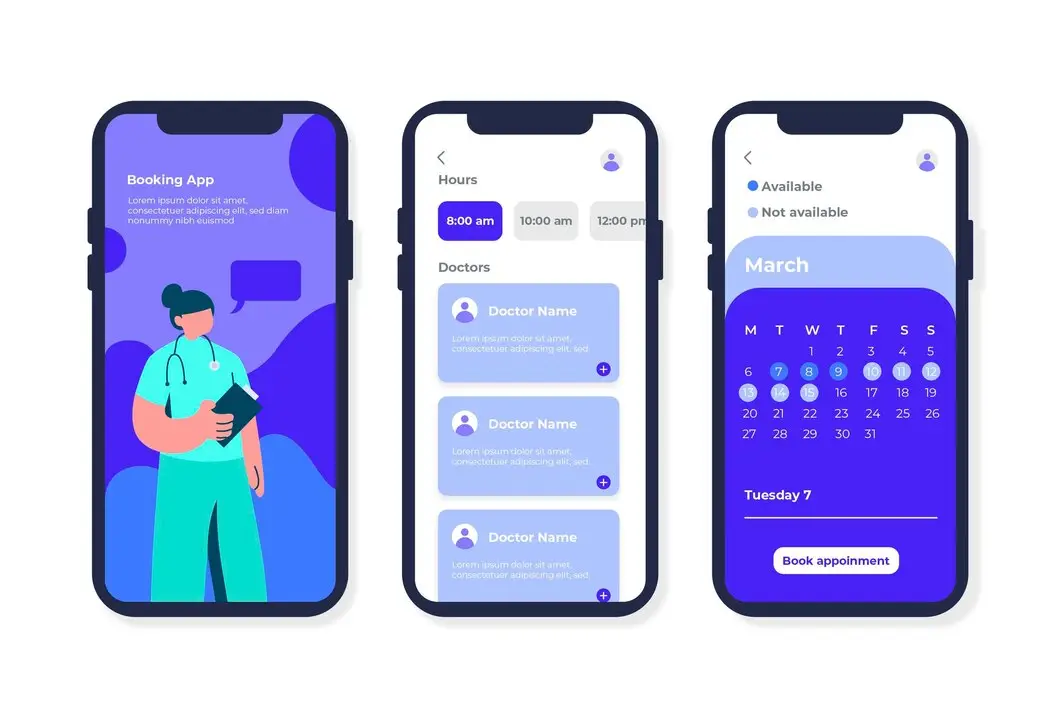
Before jumping into the development process, research on the current state of the healthcare industry is essential. Market research helps understanding various factors related to healthcare app development. These factors include the current technological trends of the healthcare industry, the behavioral patterns of the customers, and the existing loopholes in this field.
By gathering information regarding these factors, one can determine the features and functionalities that would best suit their healthcare application. Identifying the existing loopholes will guide developers in building an application that will fit into the needs and preferences of the target audience.
Market research can also provide statistical growth the healthcare application can achieve in the near future. Based on this information, healthcare organizations can determine whether investing in a healthcare application will be profitable for them or not.
For example, a report by Grand View Research states that the global healthcare app market size was valued at $46.11 billion in 2020 and is expected to reach $194.53 billion by 2027, growing at a CAGR of 21.1% during the forecast period.
Identifying unmet needs and pain points in healthcare, researching market demand, and identifying potential niche markets and target audiences are essential steps in healthcare app development.

To identify opportunities in healthcare app development, it is crucial to identify unmet needs and pain points in the healthcare industry. By understanding the challenges healthcare professionals and patients face, you can develop apps that address these needs and provide value.
One approach is to conduct surveys, interviews, and focus groups with healthcare professionals and patients to gather insights into the difficulties they encounter. For example, healthcare professionals may struggle with inefficient communication and collaboration among team members, while patients may have difficulty managing their medications or accessing reliable health information.
Additionally, analyzing industry reports, research papers, and healthcare trends can help identify emerging challenges and the areas where healthcare can benefit from technological solutions. For instance, the aging population and the rise of chronic diseases present opportunities for apps that focus on remote patient monitoring and disease management.
Once you have identified unmet needs, it is essential to research market demand for specific types of healthcare apps. Understanding the target audience and their preferences can help determine the viability of an app idea.
Market research can involve analyzing existing healthcare apps in the market, studying user reviews and ratings, and identifying gaps and areas for improvement. This research can provide insights into what users value, what features are in demand, and potential underserved areas of the market.
Conducting competitor analysis is also crucial during this phase. By studying apps offered by competitors, you can assess their strengths and weaknesses and identify opportunities for differentiation. This research enables you to understand the market landscape and carve out a unique value proposition for your healthcare app.
Suggested Reading:
Why choose AppsRhino for Healthcare app development?
Alongside identifying unmet needs and researching market demand, it is important to identify potential niche markets and target audiences for your healthcare app. Focusing on a specific niche can help you differentiate your app in a crowded market and tailor your offering to meet the specific needs of a particular audience.
To identify niche markets, consider factors such as demographics, geography, specific healthcare specialties, or unique healthcare challenges. For example, you may choose to develop an app targeting pediatric healthcare, mental health, or remote rural areas with limited access to healthcare services.
Considering these factors and incorporating them into the planning and development process is crucial to ensure the successful creation and launch of a healthcare app.
One critical factor to consider in healthcare app development is the technology and infrastructure readiness. This includes assessing the availability and reliability of internet connectivity, mobile device penetration, and the overall technological capabilities of the target market.
For instance, if you are targeting regions with limited internet access or areas where smartphones are not widely adopted, you may need to develop an app that can function offline or accommodate lower bandwidth connections. Additionally, ensuring compatibility across different operating systems and device types is crucial to reach a broader user base.
The healthcare industry is highly regulated, and healthcare apps must comply with specific regulations and legal requirements. Factors to consider include:
Healthcare app development can require significant investments, and identifying funding options is crucial. Factors to consider include:
Suggested Reading:
What is Healthcare App Development All About? A Complete Guide
Timing your investment in healthcare app development requires careful assessment of market trends and forecasts, competition and market saturation, and economic and industry factors.

Analyzing market trends and forecasts is crucial in determining the right timing for your investment in healthcare app development. This involves conducting comprehensive research on the current market dynamics, such as the demand for healthcare apps, industry growth rates, and emerging trends.
Market trends can provide insights into the potential success and longevity of your healthcare app. For example, if there is a rising demand for telemedicine services or remote patient monitoring, it may be a favorable time to invest in a healthcare app that caters to these needs. It is also essential to assess whether the market is projected to experience continued growth or if it has potential saturation points.
Understanding the competition and market saturation is crucial to determine the optimal timing for your investment in healthcare app development. Analyzing the competitive landscape allows you to identify existing players, their market share, strengths, and weaknesses.
If the market is already saturated with similar apps, it may be challenging to gain traction and differentiate your app. In such cases, it might be necessary to assess whether there are underserved niches or specific gaps that your app can fill.
Evaluating economic and industry factors is essential when timing your investment in healthcare app development. It involves considering the overall economic climate, healthcare spending patterns, regulatory changes, and other relevant industry factors.
For instance, changes in government policies related to healthcare reimbursement or telemedicine can significantly impact the market landscape. Understanding these factors can help you assess the potential risks and opportunities associated with your healthcare app.
In conclusion, investing in healthcare app development offers several benefits such as improved access to healthcare, enhanced patient engagement, streamlined healthcare processes, and potential cost savings. However, there are also challenges and risks to consider, including data privacy and security concerns, regulatory compliance, and user adoption and engagement.
AppsRhino offers the best Tech-driven solutions for Healthcare, Home services, Laundry delivery, Alcohol delivery, Grocery Delivery, Food Delivery, and Taxi Services:
To ensure successful implementation and maintenance of healthcare apps, it is important to prioritize user-centric design, collaborate with healthcare providers, conduct rigorous testing and quality assurance, monitor and comply with regulations, and provide ongoing support and maintenance.
Custom Development
7 Apr 2026
Tell us what your business actually runs on today, and we will map what it takes to make it one system.