

Custom Development
Alcohol Delivery Market Share and Trends: Size, Growth, & Business Opportunities
7 Apr 2026
Opting for enterprise app development has a huge impact on your company. However, the change brought by this development is not meant for everyone. Therefore, proper consideration should be given before committing to this measure.
Enterprise app development is a huge asset for businesses, primarily because of its ability to automate tasks, streamline workflows, and enhance data security.
Besides all these features, it also offers customized solutions that fit right into the individual needs and preferences of organizations from different domains.
For all the businesses that are thinking about adopting enterprise app development but are unsure about going ahead with it, this blog is everything you need.
This guide, given below, discusses a methodical approach through which effective enterprise app development can be obtained.
This approach throws light upon important factors like defining objectives, conducting research, collaborating with stakeholders, providing continuous support and more.
By adhering to these steps and assessing the specific requirements of the business, enterprises can leverage the power of apps to drive growth and innovation.
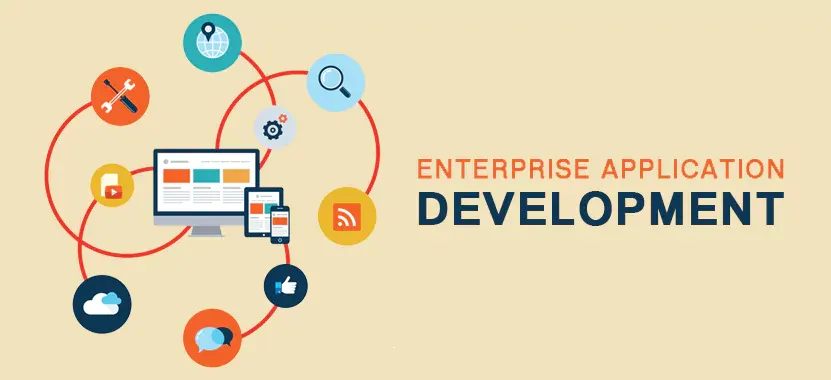
The factors mentioned below determine whether your organization must go for enterprise app development or not.
Before availing of the benefits of enterprise app development, business organizations must begin by assessing the capacity and structure of the company.
This assessment further determines if enterprise app development is actually required for the institution or not.
Every organization, be it big or small, has its own set of requirements.
There are different ways to cater to these requirements; some demand enterprise app development, while others don’t. In the case of small to medium-sized businesses, their requirements can be easily fulfilled by off-the-shelf solutions at the latest.
These solutions are even more cost-effective and quite easier to include in their usual workflows.
On the other hand, larger organizations with complex business processes and a significant number of employees may require custom-built apps that can be tailored to their specific needs.
The nature of your business operations is an essential factor to consider when deciding on enterprise app development.
Different industries have unique requirements and workflows. Assessing how apps can streamline specific business processes and address industry-specific challenges is crucial.
For example, manufacturing companies may benefit from apps that optimize supply chain management and track inventory in real-time, while professional service firms may require apps to manage project timelines and collaboration.

Every organization has a fixed budget for their respective projects. Building applications that provide personalized solutions can be a costly affair.
These apps are subjected to a higher level of development and testing, due to which companies opting for this must take their budgetary restraints into consideration.
In comparison to personalized solutions, off-the-shelf solutions are a much more pocket-friendly choice.
They are not only easy to manage but also fit well for smaller businesses. Evaluating the budget allocations and the long-term benefits against the initial costs helps in making an informed decision.
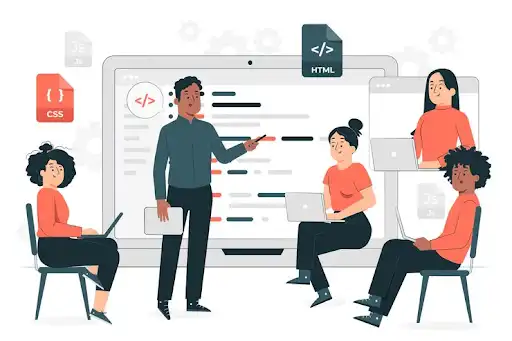
Developing enterprise apps requires a certain level of technical expertise. Assessing your in-house capabilities is crucial in determining whether to develop apps internally or outsource the development process.
If your company has a skilled IT team with experience in app development, developing apps in-house may be a viable option.
However, if the necessary skills are lacking, partnering with a reliable app development agency can ensure the successful creation and implementation of enterprise apps.
Active businesses or applications in the market are always scaling either up or down in accordance with the market situation and their evolution.
Where enterprise app development can be easily scaled along with the business requirements, Off-the shelf solutions might not be the ideal fit for organizations prone to scalability.
Look into the overall growth chart of the business before finalizing which solution would align best with your needs.
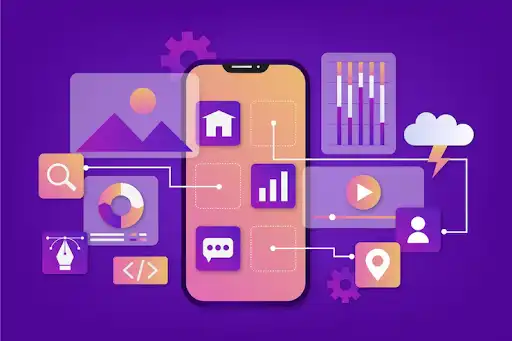
The path towards successful enterprise app development is a step-by-step process. Let us discover how.
Going ahead with enterprise app development comes much later. Identifying your goals and aspirations regarding the application comes first. Highlight the important factors that you wish to bring to life through your enterprise application.
Throughout the process of development, the team of developers, along with your guidance, will work on bringing these features to life.
These factors might range from the exclusive features you want in your application to the integration with existing systems and scalability needs.
Pinpointing your requirements makes the application development process much easier and smoother.

With a brief idea regarding the overall application, one can set off on the journey to conduct thorough market research.
This research will provide a deep insight into the existing applications, their strengths and weaknesses, the latest trends, and the loopholes in the market.
This insight will further guide you with the design and development of your own application. It also helps to remain competitive and relevant in the market.
Throughout the process of app development, an active collaboration with stakeholders is a must. For this, the app development team must send regular updates and information regarding the developed application.
They should also send prototypes of the application at every stage. The stakeholders have the liberty to ask questions and express concerns regarding the development process.
It is the duty of the development team to address these concerns and alter any development procedures if required. Consistent communication between the two parties during app development ensures that there is a uniform understanding regarding the project.

For an effective application, it is important for the application to go through a series of tests and quality checks.
Any bugs or issues present in the application get detected in these tests, which can be easily eliminated before the application sets off to serve its target audience.
The numerous stages of testing result in an application that functions at ease, providing an enhanced user experience.
Regular testing and quality assurance procedures minimize the risk of app-related issues and ensure a successful deployment.

Once the development procedure is finished and the application is ready to serve its users, the process of deployment officially begins.
In this stage, it is important to determine which process of deployment works best for the application. The process of deployment can be done via app stores, enterprise distribution, or in-house deployment.
The deployment should be constantly monitored. Constant monitoring helps in identifying if the application requires any updates and maintenance in order to run smoothly and serve its purpose.
Successful enterprise app development does not end with deployment. It is essential to provide continuous support and updates to ensure the app remains relevant, secure, and effective.
Establish a system for addressing user concerns, bug fixes, and feature enhancements. Regularly release updates that address user feedback, improve performance, and add new functionalities.
By actively supporting and improving the app, businesses can enhance user satisfaction, maintain a competitive edge, and maximize the app's long-term value.
The different types of enterprise applications for different business organizations are as follows:
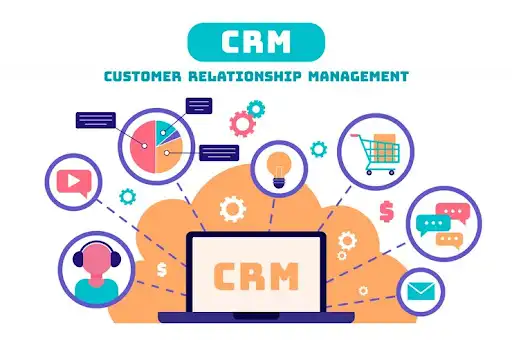
Customer Relationship Management (CRM) applications help businesses manage customer relationships, sales activities, and marketing campaigns.
They provide a centralized platform to track customer interactions, analyze data, and improve customer satisfaction.
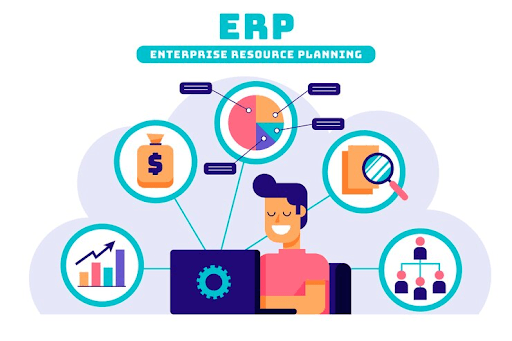
Enterprise Resource Planning (ERP) applications integrate and automate core business processes such as finance, HR, inventory management, and supply chain operations.
They provide a comprehensive view of business operations, streamlining and optimizing workflows.
HRMS applications assist HR departments in managing employee data, recruitment, performance evaluations, training, and payroll.
They streamline HR processes, improve employee self-service, and enhance workforce management.
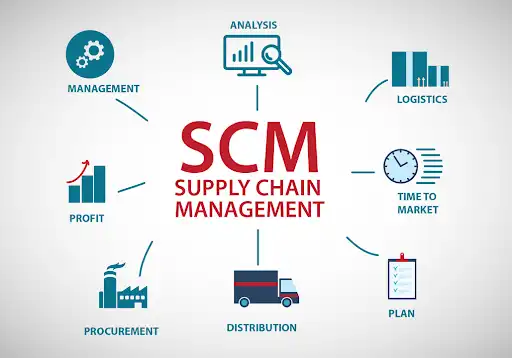
Supply Chain Management (SCM) applications help businesses optimize the flow of goods and services from suppliers to customers.
They manage inventory, logistics, order fulfillment, and demand forecasting, improving efficiency and reducing costs.
BI applications collect, analyze, and present data to help businesses make informed decisions.
They provide dashboards, reports, and analytics to extract insights from large volumes of data, enabling strategic planning and performance monitoring.
Suggested Reading:
8 Tips for Choosing Your Enterprise App Development Company
Collaboration tools facilitate communication and collaboration among team members across departments, locations, and time zones.
They include features like document sharing, project management, internal messaging, and video conferencing.
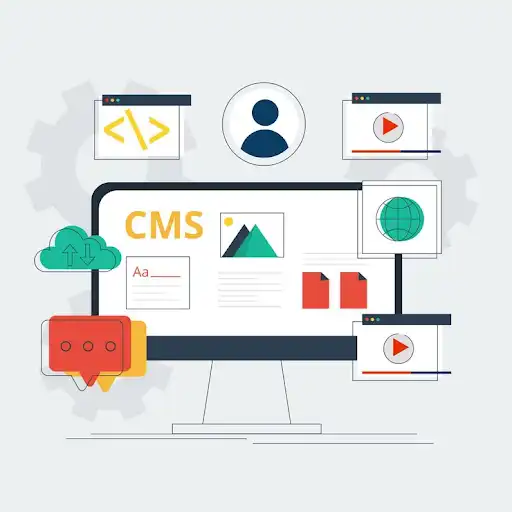
CMS applications enable businesses to create, manage, and publish digital content.
They provide tools for content creation, storage, version control, and publishing, supporting website development and content marketing efforts.
BPM applications help businesses design, automate, and optimize complex workflows and processes.
They enable process modeling, task automation, monitoring, and reporting, improving operational efficiency and reducing errors.
These enterprise applications play a critical role in enhancing business operations, increasing efficiency, and improving decision-making capabilities.
Businesses can choose and customize these applications based on their specific needs and industry requirements.
Suggested Reading:
Get Competitive Advantage with Enterprise App Development
It is important for businesses to carefully weigh these pros and cons before deciding on custom enterprise app development, considering factors such as budget, timeline, security requirements, and long-term business goals.
In conclusion, enterprise app development offers numerous benefits to businesses, including cost-efficiency, streamlined processes, enhanced data security, improved customer experience, and a competitive advantage.
Before opting for enterprise app development, companies should consider factors such as their size and structure, nature of business operations, budget limitations, in-house expertise, and scalability needs.
By following the steps of defining objectives and requirements, conducting thorough research, collaborating with stakeholders, prototyping and iterating, developing and testing the app, deploying and monitoring, and providing continuous support and updates, businesses can successfully develop and deploy enterprise apps to drive growth, efficiency, and innovation.
Custom Development
7 Apr 2026
Tell us what your business actually runs on today, and we will map what it takes to make it one system.