
Custom Development
Alcohol Delivery Market Share and Trends: Size, Growth, & Business Opportunities
7 Apr 2026
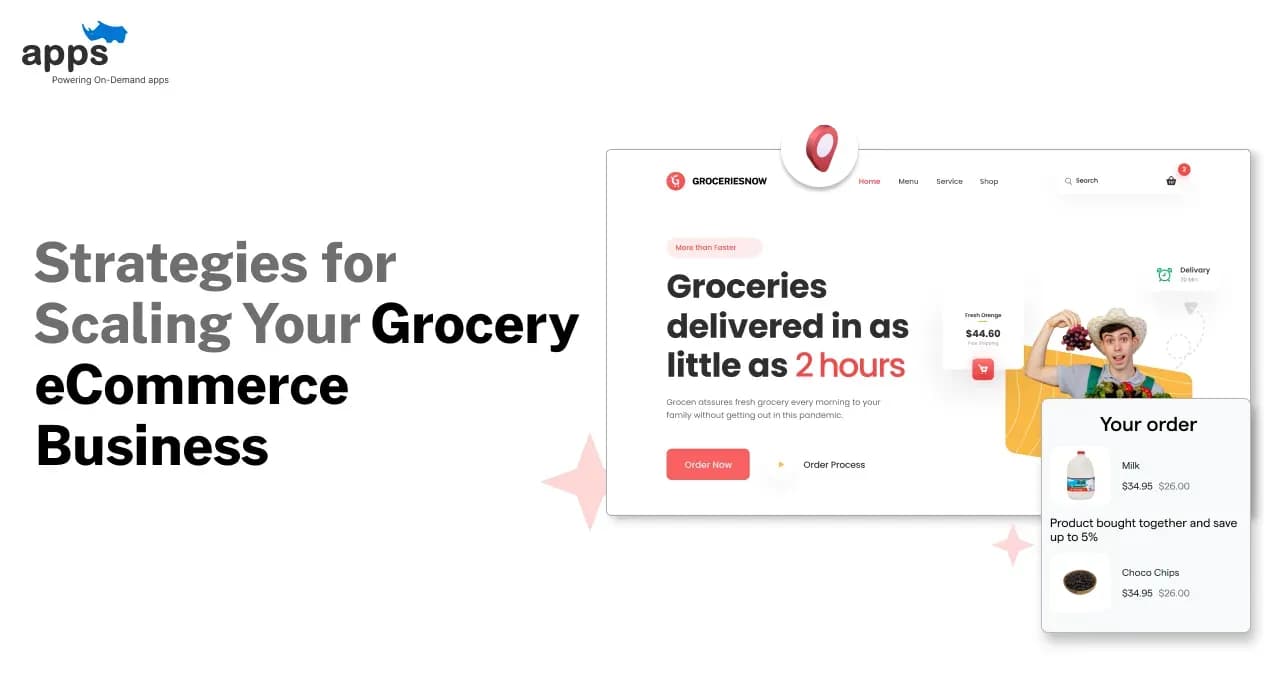
We all love grocery shopping, right? Scrolling through endless items, checking their nutritional values, adding them, and checking out everything is super exciting. However, this excitement is not only limited to buyers; sellers enjoy this process of providing grocery eCommerce services equally well.
With the growing demands for prompt service and delivery, grocery eCommerce store services have opened up the door of opportunities for businesses that are already in the grocery eCommerce market or may be considering starting their own grocery logistics or grocery delivery software soon.
So if you’re one of those sellers who have opened their small door of grocery eCommerce at one of the finest corners of the internet and are thinking about how to attract more customers or someone who is in the planning stage of the store, either way, you need some strategies to scale up your grocery delivery software’s growth properly.
And to help you with this scaling up, we have compiled a few strategies, implementing which you can easily reach thousands of customers and retain them with little to no additional resources.
So don’t wait up and go ahead with this reading and implement these strategies to scale up your grocery eCommerce business in 2026.
Here are some foolproof strategies you should follow and implement in your grocery e-commerce business and scale up your grocery delivery software.
When it comes to scaling a grocery e-commerce business and grocery delivery software, Inventory management is the primary and essential factor. Efficiently managing inventories will ensure that the right products are available at the right time to meet customer demand while minimizing costs and reducing wastage.
One strategy for optimizing inventory levels in your grocery logistics is by implementing demand forecasting techniques. By analyzing historical sales data, market trends, and customer preferences, you can anticipate demand patterns, which will allow you to stock the right quantities of products or grocery logistics in your grocery eCommerce store.
This helps prevent overstocking, which ties up capital and leads to wastage and understocking, resulting in missed sales opportunities and customer dissatisfaction.
Another strategy is implementing a just-in-time inventory management system. JIT allows grocery eCommerce stores to reduce holding costs by receiving inventory only when needed.
By establishing a close relationship with suppliers and utilizing real-time inventory tracking systems, you can ensure a steady supply of products and different grocery logistics without excess inventory in warehouses.
JIT can also improve cash flow as it minimizes the need for large upfront inventory investments.
Implementing effective marketing campaigns in your grocery e-commerce store can help you easily achieve this customer retention goal, which involves attracting new customers while also retaining existing ones.
Utilize digital marketing channels like social media, search engine optimization (SEO), email marketing, and influencer partnerships to reach a wider audience and generate your grocery eCommerce brand awareness.
Targeted advertising campaigns can be created and implemented in your grocery delivery software to reach specific demographics and promote the unique selling points of the grocery eCommerce business, such as the quality of products, competitive prices, or convenience.
Other tactics may include implementing loyalty programs, personalized offers by leveraging purchase history and data, and offering incentives, such as discounts, exclusive offers, or free shipping.
Businesses can cultivate lasting relationships and foster customer loyalty by creating a sense of exclusivity and providing value to loyal customers.
Technology implementation is indispensable for scaling a grocery eCommerce business as these directly impacts and enhances operational efficiency.
One significant technology trend in grocery eCommerce is the use of automation and artificial intelligence (AI). You can implement AI-powered chatbots and virtual assistants to handle customer queries and provide real-time support, improving response times and customer satisfaction.
Automated systems can also assist in order processing, inventory management, and logistics, reducing manual errors and improving efficiency.
Data analytics is another key technology tool that can drive your grocery eCommerce growth. You can gain insights into buying patterns, preferences, and trends by analyzing customer data.
This information can be used to personalize marketing campaigns, make data-driven business decisions, and optimize product offerings to meet customer demand. Data analytics can also help identify opportunities for cross-selling and upselling, improving revenue generation.
Apart from implementing artificial intelligence and data analytics in your grocery delivery software, you can also consider administering a CRM system in your grocery eCommerce store.
A CRM system allows you to access customer data and their purchase history and track interactions. It enables personalized communication, targeted marketing campaigns, and effective customer service, enhancing customer satisfaction and loyalty.
Social media platforms and various digital marketing channels offer a powerful avenue for reaching and engaging with a broader audience for your grocery delivery software easily.
By creating and sharing content across platforms like Facebook, Instagram, and Twitter to showcase products, share valuable information, and interact with customers, you can reach and target thousands or millions of audiences at once.
Social media advertising can also be utilized to target specific demographics and promote the products of your grocery eCommerce to users based on their interests and behavior.
Digital marketing channels, such as search engine optimization (SEO) for improving the website’s ranking, pay-per-click (PPC) advertising for targeting demographics with paid ads, and email marketing for sharing promotional offers directly in their inbox, can be utilized to increase the online visibility of the grocery eCommerce business and drive repeat purchases.
Other than caring about implementing inventory management and ways of customer acquisition, you also need to consider enhancing your customers' shopping experience on your grocery eCommerce website.
People are drawn towards such websites that offer them clear navigation, and concise and assorted menus with categories and sub-categories of items for easier search.
People tend to spend more time in grocery eCommerce stores finding their required items, and if some of them care about nutritional values, then they would like to know about it too.
So a proper placement of products with their detailed descriptions, an easy-to-navigate website, a user-friendly interface, and a color palette might not strain their eyes, and a super-fast loading capability is all you need to have in your grocery eCommerce store.
No need to make anything fancy, just keep it simple and that will take you a long way.
Last-mile delivery services may not help directly with your scaling goal, but they are important to make your customers satisfied and keep them coming back to buy more from your grocery eCommerce store, which will eventually contribute to your scaling goal, as no customer means no scaling needed.
So, implement a proper last-mile delivery service strategy like route optimization to find the most efficient delivery routes, a real-time tracking feature for your customers to track how long will it take their items to be delivered, timing flexibility such as same day, next-day delivery, inventory management integration for checking and updating whether an item is available or not.
These are some of the ways that you can implement in your grocery eCommerce business and enhance the overall shopping experience of your customers, which might lead you to repeat business, positive reviews, and improved profitability and customer loyalty in the long run.
Although we have kept this for the end, that doesn’t mean it is of the least importance. Focusing on providing an exceptional online shopping experience is crucial for the success of a grocery e-commerce business.
Implementing intuitive and user-friendly interfaces is essential for creating a seamless online shopping experience in any grocery eCommerce store.
This includes designing a responsive and visually appealing website or mobile app that is easy to navigate, with clear categorization, search functionality, and a streamlined checkout process to contribute to a positive user experience and encourage repeat visits.
By analyzing purchase history and browsing behavior, you can suggest relevant products to customers, increasing the likelihood of upselling and cross-selling.
Personalized recommendations create a more tailored and engaging shopping journey in grocery eCommerce, ultimately leading to higher customer satisfaction and increased sales.

You can also provide efficient and responsive customer service in your grocery eCommerce app by implementing live chat support, a dedicated customer service hotline, and timely email responses. Efficient customer service fosters trust and confidence in the business.
Additionally, in the app or the website you can create different sections providing engaging content such as recipe ideas or cooking tips, flexible delivery options, secure payment methods, and post-purchase support, leading to higher satisfaction and long-term customer retention.
Suggested Reading: How Delivery Fleet Management Systems Streamline Grocery Business
In conclusion, by embracing technology trends such as automation, AI, data analytics, and mobile technology, you can streamline operations, optimize efficiency, and meet customers' evolving needs to scale up your grocery eCommerce business game.
To widen your reach to a wider audience, provide exceptional customer experiences through user-friendly interfaces and a responsive website, and implement digital marketing strategies, including SEO, PPC advertising, email marketing, and social media platforms to build your grocery eCommerce brand awareness, and drive sales in your grocery logistics.
Data analytics will play a crucial role in these efforts. It will help you understand customer behavior, preferences, and purchase patterns. This understanding will allow you to tailor marketing campaigns and personalize communication for more targeted and improved conversion rates.
Ultimately, to establish long-term customer relationships, foster them by strategically implementing the above-discussed tactics. This approach will enable you to provide a seamless shopping and after-sales experience and scale up your grocery eCommerce shop.
Suggested Reading: Strategies for Scaling Your Cannabis eCommerce Business [2024]
Custom Development
7 Apr 2026
Tell us what your business actually runs on today, and we will map what it takes to make it one system.