


Custom Development
Alcohol Delivery Market Share and Trends: Size, Growth, & Business Opportunities
7 Apr 2026
The UAE telemedicine market is no longer a pilot initiative. It is one of the fastest-expanding segments within the region’s healthcare economy.
Backed by national digital transformation programs, AI integration, and strong regulatory frameworks like the Dubai Health Strategy 2026, the UAE is rapidly positioning itself as a digital health hub in the Middle East.
Within the broader digital health market in the UAE, which is expected to grow exponentially, telemedicine is driving measurable structural change.
This blog examines market size, growth forecasts, industry trends, adoption challenges, competitive landscape, case studies, and the future outlook of telehealth in the UAE.
Growth momentum remains strong. The telemedicine market in the UAE is projected to reach USD 1.25 billion by 2029 and expand further to USD 2.23 billion by 2031, advancing at a steady CAGR of around 19 percent.
Within the broader digital health market UAE, expected to cross USD 1.17 billion by 2026, telemedicine is one of the fastest scaling segments.
Regulatory modernization, AI integration, and nationwide 5G infrastructure continue to accelerate deployment. Across the MENA region, the UAE remains ahead in reimbursement integration, regulatory clarity, and system-wide virtual care implementation.
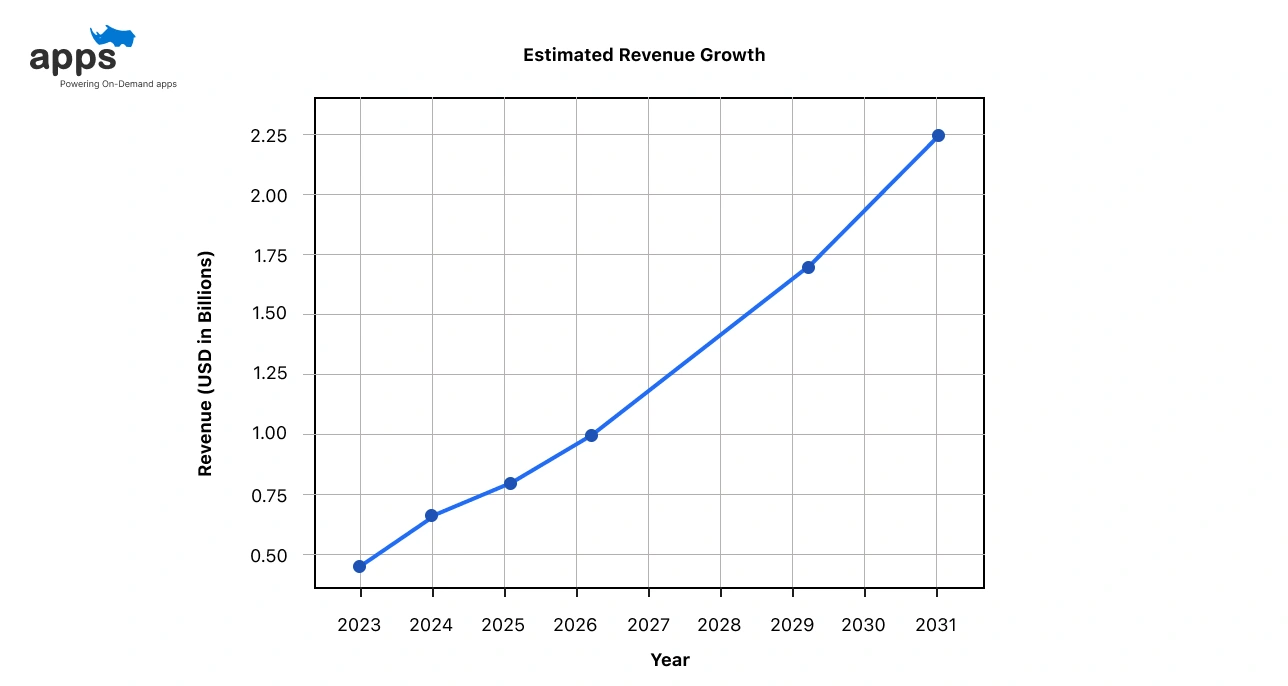
The table below presents year-wise revenue estimates and the growth trajectory of the UAE telemedicine market.
*Figures and 2024–2031 projections are based on the latest 2026 market research; for informational purposes only and subject to regulatory changes.
This trajectory reinforces a strong UAE telemedicine market growth forecast, positioning telehealth as a structural pillar of the country’s long-term healthcare expansion strategy.
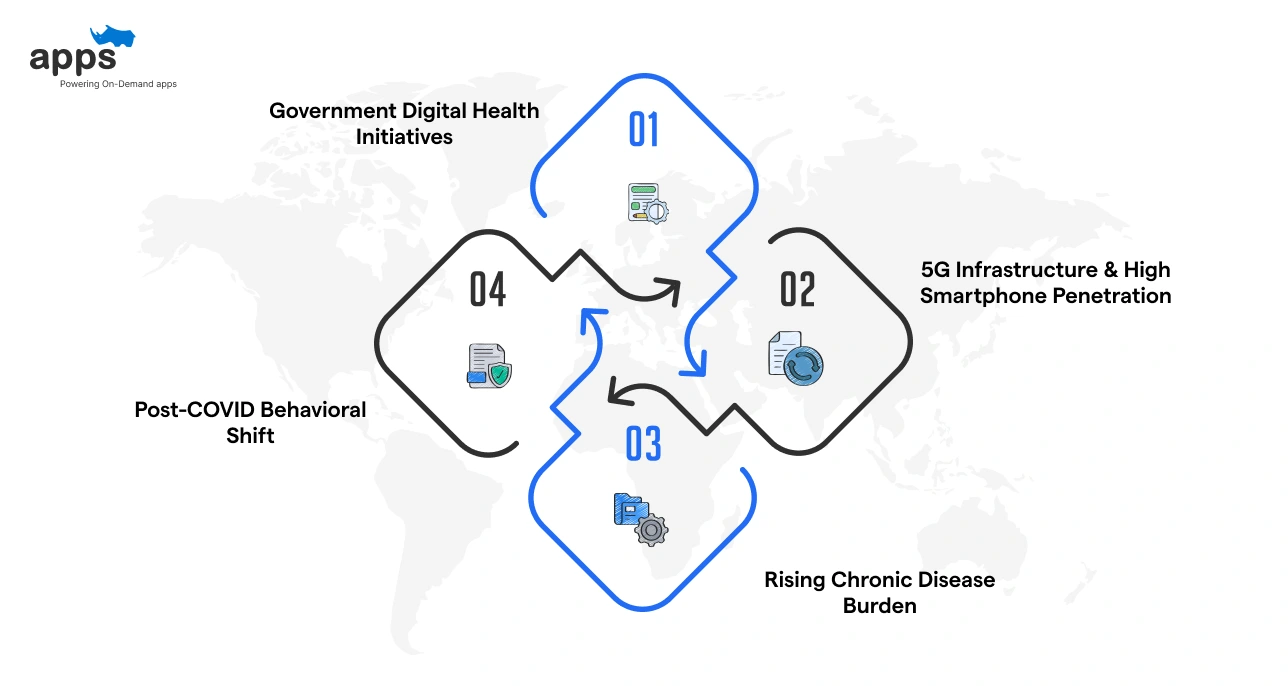
The expansion of the UAE telemedicine market is driven by structural healthcare reforms, digital maturity, and sustained patient demand. Key growth drivers include:
These initiatives continue to shape major telemedicine industry trends in the UAE.
Together, these forces are not just accelerating adoption; they are redefining how healthcare is accessed, delivered, and scaled across the UAE.
The next phase of the UAE telemedicine market is no longer about pilots. It is about scale, integration, and long-term system transformation.
As digital health strategies mature and AI adoption accelerates, the UAE telehealth industry outlook through 2031 signals sustained structural expansion across providers, insurers, and enterprise healthcare programs.
Here’s a quick snapshot of where the market is heading:
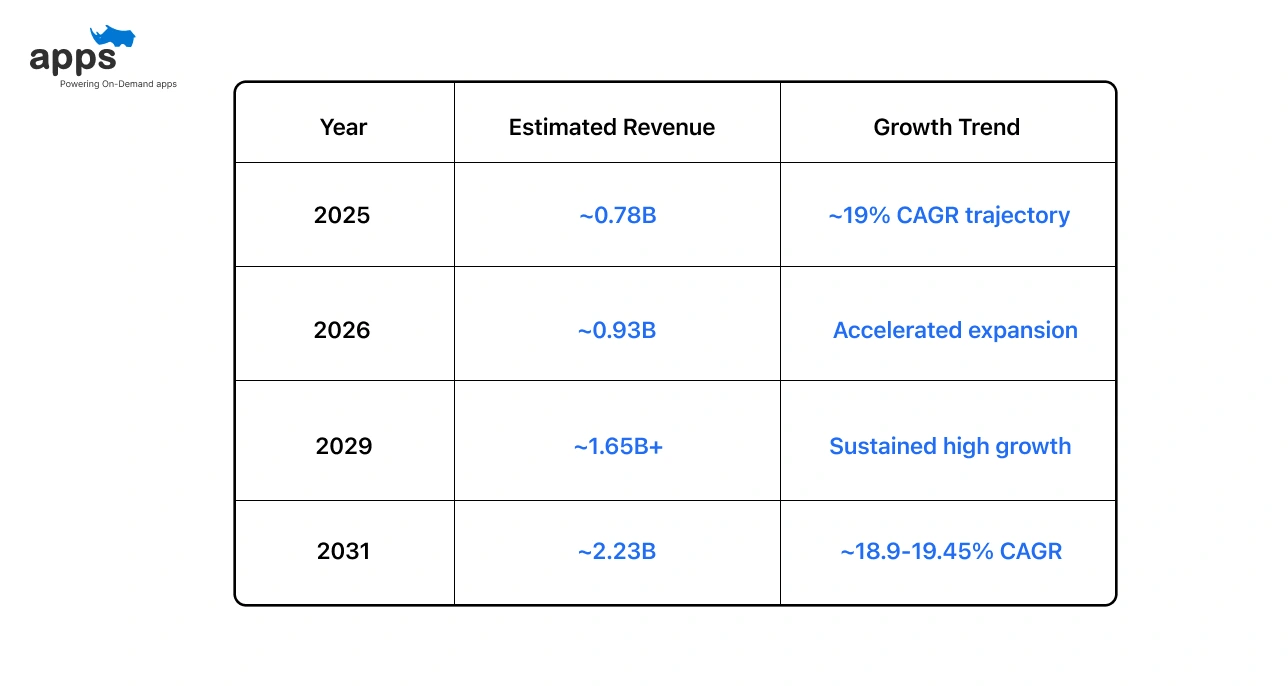
| Year | Estimated Revenue (USD) | Growth Trend |
| 2025 | ~0.78B | ~19% CAGR trajectory |
| 2026 | ~0.93B | Accelerated expansion |
| 2029 | ~1.65B+ | Sustained high growth |
| 2031 | ~2.23B | ~18.9–19.45% CAGR |
*Figures and 2024–2031 projections are based on the latest 2026 market research; for informational purposes only and subject to regulatory changes.
Beyond the numbers, several forces are shaping the outlook for the UAE telemedicine market.
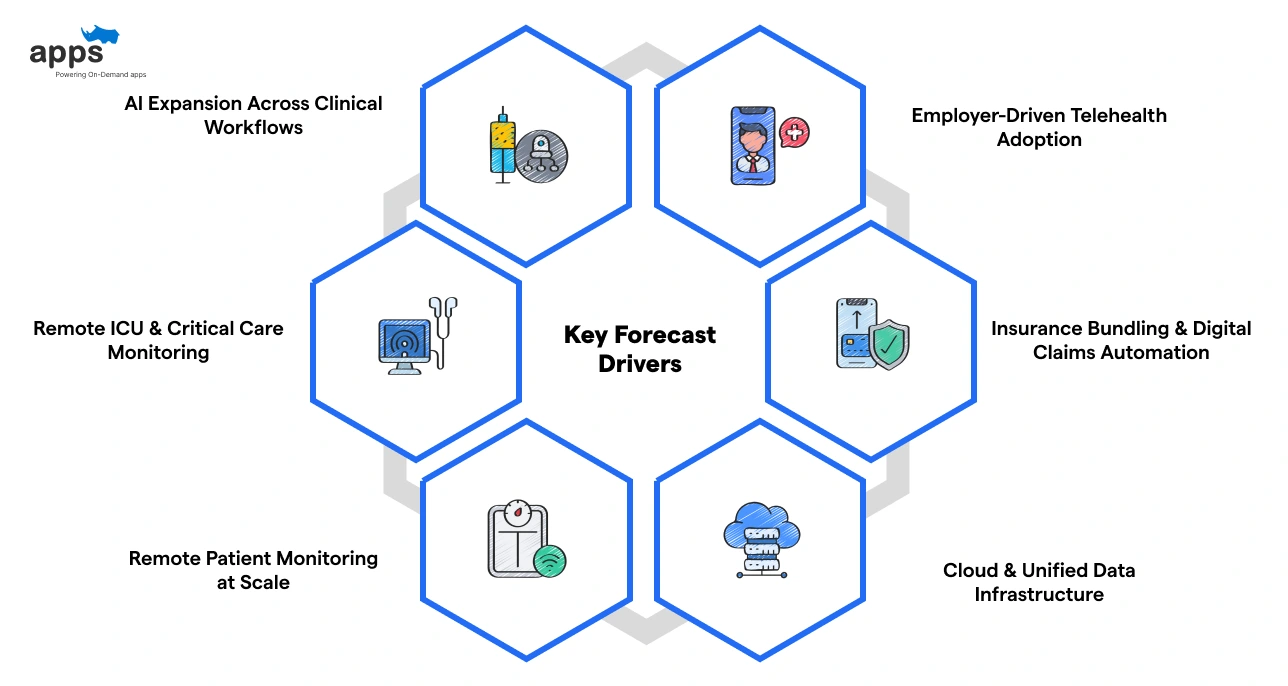
Here’s a breakdown of the key forecast drivers, showcasing the potential of the UAE telemedicine market:
From our perspective, these shifts signal something bigger than growth.
It is becoming foundational to the planning, delivery, and financing of healthcare across the UAE.
Despite strong growth, several structural and regulatory barriers continue shaping telemedicine platform adoption challenges in the UAE. These include:
Multiple authorities, including DHA, DOH, and MOHAP, enforce varying licensing frameworks, slowing cross-platform approvals.
Solution: Unified digital licensing reforms and clearer national telehealth standards are reducing fragmentation.
Physicians licensed in one emirate may face limitations on practicing virtually across other emirates, affecting scalability.
Solution: Expanded reciprocal licensing frameworks and federal alignment are gradually enabling broader coverage.
Integrating telemedicine platforms with systems like NABIDH and Malaffi remains technically complex for private providers.
Solution: API-driven architecture and standardized health data exchange protocols are improving interoperability.
Strict healthcare data localization laws require secure in-country hosting, increasing infrastructure costs.
Solution: Cloud providers with UAE-based data centers and compliance-aligned frameworks are mitigating risk.
Elderly and rural populations face usability challenges, limiting the adoption of virtual healthcare in the UAE.
Solution: Simplified interfaces, bilingual platforms, and patient onboarding programs are improving accessibility.
While insurance penetration is high, not all policies fully reimburse teleconsultations or remote monitoring.
Solution: Increasing insurer bundling of telehealth benefits is strengthening the long-term UAE telemedicine market outlook.
Addressing these concerns and challenges in the UAE healthcare system will determine how efficiently the UAE telemedicine market scales in the next phase of growth.
The ecosystem of telemedicine companies in UAE is structured across public infrastructure, private operators, and specialized startups.
| Segment | Key Players | Core Focus | Market Position |
| Government Platforms | SEHA, DHA | Public telehealth networks, EHR integration, insurance alignment | Infrastructure leaders driving national scale and regulatory standardization |
| Private Providers | HealthHub, Health at Hand | On-demand consultations, corporate health plans | Service-driven models focused on speed, convenience, and employer adoption |
| Telemedicine Startups UAE | Nabta, Cura, O7 Therapy | Niche care, such as women’s health and mental health | Innovation-led players driving specialization and AI-enabled differentiation |
This layered ecosystem strengthens the overall UAE telemedicine market outlook by combining policy stability, operational scale, and continuous innovation.
The real proof of the UAE telemedicine market lies in execution, not projections. These implementations show how virtual care moved from temporary fixes to permanent healthcare infrastructure.
Let’s walk through three adoption case studies that demonstrate scale, compliance alignment, and measurable system-level impact.
This case reflects how regulatory leadership transformed telemedicine from a crisis response into a standardized infrastructure.
| Category | Details |
| Challenge | Overcrowded clinics and limited accessibility during peak demand cycles |
| Implementation Strategy | Institutionalized the 24/7 “Doctor for Every Citizen” initiative and mandated NABIDH integration across public and private providers |
| Measurable Results (2026) | 9.47M patient records unified across 1,300+ facilities. 81% of healthcare professionals connected to the digital ecosystem. 450,000+ telehealth consultations in latest cycle. 92% patient satisfaction via DHA smart app. |
| Market Impact | Under the Dubai Health Strategy 2026, telemedicine shifted from emergency use to a regulated outpatient standard. |
This case study of Tasame shows how specialized platforms can scale securely within a regulated digital health ecosystem.
Category | Details |
Challenge | Scaling specialized mental health services while maintaining secure onboarding and data privacy compliance |
Implementation Strategy | Built a scalable digital platform with automated expert verification and localized payment systems aligned with data residency laws |
Measurable Results (2026) | 120,000+ completed sessions. 65,000+ monthly active users. 60% mobile session share reflecting 90%+ smartphone penetration. |
Market Impact | Demonstrates how niche B2C platforms integrate into the regional digital health ecosystem while sustaining growth |
Here we see how telehealth was deployed at a population scale to manage chronic care and mass screening.
Category | Details |
Challenge | Managing chronic care remotely and streamlining mass screenings for elderly and high-risk populations. |
Implementation Strategy | Deployment of Malaffi Health Exchange and integration of the Teledoctory service within SEHA’s mobile infrastructure |
Measurable Results (2026) | 1.5M+ remote screenings conducted. 70% of chronic patients enrolled in remote monitoring. 50% reduction in specialist wait times through virtual scheduling. |
Market Impact | Validated the scalability of the “Virtual Hospital” model under the UAE 2031 healthcare vision |
A clear pattern emerges across these case studies. The UAE telemedicine market is no longer centered solely on video consultations.
It is evolving toward integrated ecosystems combining EHR connectivity, AI triage, remote monitoring, pharmacy fulfillment, and insurance alignment.
The competitive advantage is shifting from access enablement to full orchestration of the patient lifecycle.
As the UAE telemedicine market matures, the differentiator is no longer access, but execution quality.
Many companies in the UAE capitalize on this shift by partnering with custom telemedicine app developers like AppsRhino that work with healthcare organizations to build compliant, integration-ready platforms aligned with the region’s evolving digital health ecosystem.
The digital health market UAE is expanding steadily, with telemedicine emerging as one of its fastest-growing segments over the coming years.
Let’s break down where investment and development momentum are heading next.
The following table outlines estimated cost benchmarks for building compliant telemedicine platforms in the UAE.
| Platform Type | Estimated Cost (USD) |
| MVP Platform (Core Teleconsultation Features) | 45K – 90K |
| Standard Platform (EMR & Insurance Integration) | 110K – 220K |
| Enterprise AI-First Platform (RPM & Predictive Analytics) | 250K – 500K+ |
| Annual Compliance & Hosting Costs | 10K – 30K |
It seems like the capital in 2026 is not chasing trends. It is a scalable, compliance-aligned infrastructure that strengthens the long-term UAE telemedicine market outlook.
As the UAE telemedicine market evolves from rapid expansion to structured maturity, leadership decisions are becoming more strategic and long-term in nature.
Entering or scaling within the telemedicine market in the UAE now requires deeper evaluation beyond feature checklists.
Healthcare executives and digital transformation leaders typically assess:
1. Regulatory Longevity: Is the platform designed to adapt to evolving DHA, DOH, and MOHAP policies over the next 5–7 years?
2. Data Sovereignty Architecture: Does the infrastructure ensure UAE-based hosting, sovereign cloud alignment, and audit traceability across all patient interactions?
3. Clinical Workflow Integration: Can virtual care seamlessly embed into existing outpatient, pharmacy, lab, and referral workflows without increasing clinician burden?
4. Reimbursement & Payer Compatibility: Is the model aligned with insurance bundling trends shaping the UAE telehealth industry outlook?
5. Population Health Intelligence: Does the system support predictive analytics and risk stratification using unified exchanges like NABIDH and Malaffi?
6. Ecosystem Interoperability: Can it integrate with national digital health initiatives and enterprise HR systems for employer-driven telehealth expansion?
Within this environment, AppsRhino positions itself as an infrastructure enabler, focusing on compliance-aligned system design, interoperability readiness, and AI-adaptable frameworks aligned with the long-term direction of the digital health market UAE.
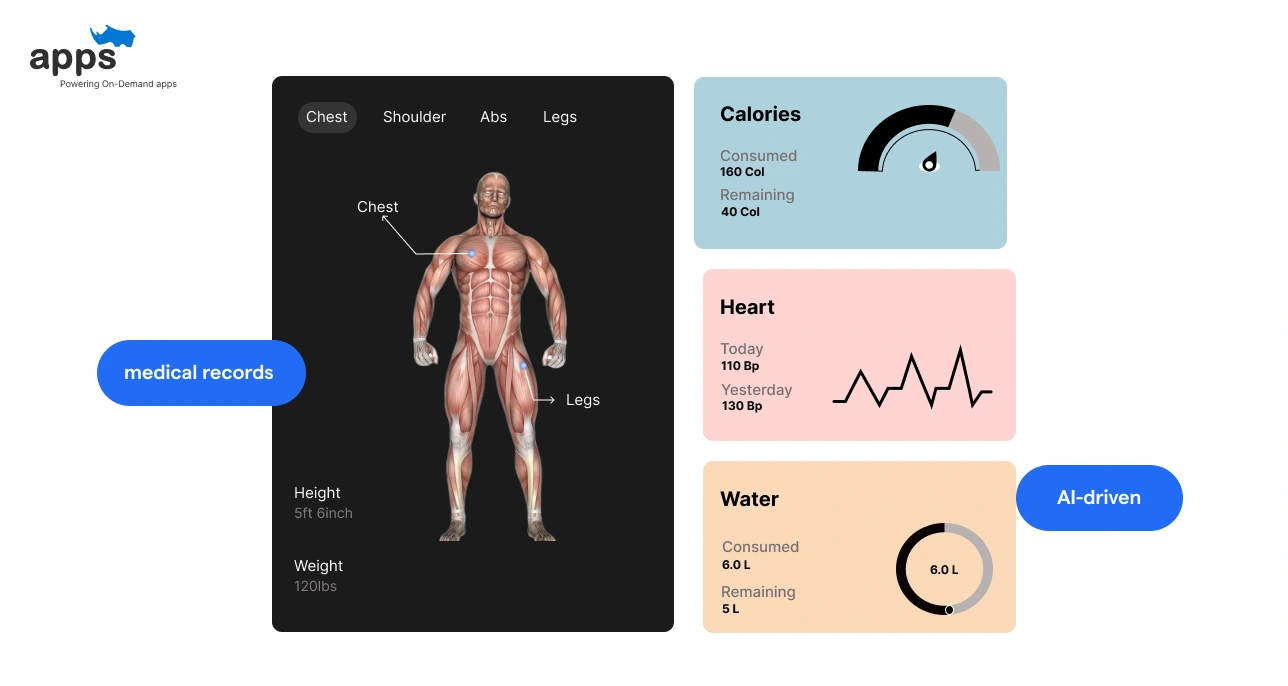
The future of the UAE telemedicine market is moving beyond virtual access toward intelligence-driven care ecosystems.
The evolving UAE telemedicine market outlook highlights a shift to AI-enabled triage, automated clinical decision support, and smarter patient routing across both public and private networks.
Remote diagnostics supported by connected devices and nationwide 5G coverage are strengthening chronic disease supervision outside hospital walls.
Genomics-based telehealth pilots and precision screening initiatives are also gaining traction within the broader digital health market UAE.
Looking ahead, predictive population health analytics integrated with NABIDH and Malaffi will increasingly influence long-term care planning and sustained virtual healthcare adoption in UAE.
Custom Development
7 Apr 2026
Tell us what your business actually runs on today, and we will map what it takes to make it one system.