
Custom Development
Alcohol Delivery Market Share and Trends: Size, Growth, & Business Opportunities
7 Apr 2026
Food delivery is no longer a luxury. It’s routine.
Millions of people now order meals, groceries, and everyday essentials through their phones instead of standing in lines or driving to stores. On-demand delivery apps have reshaped how we eat and shop. One of the early pioneers in this shift was Postmates.
The Postmates app connects customers with restaurants, grocery stores, and local shops in minutes. Whether it’s late-night snacks, groceries, or everyday essentials, Postmates brings them straight to your door.
But how does it really work? In this guide, we’ll break down what Postmates is, how the app works, and everything you need to know about ordering, delivery, and fees.
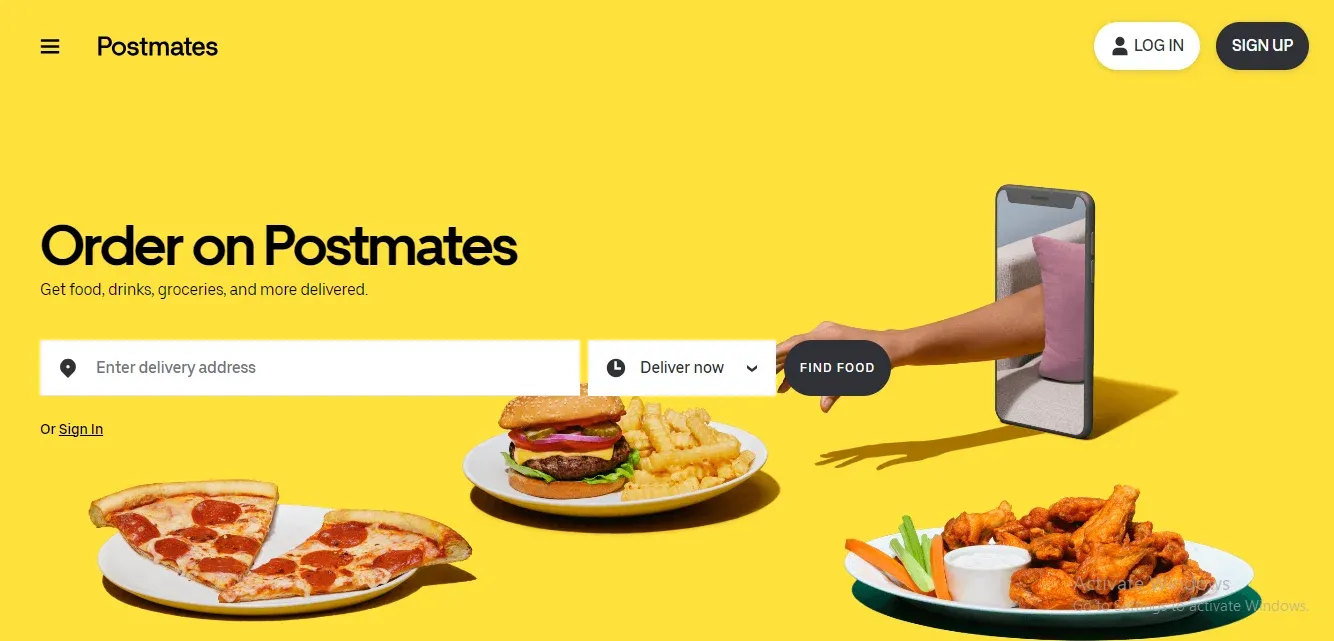
Postmates is an on-demand food and goods delivery service that first opened its doors in 2011.
The on-demand marketplace allows users to order from nearby restaurants and stores through a single platform, delivering meals, groceries, and everyday essentials directly to your door.
As a prominent American Corporation, Postmates has grown its presence nationwide, becoming so well-known that “Postmates it” is now commonly used to describe ordering food on demand.
Postmates connects customers, local merchants, and delivery partners to create a fast and convenient delivery experience.
In fact, prior to its acquisition by Uber Eats, the delivery giant had approx. 8% of the US food delivery market, reflecting its strong presence in major cities. (Source: Statista)
Using the Postmates app, you can order meals, groceries, or essentials and have them delivered quickly, without leaving home.
The process usually works like this:
This simple flow shows how Postmates makes ordering fast and hassle-free, no matter what you need.
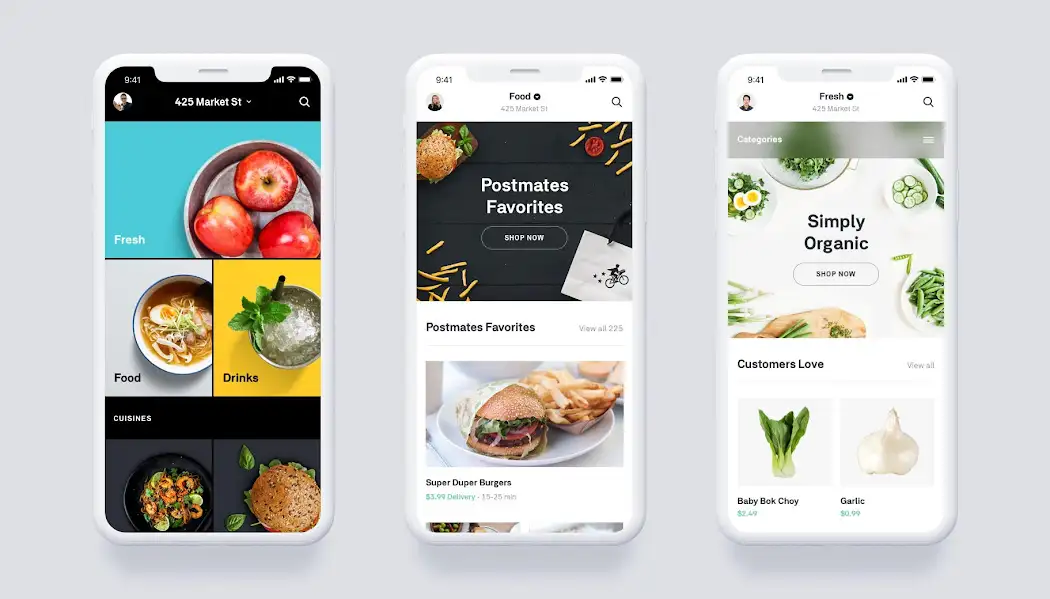
From choosing what to eat to getting it in your hands, every decision you make can be seamless. Users can choose from:
Postmates food delivery company keeps delivery simple with features designed for speed, flexibility, and convenience.
Here are the app’s core features:
Thus, the Postmates app makes ordering simple and convenient, no matter what you need.
If you're planning to build a similar on-demand delivery platform, this model offers a clear blueprint.
Many businesses team up with custom app development platforms like AppsRhino to design and develop tailored food and grocery delivery apps, adjusted to their market, scale, and growth goals.
At this stage, it’s worth looking at where the mega on-demand brand stands today and what it offers customers in 2026.
Postmates has evolved over the years, solidifying its place as a go-to platform for quick, reliable, and diverse local delivery.
As of 2026, the Postmates app remains available for download on iOS and Android.
While it looks and feels like the classic service, it now runs entirely on the Uber Eats platform.
This means when you order through Postmates, you are accessing the same massive network of drivers and merchants found on Uber Eats.
You can still find the Postmates app in major app stores. It serves as a dedicated portal for fans of the original brand.
However, since the systems are linked, the restaurants and stores you see are identical to those in the Uber Eats app.
The old Postmates Unlimited program has fully moved to Uber One.
If you were an Unlimited subscriber, your account likely transitioned automatically.
Here’s a quick breakdown of what changed:
You can use these perks across three apps: Postmates, Uber Eats, and the Uber rideshare app.
This unified membership gives users more value, broader access, and consistent savings.
Postmates operates as a three-sided delivery marketplace.
It brings together customers, merchants, and delivery partners through one coordinated system.
The app handles ordering, payments, dispatch, and tracking in real time.
Each participant plays a defined role, which keeps the process fast and structured.
Here’s how a typical Postmates order moves from checkout to delivery:
The automated dispatch system reduces wait times by assigning drivers based on proximity and availability.
Couriers today are part of the broader Uber fleet, using the Uber Driver app to fulfill orders placed on both Postmates and Uber Eats.
Delivery partners work as independent contractors. They control their schedules and accept orders through the app.
Earnings include delivery payouts and customer tips.
Merchants join through a digital onboarding process, often managed via the Uber Eats for Merchants portal.
Postmates charges a commission per order, ranging from 15% to 30% depending on the selected partnership tier.
In return, businesses gain:
This structured model keeps customers, drivers, and merchants connected in one efficient delivery network.
Postmates links three distinct groups to create a smooth delivery loop.
By using Uber’s shared technology, the platform balances supply and demand in real time.
The ecosystem relies on advanced logistics to sync these groups. When a customer places an order, the app identifies the best store.
It then matches the request with the closest available courier. This process ensures that food stays hot and deliveries arrive on time.
Likewise, the Postmates revenue model is built on three primary income streams:
Together, these streams allow Postmates to monetize both sides of the marketplace while maintaining scalable growth and offering rewarding Postmates deals.
The Postmates app is built for speed and control.
You can browse, compare prices, track drivers, and manage orders in one place. Here’s how it works in practice.
Download the app from the App Store (iOS) or Google Play (Android).
If you already have an Uber or Uber Eats account, you can sign in with those credentials immediately to sync your saved addresses and payments.
To get started:
The app uses your location to show nearby merchants and estimated delivery times.
You can choose delivery or pickup before ordering. Pickup avoids delivery fees.
To place an order:
Estimated times adjust based on traffic, distance, and driver availability.
Once confirmed, you can monitor the full process:
You stay informed at every step, from preparation to doorstep delivery.
Postmates offers more than just takeout. You can order fresh meals or stock your pantry using the same app.
Both Postmates food delivery and Postmates grocery delivery operate on Uber’s integrated delivery infrastructure in most U.S. markets, helping ensure fast and reliable drop-offs.
Here is how the two options compare:
Whether you need a hot dinner or a gallon of milk, the Postmates app provides an effortless experience.
It remains a versatile tool for managing your household needs without leaving your home.
Postmates operates on three core revenue streams: customer fees, merchant commissions, and subscription income.
Customers pay a delivery fee, which varies based on distance, location, and real-time demand. During busy hours, dynamic pricing may apply.
A service fee is charged as a percentage of the order subtotal. Some smaller orders may include a small cart fee if they don’t meet the minimum value.
Tips are optional and go directly to the courier.
Restaurants and retail partners pay a commission on every order, generally between 15% and 30%. Higher commission tiers may offer better in-app visibility.
Merchants can also pay for sponsored listings and promotions to appear higher in search results and curated categories.
After the acquisition of Postmates by Uber, Postmates Unlimited transitioned into Uber One.
Uber One generates recurring monthly revenue while offering members $0 delivery fees on eligible orders above a minimum threshold.
This model improves retention, increases order frequency, and creates predictable income for the platform.
For businesses entering the on-demand space, getting the pricing and commission structure right can determine long-term success. Teams like AppsRhino work with brands to build delivery apps that balance user affordability with sustainable revenue.
Postmates operates in a competitive on-demand delivery market.
To understand its position, it helps to compare it with its primary contemporaries, DoorDash and Uber Eats across coverage, grocery access, pricing, and membership benefits.
*US market share data sourced from Statista
Postmates’ identity thus centers on urban, multi-category convenience, strengthened by Uber’s logistics network.
Postmates has played a major role in shaping modern on-demand delivery.
What began as a food delivery app has expanded into groceries, retail items, and everyday essentials, all within a single platform.
The Postmates app makes ordering simple. You browse, pay, track, and receive your items with just a few taps. Fees depend on distance and demand, and membership options help frequent users save on delivery costs.
Merchants gain access to more customers, and couriers benefit from flexible earning opportunities.
Whether you need a quick meal or weekly groceries, the online ordering and delivery service offers a practical and convenient way to get what you need, when you need it.
Custom Development
7 Apr 2026
Tell us what your business actually runs on today, and we will map what it takes to make it one system.