

Custom Development
Alcohol Delivery Market Share and Trends: Size, Growth, & Business Opportunities
7 Apr 2026
In today’s education landscape, a robust student enrollment management system is essential for streamlining applications, registrations, and record-keeping.
Schools and universities rely on student database management systems and student information management systems to maintain student records and improve the admissions process.
In fact, global EdTech spending is booming: total educational technology investment is projected to reach about $404 billion by 2025. (Source: HolonIQ)
This growth means more powerful tools are available to automate admissions tasks, ensure data accuracy, and enhance the student experience.
As you evaluate options, look for systems that integrate with your existing SIS, support reporting, and offer self-service portals.
In this guide, we’ll explain key features to consider and then compare five leading solutions – Slate by Technolutions, Ellucian Banner, PowerSchool Enrollment, SchoolMint Enroll, and Element451 – to help you choose the best student management systems for your institution.
Before comparing products, consider what features your institution needs. A strong student information management system should support your enrollment goals and offer flexibility. Key features include the following.
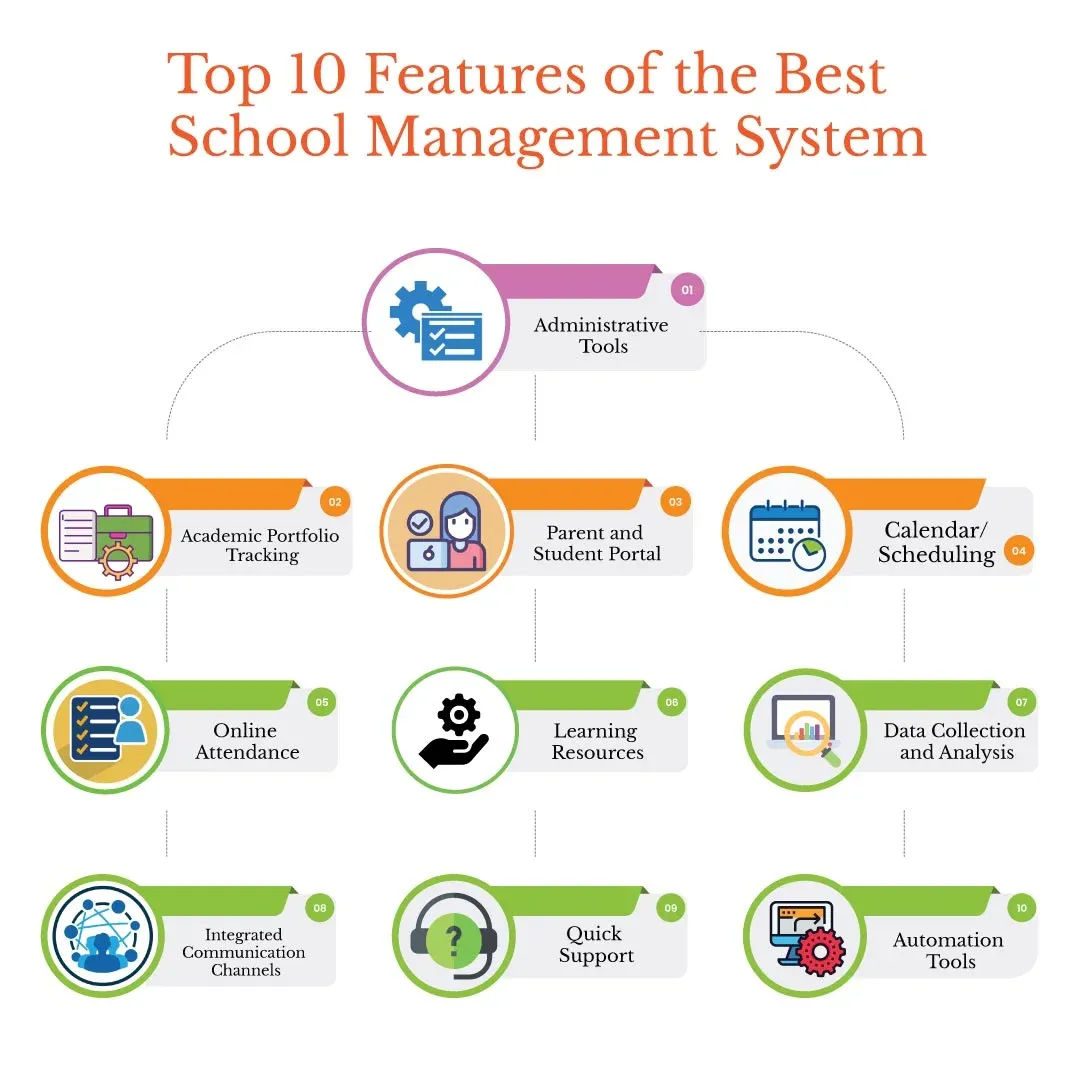
By focusing on these capabilities, a proper student database management system will streamline enrollment, improve accuracy, and save administrative effort. The right solution should also scale with your school’s needs and allow customization without excessive cost.
Finding the right student enrollment management system can be overwhelming. To help, we’ve compared the top five platforms side-by-side. Below is a quick-reference table summarizing their features, pricing models, and best-use scenarios to guide your decision with clarity and confidence.
CTA: Start Simplifying Your School’s Enrollment Today
Button text: Get Started Now
Choosing between different student enrollment management systems?
This comparison table breaks down the top five solutions—Slate, Ellucian Banner, PowerSchool, SchoolMint, and Element451—so you can quickly evaluate features, pricing, and best-fit scenarios.
Use this snapshot to identify which system aligns best with your institution’s needs and enrollment goals.
System | Pricing | Key Features | Ideal For |
| Slate by Technolutions | Custom flat-rate (starts ~$30K/year) | All-in-one higher-ed CRM: admissions, outreach, reporting, donor management | Mid-large colleges and universities |
| Ellucian Banner | Custom (ERP licensing by scale) | Full SIS/ERP: registration, curriculum, finance, HR, robust analytics | Large universities and multi-campus systems |
| PowerSchool Enrollment | Per-district licenses | K-12 online registration: family portal, forms, data validation | K-12 schools and districts (online enrollment) |
| SchoolMint Enroll | Per-school/district licenses | K-12 enrollment: custom forms, lotteries, parent communications | K-12 schools needing easy online enrollment |
| Element451 | Custom (SaaS CRM licensing) | Higher-ed CRM: campaign management, automation bots, analytics | Colleges seeking modern admissions CRM |
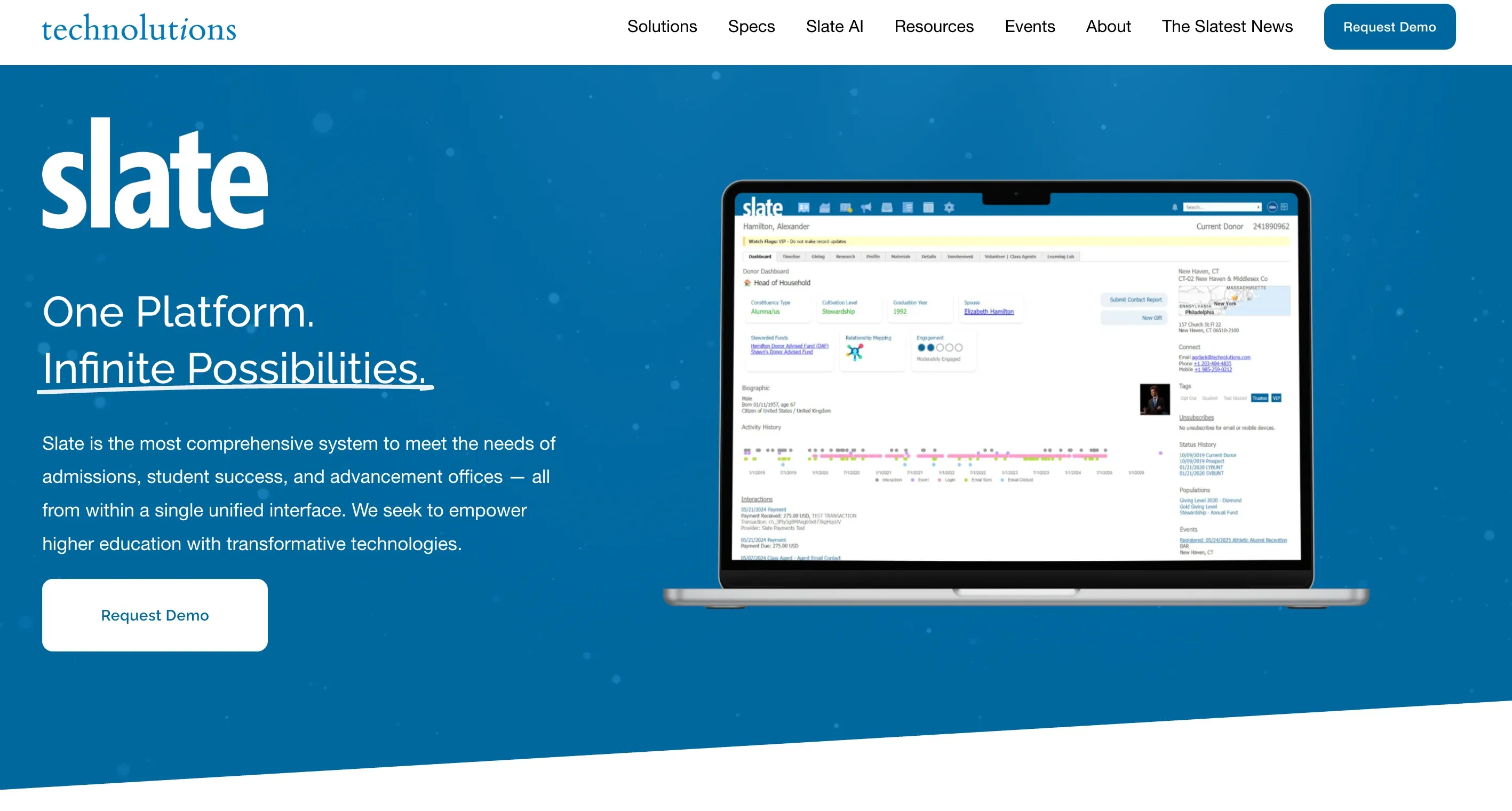
Slate by Technolutions is a comprehensive admissions CRM built for higher education. It’s often described as a student enrollment management platform because it manages the entire admissions funnel.
Key Features:
Pros:
Cons:
Ideal For: Mid-to-large universities with complex enrollment processes.
Pricing Model: Flat annual fee; typically starts around $30K/year.
Over 2,000 colleges and universities trust Slate for admissions, student success, and advancement operations.
Slate lets schools create fully customized application processes and communication campaigns.
For example, it supports online applications, reading configurations, campus event management, and multi-channel outreach. The platform offers a powerful report writer and dashboards, so admissions teams can analyze funnel metrics without exporting data.
Slate is licensed on a flat-rate basis. According to Technolutions, contracts “begin at $30K annually, with the majority of customers falling in the $50K per year range”. That fee covers unlimited users and all features – a predictable pricing model for larger schools.
Because of its depth, Slate is best for mid-size and large universities that have dedicated IT/admin resources. It can replace multiple point solutions, handling everything from applicant tracking to donor interactions in one system.
The tradeoff is Slate’s complexity and cost: smaller colleges or K-12 schools may find it more than they need. In summary, Slate excels as a robust student enrollment management system for higher-ed institutions that want a highly configurable, all-in-one platform.
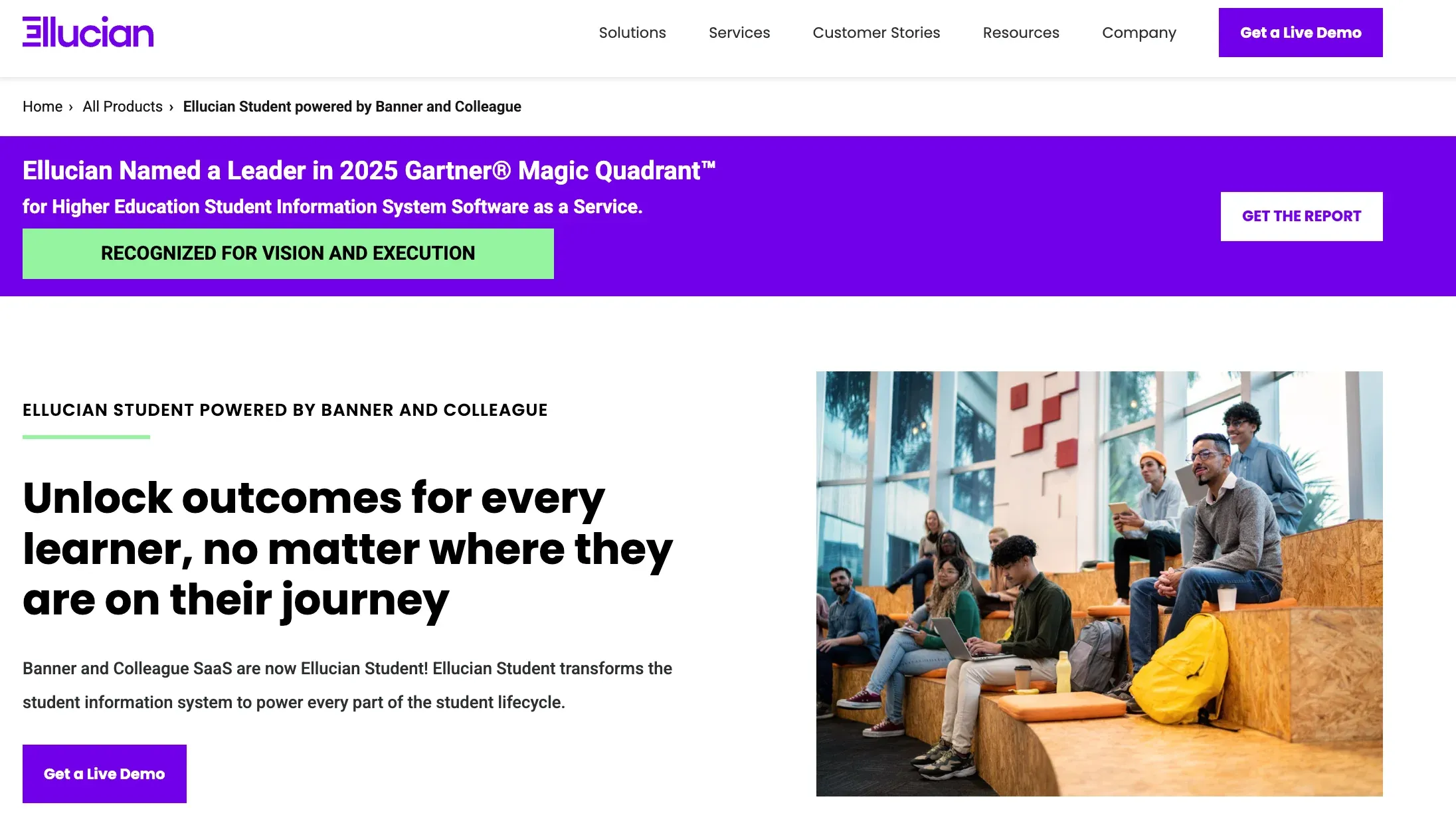
Ellucian Banner is a full-fledged ERP and student information management system designed for large colleges and universities.
Banner is not just enrollment software – it handles the entire student lifecycle (registration, advising, financial aid, etc.) along with finance and HR.
Key Features
Pros
Cons
Ideal For: Universities and multi-campus institutions with large enrollments.
Pricing Model: Custom pricing based on modules and institution size.
In fact, 1,400 institutions use Ellucian Banner worldwide, making it one of the most widely deployed systems for student data. The Banner Student module is focused on “guid(ing) the student experience” by managing critical student information and campus services.
Banner’s strength is its breadth: it provides powerful course catalog, curriculum, scheduling, and degree audit functionality. A Banner implementation can connect admissions to registration to graduation within one system.
It also has advanced reporting and a shared technology platform for integration. However, this richness means a complex rollout. Pricing is typically custom/contracted, and deployments can be lengthy.
Banner is ideal for large universities or state systems that need a single integrated SIS/ERP rather than a standalone enrollment app.
In short, Ellucian Banner serves as the institutional student database management system, offering a one-stop platform to manage admissions, enrollment, grades, and administration.
Suggested Reading:
Student Database vs Student Information Management System
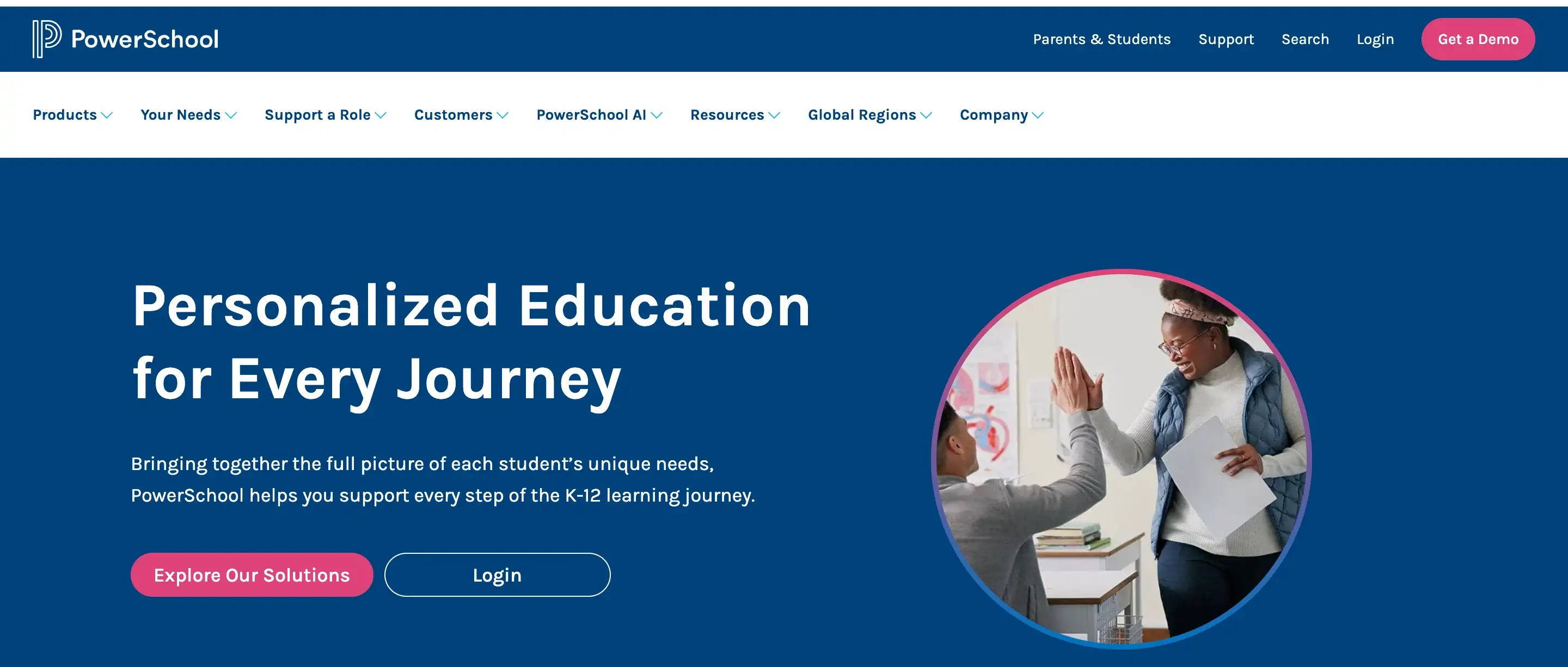
PowerSchool Enrollment is part of the PowerSchool K-12 ecosystem. It’s designed specifically for school districts to move student registration and enrollment entirely online.
Key Features:
Pros:
Cons:
Ideal For: Public school districts and charter schools handling large volumes.
Pricing Model: Per district, based on student count and modules.
According to PowerSchool, the company “supports over 45 million students globally and more than 13,000 customers”, including 90 of the top 100 U.S. districts. This scale means PowerSchool Enrollment is battle-tested in large school settings.
In practice, this means families can complete new and returning student registration through a secure portal at any time. The system handles data validation, household billing, and document uploads.
Administrators gain tools to manage submissions and run reports on family progress. PowerSchool Enrollment is typically sold by district license; pricing varies by district size and chosen modules.
Overall, this solution is best for K-12 schools and districts managing large volumes of applications. It integrates seamlessly with PowerSchool’s core SIS or other student information systems, ensuring student records are up-to-date.
Its user interface is tailored for families (multi-lingual support, mobile access) and for staff who need standardized workflows. In summary, PowerSchool Enrollment is a mature students management system for K-12 that excels in standardizing and automating enrollment at scale.
Suggested Reading:
What Is a Student Management System? A Complete Guide for 2025
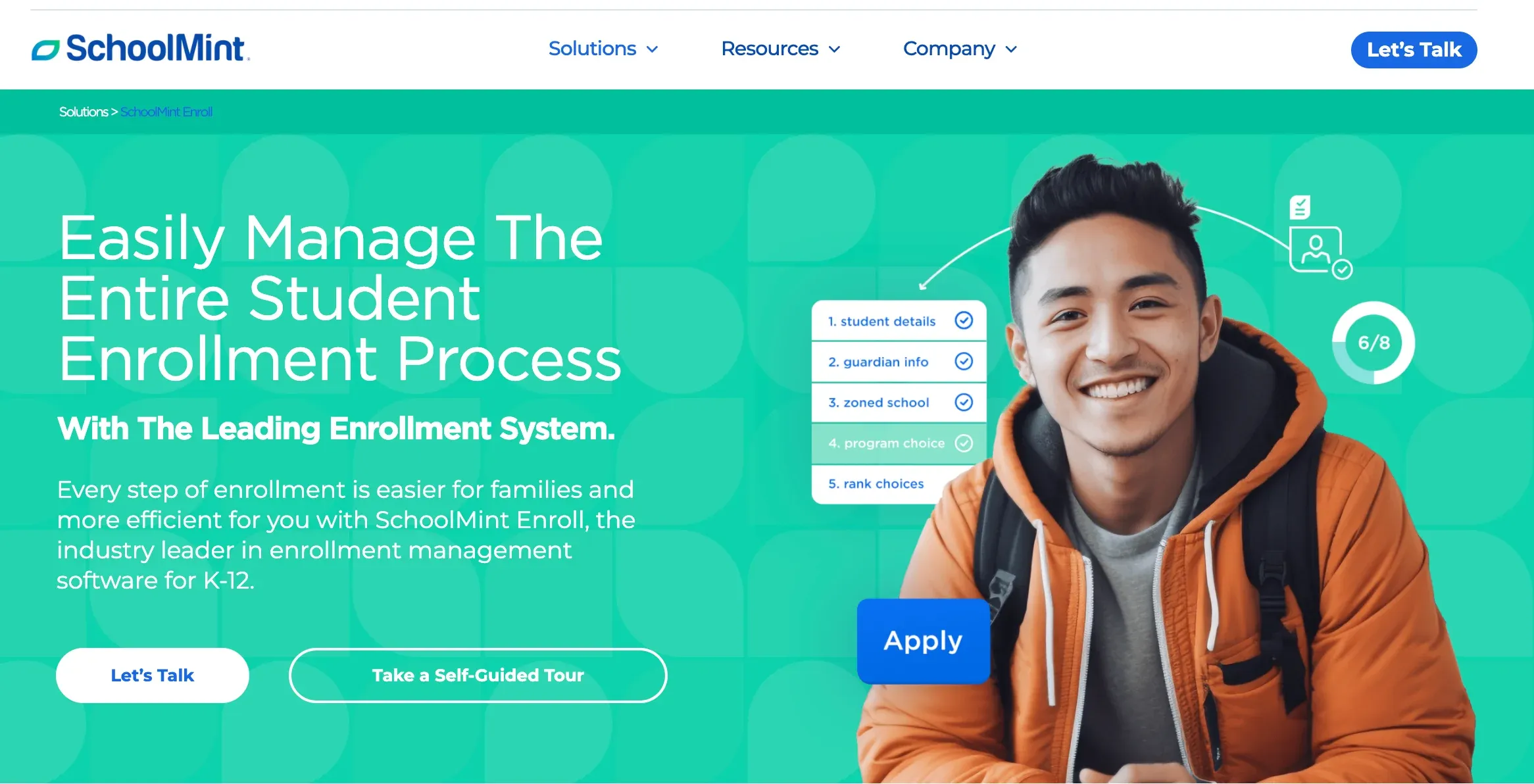
SchoolMint Enroll is a popular cloud-based enrollment and registration platform for K-12 schools. It advertises itself as the “industry leader in enrollment management software for K-12”.
Key Features:
Pros:
Cons:
Ideal For: Charter schools, public districts, and private K-12 schools.
Pricing Model: Per school/district licensing with optional add-ons.
SchoolMint focuses on ease-of-use for both families and administrators. For over a decade, it’s helped schools “transform frustrating enrollment procedures into accurate, efficient experiences that parents love”.
The interface lets districts build flexible registration forms and set up lotteries, sibling information, and feeder school automation without custom coding.
One key advantage is that SchoolMint is very family-friendly: the company claims it is the “easiest enrollment software for all families, helping them complete enrollment in minutes”.
Parents receive email/SMS reminders and can manage all their children’s data in one place. On the admin side, staff can track progress in real-time and reduce repetitive tasks like data entry and paper paperwork.
Pricing for SchoolMint is typically charged per school or district; it is generally more affordable for K-12 than large higher-ed systems.
In short, SchoolMint Enroll is ideal for elementary, middle, and high schools or small districts that need a straightforward online enrollment solution.
It lacks some of the advanced SIS features of Banner or Slate, but it covers the core needs of K-12 enrollment (forms, communications, lotteries) out-of-the-box.
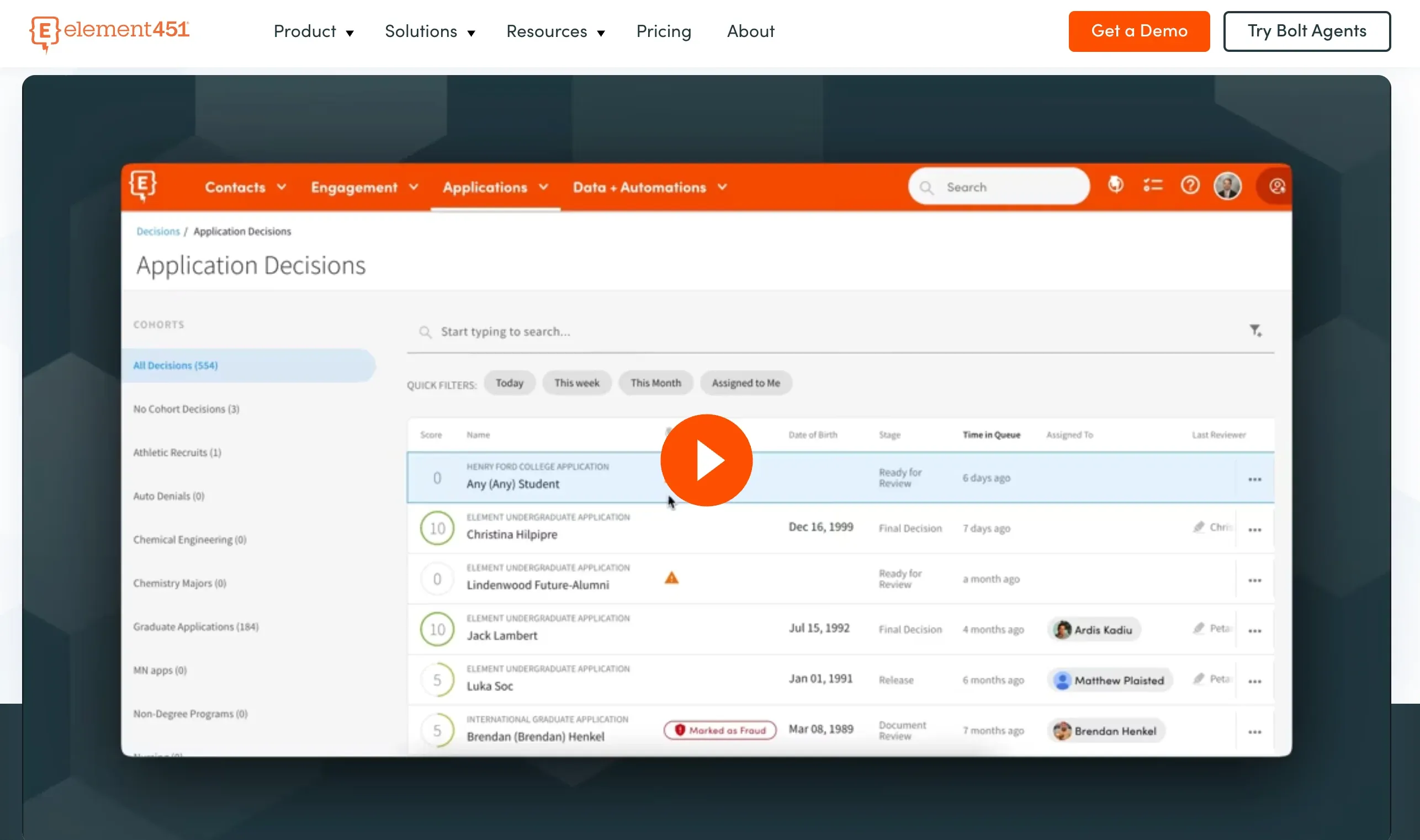
Element451 is a modern CRM platform for higher education admissions and marketing. It positions itself as a “digital workforce platform” built to revolutionize how colleges engage and enroll students.
Key Features
Pros
Cons
Ideal For: Colleges focusing on digital recruitment strategies.
Pricing Model: Custom SaaS subscription based on usage and features.
The system’s standout feature is its automation: it uses what it calls “Bolt Agents” (automated bots) to handle many admissions tasks such as outreach, application processing, and personalized messaging.
A verified user notes that “Element451 is a comprehensive enrollment management and marketing platform, not just a CRM,” aggregating data across many systems for a unified view of prospects.
In practice, Element451 provides tools for managing campaigns (emails, texting), segmenting student inquiries, and automating communications at scale. It also includes reporting dashboards to track funnel performance.
Element451 is best for mid-to-large colleges that want a high-tech, data-driven approach to admissions. It can replace multiple older tools by consolidating recruitment, marketing, and initial student engagement.
In summary, Element451 acts as a next-generation student enrollment management platform: it streamlines outreach and application workflows with powerful automation, helping institutions move faster without adding headcount.
No single tool is perfect for every school. Generally, higher education institutions lean toward solutions like Slate, Banner, or Element451 because they cover complex admissions and student life cycles.
K-12 districts often prefer PowerSchool or SchoolMint, which focus on parent-friendly online registration and district reporting.
For example, Slate and Element451 excel at personalized outreach and recruitment campaigns, while Banner serves as a full SIS behind the scenes. PowerSchool Enrollment and SchoolMint shine in the K-12 space with streamlined family portals and built-in workflows.
As you decide, consider both ready-made options and custom solutions.
For instance, AppsRhino (a certified Joget development partner) offers tailored solutions for enrollment. AppsRhino highlights that they can “simplify course management, student enrollment, and interactions with custom apps” built on their Joget platform.
In other words, if off-the-shelf systems don’t fit all your needs, AppsRhino can create custom workflows and integrations. Ultimately, the best choice depends on your institution’s size, budget, and goals. We hope this comparison helps you pinpoint which student enrollment management solution aligns with your needs.
Suggested Reading:
Guide to Custom Student Fee Management Systems
Custom Development
7 Apr 2026
Tell us what your business actually runs on today, and we will map what it takes to make it one system.