

Custom Development
Alcohol Delivery Market Share and Trends: Size, Growth, & Business Opportunities
7 Apr 2026
Humans strive for many things, including success, happiness, achievements, and glory. To achieve all these things, humans need one thing intact, and that thing is their health.
No matter how much time they have and the resources they have nearby, if their health does not allow them to work, they will not be able to achieve anything.
With changing times, human life has also become hectic, thus making it hard to take out some time from our busy schedules for a health checkup visit.
In such a scenario, Healthcare apps have come in handy to preserve our health. Many medical institutions have shown an interest in getting healthcare apps developed for their organization.
The reason for this interest is that patients tend to be inclined toward those healthcare centers that offer healthcare apps, as it makes it easier for them to get a consultation anywhere and anytime.
Before implementing healthcare apps for an organization, it is essential to identify the must-have features to include in these apps.
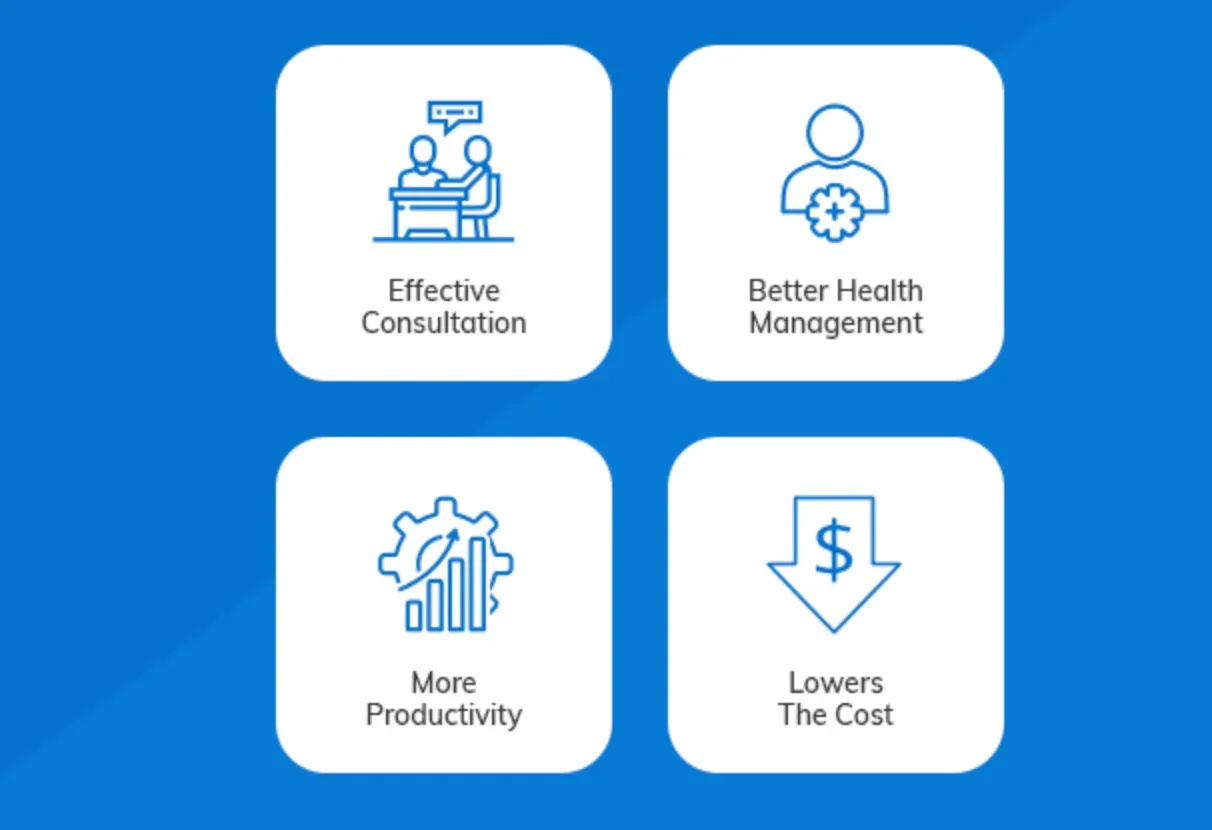
Healthcare apps have reduced errors due to incomplete patient history or mixing up two different patients' medical records.
Now, healthcare apps save patient data on the cloud, thus reducing the wrong diagnosis.
If a patient needs access to doctors, though it is a non-emergency episode, they can contact doctors anytime and anywhere and treat the ailment until it becomes necessary to pay a visit.
Even when people need access to the correct information, healthcare apps are the most accurate sources. Thus, people tend to download healthcare apps that provide them with the most information with ease.
Customized healthcare mobile apps help doctors chalk out customized treatments for every patient with ease.
Healthcare apps put every piece of information relating to patients' medical histories, thus helping make tailored treatment plans.
Healthcare apps also let doctors monitor vital parameters by taking in information and data from health wearables (IoT technology), which patients usually wear on their bodies.
Let us now read the eight must-have features for your healthcare apps in 2022.
Here we list the must-have features of healthcare apps, features revolving around data security, and other crucial features. These features should make it into your healthcare apps to create healthcare apps that find users.

Registration and login are the first steps any healthcare app takes. Therefore, it is necessary to keep these two steps as easy as possible. Patients should be able to register by providing their information, ion like name, email ID, and contact details.
The fewer the number of steps here, the better the user experience gets. Also, ensure that patients log in to their accounts by their email IDs or the OTP they receive.
Your healthcare apps should have an easy picture and information update feature. Besides, ensure that every doctor's profile is visible with all the required details like their specialty, experience, clinic address, & contact details.
As nothing is constant, your users might also change their residence address or phone number. Therefore, your healthcare apps should allow users to update their profiles as and when desired.
Healthcare apps should always have an intelligent filter to segregate doctors based on their specialization, experience, reviews, consulting fee, education, location, etc.
Also, make your healthcare apps have a facility where patients can upload and tell about their ailments even before the actual appointment/ consultation.
Healthcare apps should have a feature where patients can search for doctors based on their ailments. Patients should get all the required information about the doctor, like their name, qualification, specialty, visiting time, and consultation fee.
Patients should also be able to see the digital prescription; this would help them buy medicine even if they lose their prescription slip.
This feature is specifically for doctors. Doctors should be able to view all consultation requests and even accept/ reject these consultation requests. Patients should get notifications of their appointments only when the doctor approves the request.

It is a vast world, and people of different nationalities and dialects exist. Healthcare apps should have multiple language support to ensure that many people can use these apps and access doctors and medical assistance with ease.
Also, healthcare apps should use cloud storage to store patient data, as it keeps the data secure, safe, and accessible.
Healthcare apps should have a geolocation facility, as it helps patients find nearby hospitals and doctors. It can also send updates on medical news and hotspot areas during the COVID pandemic.
Healthcare apps should have a secure solution that guards patient data while effortlessly connecting to other technology platforms.
Besides traditional payment options, healthcare apps should have recurring payments to help with high medical costs and prompt-pay discounts.
These are the eight must-have healthcare app features.

This Healthcareapps feature reminds patients of their upcoming appointments ahead of the scheduled consultation.
Also, patients can receive reminders to take their medicine as and when needed.
Healthcare apps assist in remote medical monitoring. With this feature, doctors can check symptoms and identify diseases instantly.
For this, doctors require patient data and previous medical history, which they get from healthcare apps.
Healthcare apps should provide a means to track patient recovery and get data on various parameters.
These apps should store the latest information on a patient's blood pressure, heart rate, water intake, calorie count, etc.
Suggested Reading:
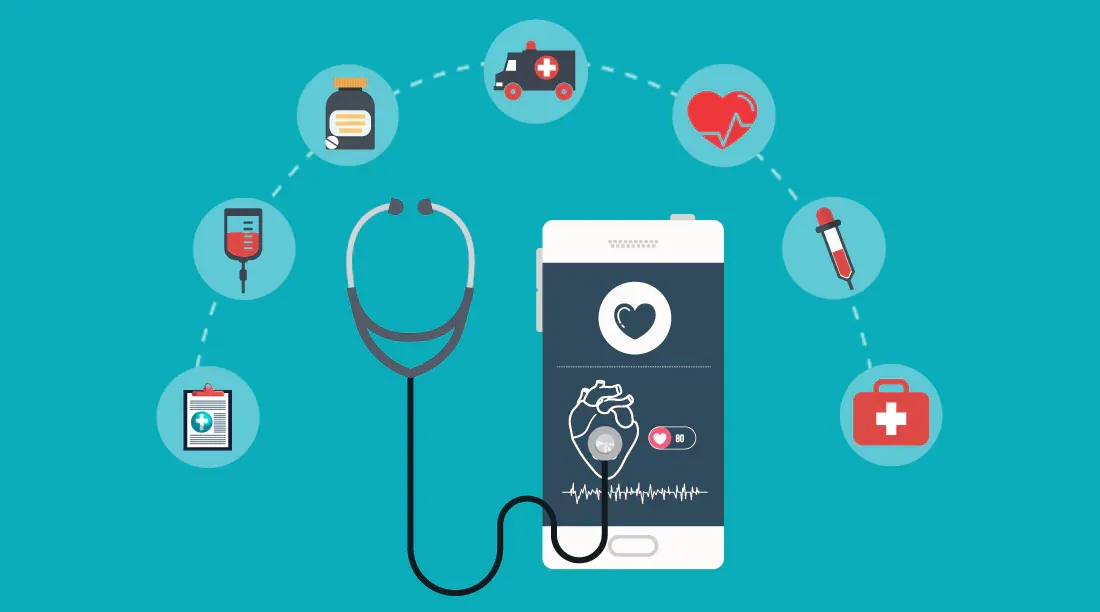
Your Healthcare apps should be per the FTC recommendation. The FTC suggests healthcare apps ask for data and information required for the proper app working/ services and nothing more.
Also, such apps should have a secure pathway to transmit and store data.
At the end of the session, all the collected data should be deleted as per the FTC guidelines.
Several apps ask for the following information/ access at the time of installation:
Healthcare app developers need to ensure that they do not misuse user information with API access, as most users do not think about the reason for being asked for access to all these things.
Also, avoiding this ensures optimized data collection and decreases unnecessary data collection.
This feature is a must-have for healthcare apps, and your app should include it. Its fundamental purpose is for records and information.
Such information is of immense importance to patients, healthcare specialists, and even hackers.
Your healthcare apps should have authentication at application-level security, and it should be the priority during development to keep unauthorized access at bay.
You should also invest in designing, implementing, and testing app authentication from the beginning. You can even have multi-factor authentication in case of any risk of unauthorized access.
Healthcare apps are the need of the hour now that the world is fighting a global pandemic. We need to develop healthcare apps keeping in mind technological advancements.
You can use AI to discover relevant conclusions from patient data for more effective and customized treatment. It can also help with predictive analytics functionality. For taking care of patient data, like its security, portability, and integrity, you can use Blockchain.
When healthcare apps, augmented reality, and Virtual reality combine, you can replace physical therapy. Wearable devices and IoT help doctors monitor patients remotely if patients can not call on doctors immediately.
If you are a medical organization and want a healthcare app for your organization, you must include these healthcare app features in your app.
You can contact AppsRhino to get your healthcare app built with all the required features by default.
Custom Development
7 Apr 2026
Tell us what your business actually runs on today, and we will map what it takes to make it one system.