
Custom Development
Alcohol Delivery Market Share and Trends: Size, Growth, & Business Opportunities
7 Apr 2026
Wish someone would handle the nitty-gritty of your business without you worrying about quality loss or competition altogether? Let us introduce you to a new and effective way of doing business- Enterprise mobile app development.
Be it the healthcare domain or the culinary market, almost every business domain has more or less introduced an application of its own.
It's time for entrepreneurs to go ahead with this practice and partner up with enterprise app development for a mobile application that aligns with your company’s goals and objectives.
Developing a mobile application that’s in tune with your business proposition can be regarded as the digital way of staying ahead of the competition. Developing an application with your business goals and ideas requires a modular approach.
To help you out in this, dive into this journey and explore the world of enterprise mobile app development. This journey will take you through the various benefits enterprise mobile app development has to offer, along with the steps through which one can easily begin the development of their very own enterprise mobile application.
Enterprise mobile app development requires businesses to draft an application that aligns with the individual needs and requirements of their organization.
Enterprise applications can serve different purposes. It can be used to track team leads, or an application the employees utilize to actively communicate with each other, and much more.
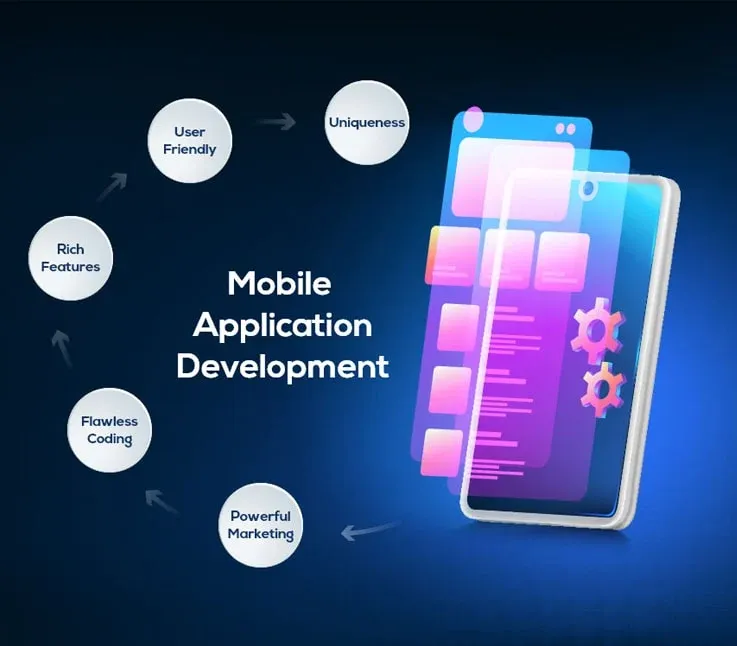
There are several technological requirements of an Enterprise mobile application. Some of them are mentioned below:
Enterprise app development is often confused with regular mobile app development. To start with, applications developed under enterprise mobile app development are not meant for the public.
At the same time, mobile applications are solely developed so that the applications can be utilized by its target audience.
The development procedure of enterprise mobile applications is way more complex than mobile applications.
This is majorly because the former requires a lot of complex integration, such as enterprise resource planning (ERP) systems or customer relationship management (CRM) tools and more, while the latter may or may not require them.
The development of Enterprise mobile applications brings in a lot of benefits for businesses, which are as follows:
Businesses that have integrated enterprise mobile applications into their systems have witnessed an upgrade in terms of efficiency and productivity. The application offers the employees the necessary information and tools that might assist them in their tasks.
To get a better idea of it, let us consider a sales team. An enterprise application can be of great help for this team as it can easily store customer’s data and even track leads for them if required. Thus, more work can be done in less time without compromising on the quality and efficiency.
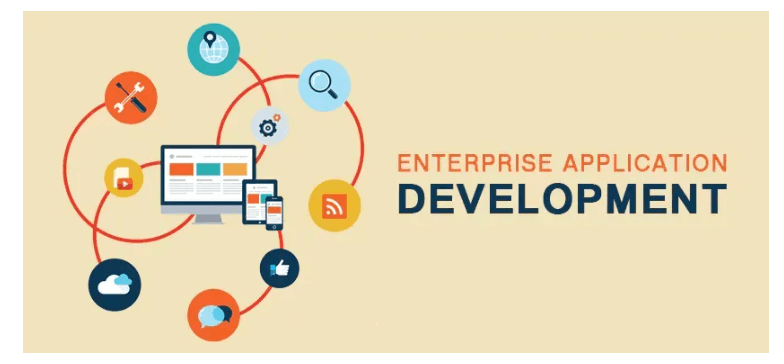
Besides using it for the employees, one can even extend these applications to its target audience. Think about it: applications offering customized solutions to their customers are more likely to enhance user experience than the usual ones.
These applications also have a higher chance of attracting new customers and retaining the old ones. Applications with customized solutions are also an effective way of staying out of competition.
With enterprise mobile applications, employees can bid goodbye to physical records and repetitive tasks. Through this application, tasks that are prone to errors can be automated. This automation can not only ease the workflow but also streamline operations within the organization.
Agile development methodology is an iterative approach to software development that emphasizes collaboration, flexibility, and customer satisfaction.
Agile methodology offers several benefits for enterprise mobile app development, including faster time-to-market, improved collaboration and communication, and the ability to quickly adapt to changing business needs and user feedback.
By breaking the development process down into smaller, more manageable pieces, agile development can help ensure that the app meets the needs of all stakeholders and is delivered on time and within budget.
Agile development is guided by several key principles:
To implement agile development in enterprise mobile app development, it's important to follow certain best practices.
This includes establishing a cross-functional team that includes representatives from all stakeholder groups, such as business analysts, developers, and quality assurance professionals.
It's also important to establish a clear product backlog that prioritizes features and requirements based on business needs and customer feedback.
Finally, it's important to embrace a continuous improvement mindset, using metrics and feedback to refine the app and improve its performance and usability over time.
User-centered design is an essential aspect of enterprise mobile app development. In this section, we will explore several best practices for designing user-friendly enterprise mobile apps, including designing for user needs, following UI design principles, and incorporating accessibility features.
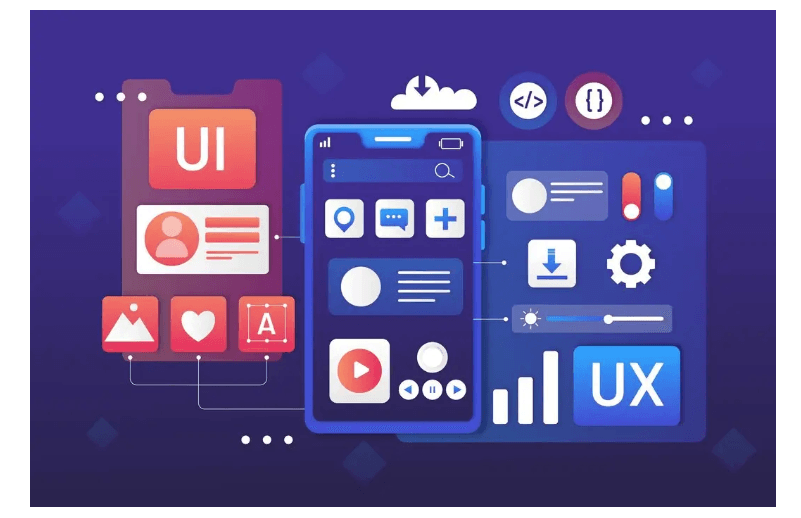
The presence of an innovative design that caters to the individual needs of the users boosts the visibility of your application.
An ideal enterprise mobile application should be one where the users can smoothly operate the application whenever they want. Some of the best practices for enterprise mobile applications are as follows:
In order to cater to the needs of a specially-abled target audience, the enterprise mobile application must incorporate accessibility features in it.
These features include a voice assistant, support for screen readers, and much more. The application can also include large fonts for people with low vision so that almost anyone can operate the application at ease.
Backend integration is a key aspect of enterprise mobile app development, as it can enable greater functionality and interoperability with existing business systems.
Backend integration is important for enterprise mobile app development because it can enable the app to access external data sources and services, integrate with other business systems, and enhance overall functionality. This can include integration with enterprise resource planning (ERP) systems, customer relationship management (CRM) tools, and other data sources.
There are a range of backend solutions available for enterprise mobile app development, including cloud-based solutions like Amazon Web Services (AWS) and Google Firebase, as well as on-premises solutions like Microsoft SQL Server and Oracle Database.
When choosing a backend solution, it's important to consider factors such as scalability, security, and ease of integration with existing business systems.
Throughout the course of developing your Enterprise application, a series of tests and quality assurance checks must be conducted. These tests help in recognizing any bugs and issues present in this application. There are a number of testing methods that evaluate the overall performance of the application. The upcoming section mentions in detail some of the best practices for quality assurance checks.
Suggested Reading:
A No-Fluff Introduction to Enterprise Mobile App Development
Launching and deploying enterprise mobile apps can be a complex process that requires careful planning and execution.
Before launching an enterprise mobile app, it's important to ensure that the app is properly tested and meets all performance and quality requirements.
This may involve beta testing with a select group of users, as well as implementing bug fixes and performance improvements as needed.
While deploying your enterprise application to respective app stores like Apple App Store or Google Play Store, it's important to check whether your developed application fits into the requirements and guidelines of the respective app store.
The guidelines and requirements generally include appropriate metadata, icons, descriptions, and the capacity of the application to meet security standards.
Lastly, your developed and deployed application must also include strategies for app distribution and onboarding users. For this, various tutorials and guides can be created. It is through these guides that individuals will familiarize themselves with the exclusive features incorporated in your application.
To conclude, enterprise mobile applications offer a strategic hold to businesses like never before. These applications work best for both the employees of the organization or even for the target audience.
In the case of employees, Enterprise applications streamline workflows and help in actively communicating and collaborating with the team members.
Whereas the target audience can benefit from customized solutions that fit perfectly into the needs and requirements of individuals. For developing a proper functioning and user-centric enterprise mobile application, businesses are required to carefully consider a lot of factors. These factors range from incorporating a user-friendly interface to adopting agile development methodology in the system.
Throughout the development process, the application must go through a list of quality assurance checks to ensure that the end product is free of any bugs and issues. The developed application is all set to deliver its services to the audience and take your business to unimaginable heights.
Custom Development
7 Apr 2026
Tell us what your business actually runs on today, and we will map what it takes to make it one system.