
Custom Development
Alcohol Delivery Market Share and Trends: Size, Growth, & Business Opportunities
7 Apr 2026
Hungry, tired, and don’t want to cook? Most people open a food delivery app without thinking twice.
But before DoorDash and Uber Eats dominated the space, there was Seamless.
So, what is Seamless app, and how does Seamless work in today’s crowded on-demand food app market?
At its core, Seamless is an online food-ordering platform that connects customers with local restaurant partners through a streamlined ordering system.
From browsing menus and checking estimated delivery times to understanding service fees and membership perks like Seamless+, the Seamless delivery process is built for speed and convenience.
In this blog, we will walk you through how to order food on Seamless, explore its features, compare Seamless, Grubhub, and DoorDash, and evaluate how this restaurant delivery service compares with other major food delivery platforms.
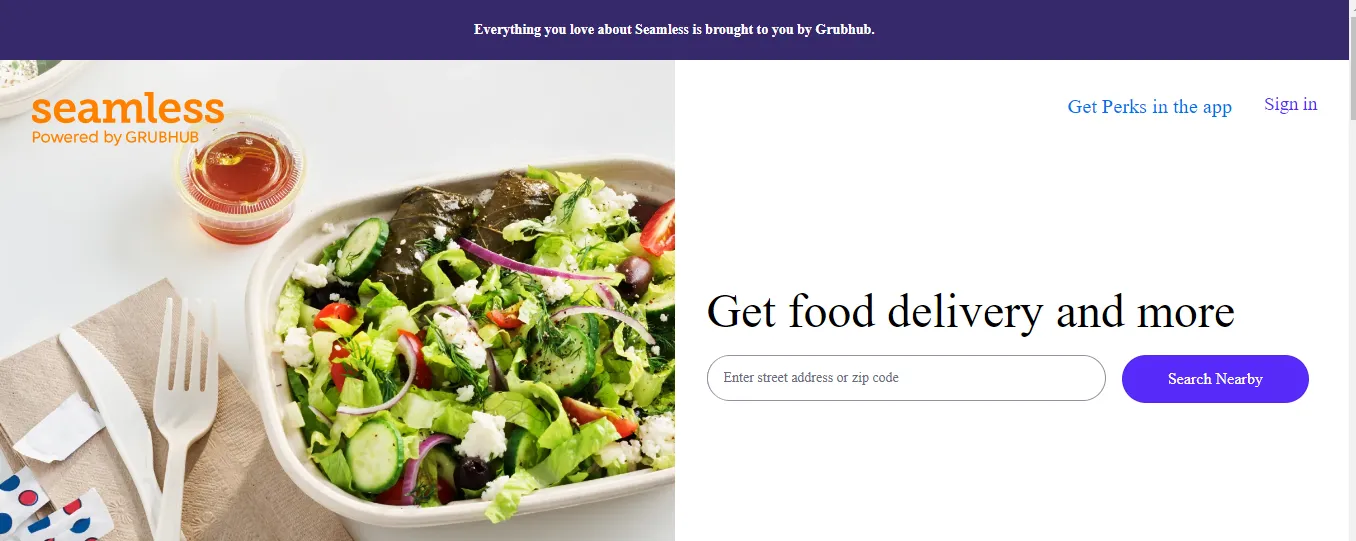
Seamless is an online food ordering platform and restaurant delivery service that allows users to order food from local restaurants through the Seamless app and website.
Founded in 1999 as Seamless Web, the Seamless company merged with Grubhub in 2013 and now operates under the same parent brand.
It connects customers with restaurant partners across major U.S. cities, offering pickup and delivery with estimated delivery times, transparent service fees, and real-time order tracking.
Key Facts
If you are wondering what is Seamless app or how Seamless works, it is essentially a digital platform that simplifies seamless food delivery through a structured checkout process and an integrated restaurant delivery network.
Seamless works as an online food ordering platform that connects customers, restaurants, and delivery partners through a streamlined digital system.
1. Browse Restaurants: Open the Seamless app or food ordering website, enter your location, and view available restaurants based on service area, cuisine, and estimated delivery times.
2. Select Food Items: Add meals to your cart, review restaurant variety, delivery fees, and Seamless service fees, including options like scheduled orders where available.
3. Checkout and Payment: Complete the Seamless checkout process using supported payment methods. Seamless+ membership under the Seamless subscription plan may offer fee benefits.
4. Restaurant Confirmation: The restaurant receives the order instantly through the Seamless online ordering system and begins preparation.
5. Delivery Tracking: Track your Seamless food delivery in real time with order updates and accurate Seamless delivery time estimates until the Seamless delivery driver completes the order.
1. Partner Onboarding: Restaurants join the Seamless company network and list their menus on the digital food marketplace.
2. Order Dashboard: Manage incoming orders, update preparation status, and coordinate delivery through a centralized dashboard.
3. Commission Model: Seamless earns a commission on completed orders as part of its broader Seamless business model under Grubhub.
4. Payout Process: Restaurants receive payouts after commission deductions based on the agreed settlement cycle.
This structure explains how Seamless works as a restaurant delivery service competing with food delivery platforms like DoorDash and Uber Eats.
But this all looks incomplete without underscoring the features, so let's take a look below.
The Seamless app is built to make ordering food feel effortless and predictable.
As an online food ordering platform, it keeps the entire Seamless delivery process fast, transparent, and easy to track.
Seamless order tracking provides live updates from restaurant confirmation to final delivery.
Users can see estimated delivery times and monitor the Seamless delivery driver in real time, improving transparency in the Seamless food delivery service.
The Seamless online ordering system allows users to filter by cuisine, price, ratings, and delivery time.
This helps customers compare restaurant options within their service area, similar to other food delivery platforms such as DoorDash and Uber Eats.
Customers can schedule orders in advance for delivery or pickup.
This feature supports planned meals, office lunches, and events, strengthening the Seamless delivery service for time-specific needs.
The Seamless+ membership, part of the Seamless subscription plan, provides reduced service and delivery fees at eligible restaurants, lowering overall Seamless food delivery costs for frequent users.
The Seamless checkout process supports major cards and digital payments.
Users can securely store payment details within the Seamless app for faster repeat orders.
Seamless corporate accounts and group ordering allow businesses to manage shared meals and centralized billing.
This makes the Seamless food delivery company useful for both individual and professional use cases.
At first glance, they look identical.
But when you compare branding, delivery time, and focus, the differences become clearer.
Delivery time, payment methods, and fee structure are broadly similar across all three. In most cases, location and restaurant variety make the real difference.
Next, let’s look at Seamless fees and what you actually pay.
Before you order food on Seamless, it helps to know what you are actually paying for. Like most food delivery platforms, the Seamless app applies a few standard charges.
The delivery fee varies by restaurant, distance, and demand. Some Seamless restaurant partners offer free delivery, while others charge a variable fee based on location and Seamless delivery time.
Seamless service fees are usually about 10 % – 15 % of your order subtotal.
They support the Seamless online ordering platform, customer support, and tech infrastructure, and are displayed during the checkout process.
If your order is below a restaurant’s minimum (often around $10-$12), a small order fee may apply.
This helps ensure deliveries remain cost-effective for drivers and the platform.
The Seamless+ membership, part of the Seamless subscription plan, offers reduced delivery fees and lower service fees at eligible restaurants.
For frequent users of the Seamless food delivery app, this can significantly reduce overall Seamless food delivery fees in 2025.
For a deeper breakdown of how commissions and platform economics work, to understand how Seamless generates revenue, read our detailed Seamless Business Model breakdown.
Seamless hasn’t disappeared; it has simply settled into its niche.
In 2026, it remains especially strong in major cities where it first built its reputation as an online food ordering platform.
While competition from DoorDash, Uber Eats, and even Grubhub and it’s important for business has grown, the Seamless app continues to perform well in dense urban areas, thanks to reliable delivery times and established restaurant partners.
Today, its positioning feels clear and focused: a city-first digital food marketplace backed by Grubhub, serving users who prefer a familiar, consistent Seamless delivery experience.
At the end of the day, Seamless is exactly what its name suggests, built to make ordering food feel effortless.
If you came here wondering what is Seamless app or how Seamless works, the answer is simple: it’s a city-focused online food ordering platform that connects you to local restaurants, shows clear delivery times and fees, and keeps the entire Seamless delivery process easy to follow.
While competition from Grubhub, DoorDash, and Uber Eats continues to grow, Seamless still holds strong in urban markets with reliable service and familiar restaurant partners.
And if platforms like this inspire you to build your own on-demand food app, thoughtful custom app development becomes the real game changer, something experienced teams like AppsRhino quietly specialize in.
Custom Development
7 Apr 2026
Tell us what your business actually runs on today, and we will map what it takes to make it one system.