
Custom Development
Alcohol Delivery Market Share and Trends: Size, Growth, & Business Opportunities
7 Apr 2026
Did you know the global food delivery market is worth over $160 billion today?Long before the boom, Seamless was already doing it, turning food delivery into a smooth, digital experience when no one else imagined it.
Back in 1999, the Seamless company launched a platform that connected hungry users, busy restaurants, and delivery drivers in one on-demand delivery app.
By perfecting seamless operations, from easy payments to real-time tracking, the Seamless company set the standard for today’s giants like Grubhub, DoorDash, and Uber Eats.
This was not the luck that worked for them; it was a thoroughly planned and executed strategy.
In this guide, we’ll unpack how the Seamless business model works, how it makes money, and why its approach to seamless delivery remains the blueprint for anyone building an app like Seamless today.
Founded in 1999 by Jason Finger, Paul Appelbaum, Todd Arky, and Andy Appelbaum, Seamless started as a platform for office meal orders and quickly evolved into a full-scale food delivery marketplace.
After its 2006 acquisition by Aramark and investment from Spectrum Equity, Seamless expanded rapidly before merging with Grubhub in 2013, forming one of the largest delivery networks in the U.S. and U.K.
To understand the operational mechanics and revenue generation of the combined entity, you can learn more about the Grubhub business revenue model.
Today, Seamless connects customers, restaurants, and drivers through its on-demand delivery app.
Customers order and pay via the app, restaurants manage orders through dashboards, and drivers complete deliveries using real-time GPS tracking, a model built for true seamless operations.
This model operates on a B2C (Business-to-Consumer) structure powered by three main components:
How the Seamless Business Model Works
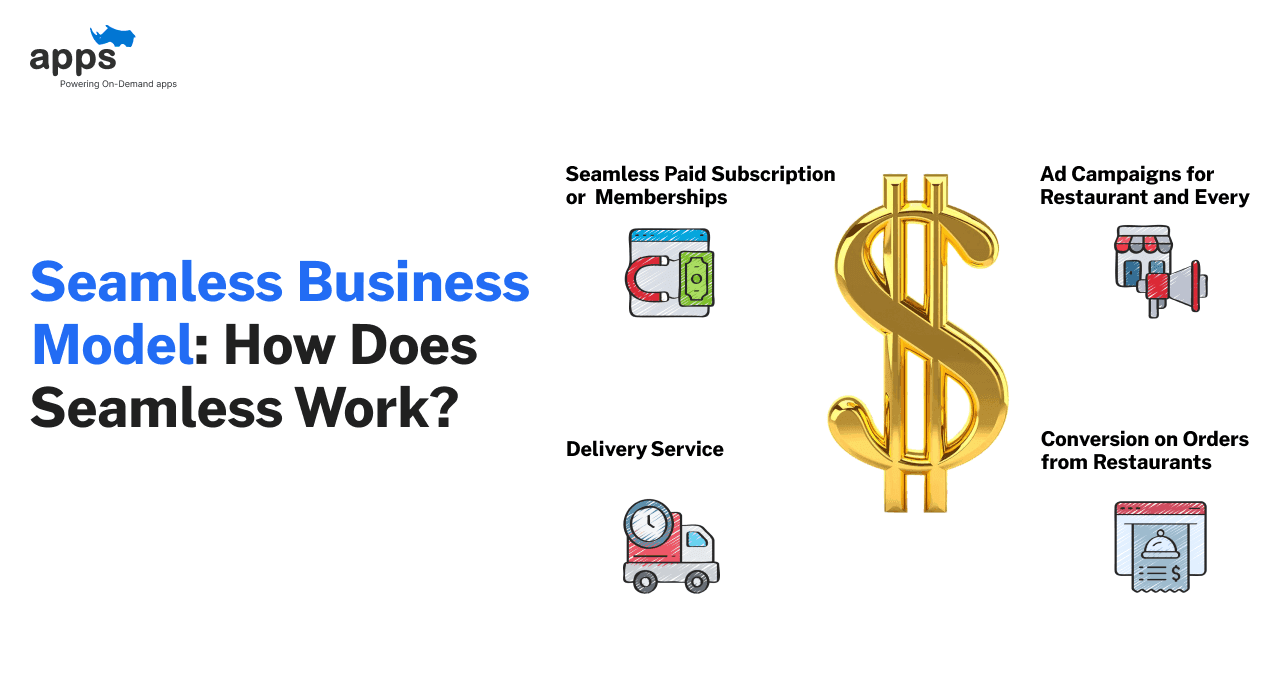
The Seamless company thrives on a commission-based model, taking a small percentage of each order from restaurants while also generating revenue from ads, delivery fees, and memberships (Seamless+).
Up next, we’ll explore how this ecosystem functions behind the scenes and what makes the Seamless app experience stand out.
Here’s a straightforward, step-by-step process for how the Seamless ecosystem works across its three main user types: Customers, Drivers, and Business/Restaurant Partners.
For a deep dive into the underlying architecture and development costs of similar food delivery platforms, consult this detailed article on Food Delivery App Development.
This shows how the seamless business model actually works in practice.
Behind the scenes, AI-driven route optimization and real-time data sync ensure every order runs smoothly, even when handling thousands daily.
This balance of tech, data, and human touch makes Seamless’s logistics efficient and dependable.
At its peak, Seamless managed over 130,000 orders daily, proving the strength of its seamless business operations.
Together, these three groups, customers, drivers, and restaurants, form a B2C ecosystem that defines the modern on-demand delivery app. It’s the coordination, not just the code, that makes Seamless truly seamless.
Let’s quickly take a look at the key features that set this system apart from other apps like Seamless.
The real power of the Seamless App lies in its finely tuned features. Besides ordering food, it’s about building trust, keeping every interaction smooth, and making seamless delivery feel natural.
Here’s what sets it apart.
Finding the right food should not feel like navigating a maze. Modern food-delivery apps use recommendation and search algorithms to reduce friction and help users choose easily. For instance, a review by MoldStud found that integrating a predictive search feature increased user satisfaction by up to 30%.
Research done by IJFMR noted that apps benefiting from well-designed search/discovery tools tend to have higher user retention because customers face fewer irrelevant results.
Seamless app takeaway:
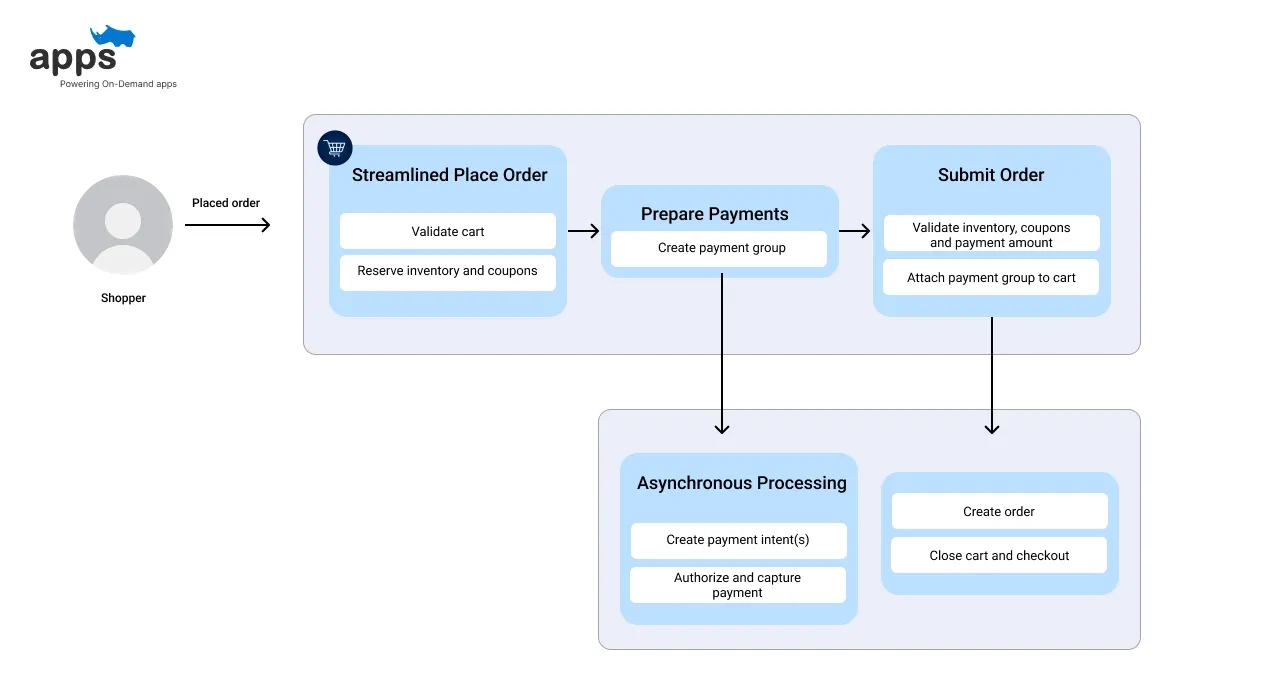
The payment and checkout journey is a sensitive point: if it’s clunky, users drop off.
Research done by Plos found that “system operation” and “traceability” are core quality factors, and that easy checkout helps drive satisfaction and reuse intention.
Datasciencesociety.net highlights that integrated online payment gateways and multiple payment methods reduce friction and build trust.
Seamless app takeaway:
Users don’t like to feel “in the dark”.
Real-time tracking drastically reduces anxiety about "Where is my food?" One study by Parul University found that customers who have visibility into delivery progress report higher satisfaction and are more likely to remain loyal.
Another found that transparent tracking and clear status updates are strongly tied to trust and customer retention.
Seamless app takeaway:
Offering value beyond just the order increases stickiness. Research done by ScienceDirect into why people choose food-delivery apps shows that perceived value (including discounts, ease, and variety) strongly influences repeat usage.
Another studies by ScienceDirect also show that apps that integrate loyalty or subscription-based benefits help lock in users and improve lifetime value.
Seamless app takeaway:
Delivery today is faster, smarter, and more connected, turning every order into an experience, not just a transaction.
The modern model extends to scheduled deliveries, group ordering (for offices or events), and multiple categories such as groceries, alcohol, or convenience items.
Studies show that expanding service categories and scheduling options increases platform reach and customer utility. For example, a paper on food-recommender systems by Arxiv found that personalization and variety help engagement in delivery apps.
Seamless app takeaway:
Clarity builds trust, and Seamless understands that.
The Seamless app ensures users see delivery fees upfront before confirming their order, helping them make informed choices and avoid unpleasant surprises. This commitment to transparency directly enhances user confidence and supports seamless business operations.
According to the official app listing on Google Play, Seamless clearly states, “Expect to see the fees upfront,” which helps build a predictable user experience and reduces cart abandonment.
Seamless also lets users view past orders and reorder favourites with just a few taps. This “smart recall” design reduces friction in repeat purchases, a key to customer loyalty in the online food ordering business model.
Seamless app takeaway:
Seamless Business Model, built initially to simplify meal ordering for offices, Seamless continues to serve businesses today through its Seamless for Business program, offering centralized billing, group orders, and curated meal options for teams.
The official Seamless website defines its mission clearly: “An online food ordering service offering restaurant food for delivery and pickup. You can order food online or through our food delivery mobile apps.”
This B2C and B2B hybrid design showcases the scalability of the seamless business model, serving both individual consumers and enterprises within one on-demand delivery app ecosystem.
The corporate integration reflects a mature approach to seamless commerce definition, where convenience meets operational efficiency.
Seamless app takeaway:
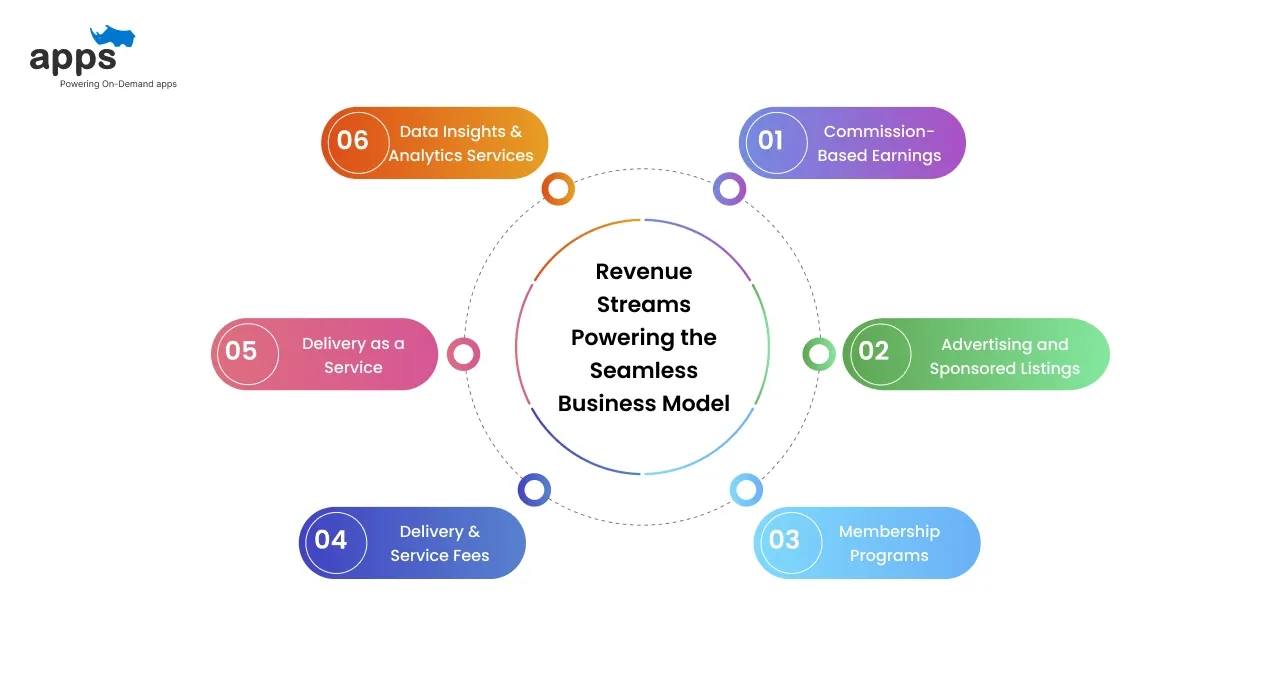
Seamless charges partner restaurants a commission fee for each order placed through its platform. This fee typically ranges between 15% to 30% of the total order value.
How It Helps: This commission-based model ensures consistent income while motivating the Seamless business model to drive higher order volumes for both the platform and its partners.
To enhance visibility, Seamless offers restaurants in-app advertising opportunities. These sponsored listings allow restaurants to promote their offerings to a broader audience, increasing their chances of attracting more customers.
How it helps: Brands gain better exposure and the app earns additional revenue, strengthening the seamless commerce definition by turning visibility into value.
Seamless offers a subscription program called Seamless+, providing members with benefits such as free delivery, exclusive discounts, and priority customer support.
How it helps: Subscriptions create predictable recurring income and foster customer loyalty, key to scaling a modern online food ordering business model.
Customers are charged delivery and service fees based on factors like distance, order size, and demand. These dynamic pricing models ensure that Seamless covers operational costs and maintains profitability, especially during peak times.
How it helps: These charges help cover logistics and incentive drivers, supporting the promise of seamless delivery and enabling the platform to operate reliably at scale.
Seamless offers Delivery as a Service (DaaS) to restaurants that lack their own delivery infrastructure. This service allows restaurants to outsource their delivery operations to Seamless, enabling them to reach a broader customer base without investing in their own delivery systems.
How It Helps: DaaS extends Seamless’s reach beyond its platform, turning its logistics network into a standalone revenue driver.
Seamless leverages its platform data to provide analytics insights to restaurant partners for demand forecasting and customer trends analysis.
How It Helps: This adds value for businesses and strengthens Seamless’s role as a restaurant aggregator, improving overall partner performance and retention.
As we analyze how Seamless performs in real-world conditions, we’ll examine key areas that matter to users and business partners alike.
These metrics help us evaluate the food delivery company Seamless on customer support, restaurant variety, delivery fees, order accuracy, membership programs, grocery delivery, and driver safety, all while tying back to its core Seamless business model and operational logic.
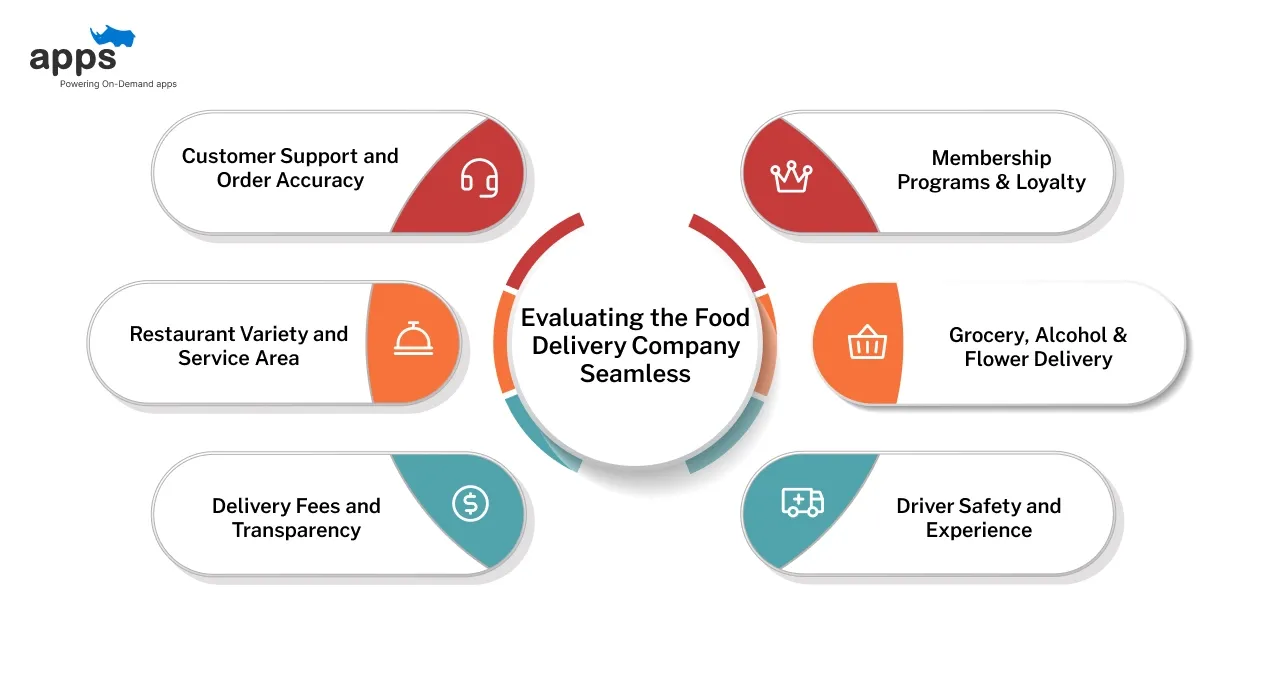
Performance Snapshot: Reliable customer support and precise orders are critical for building trust. Seamless, operated by Grubhub, provides 24/7 support but still faces user concerns about delayed responses and refund processing.
Supporting Data: Reviews on Trustpilot and SiteJabber highlight occasional late deliveries and mixed experiences with customer service.
Why it matters: Poor support or incorrect orders undermine the promise of seamless delivery, reducing repeat orders and eroding partner-restaurant trust.
Performance Snapshot: A vast restaurant network gives users more dining options and regional coverage. Seamless partners with thousands of eateries across diverse cuisines in the U.S.
Supporting Data: Combined with Grubhub, the platform connects users to over 300,000 restaurants nationwide, according to DMR statistics.
Why it matters: Having substantial restaurant variety supports the idea of a fully-fledged food delivery marketplace and enables the online food ordering business model to scale.
Performance Snapshot: Delivery fees are a consistent user concern. Seamless applies dynamic pricing based on distance and order value, but full costs aren’t always visible upfront.
Supporting Data: User feedback on DeliveryRank reports unclear fee visibility during checkout, impacting customer satisfaction.
Why it matters: Transparent pricing builds trust in seamless business operations and reduces cart abandonment caused by unexpected costs.
Performance Snapshot: Seamless offers membership perks under its Seamless+ program, providing discounted or free deliveries and exclusive deals.
Supporting Data: As reported by DeliveryRank, these loyalty-based programs boost recurring usage and customer retention for the platform.
Why it matters: Membership benefits strengthen customer retention and enable the seamless business model to rely on more predictable revenue streams.
Performance Snapshot: Seamless has expanded beyond traditional meals, delivering groceries, alcohol, and convenience items to meet evolving customer demand.
Supporting Data: The 2024 Trends Report by Convenience.org notes increased demand for convenience-store and non-food deliveries through Seamless’s parent network.
Why it matters: Offering non-traditional delivery options broadens brand appeal and supports the company’s seamless shift from food delivery to a full-service delivery ecosystem.
Performance Snapshot: Delivery drivers are central to the user experience. Seamless focuses on fair pay, safety policies, and real-time tracking, though broader industry challenges persist.
Supporting Data: Business Insider reports that delivery fatigue and insurance costs continue to impact driver experience across major platforms, including Seamless.
Why it matters: Strong driver systems and safety protocols reinforce the promise of delivery reliability and help maintain high standards in the restaurant aggregator network.
Together, these six evaluation areas provide a clear picture of how Seamless is performing and where improvements could strengthen its position in the on-demand delivery app market.
Next, we’ll compare Seamless with competitors like DoorDash, Uber Eats, and Postmates, focusing on service area, delivery reliability, and cost structure.
The competitive landscape for food-delivery platforms is intense, and assessing the seamless business model alongside rivals gives valuable insight into trade-offs.
Below is a comparison table to differentiate and analyze key metrics and then highlight what uniquely positions the Seamless company in the market.
Metric | Seamless / Grubhub | DoorDash | Uber Eats |
| Commission & Pricing (for restaurants) | Uses Marketing and Delivery commission; plan-based pricing (Grubhub for Restaurants). | Commission & fees vary by plan (Delivery/Pickup) and market | Lite / Plus / Premium restaurant pricing tiers shown on the Uber Eats merchant site |
| Cities / Area Coverage | 4,000+ U.S. cities; 375k+ merchants. | Operates in 30+ countries | 6,000+ cities across 45 countries |
| Features | -Grubhub Direct (commission-free ordering site for restaurants); -Promotions/Ads tools; Grubhub+ membership for consumers -Deep U.S. presence with corporate-ordering roots; robust self-serve marketing tools for restaurants. | -DashPass (consumer membership), Storefront (commission-free online ordering on restaurant sites), merchant commission/fee guide -Broad international footprint with flexible merchant programs (membership + web ordering). | -In-app Ads/Promotions for merchants; global Delivery & Pickup services under one merchant suite (country pages) -Massive city coverage and unified merchant platform with pricing tiers and growth tools. |
The Seamless business model proves that thriving in the food delivery marketplace isn’t just about a great idea; it’s about execution, structure, and the right technology.
Entrepreneurs can take inspiration from how Seamless built trust, efficiency, and growth through well-connected systems and thoughtful expansion.
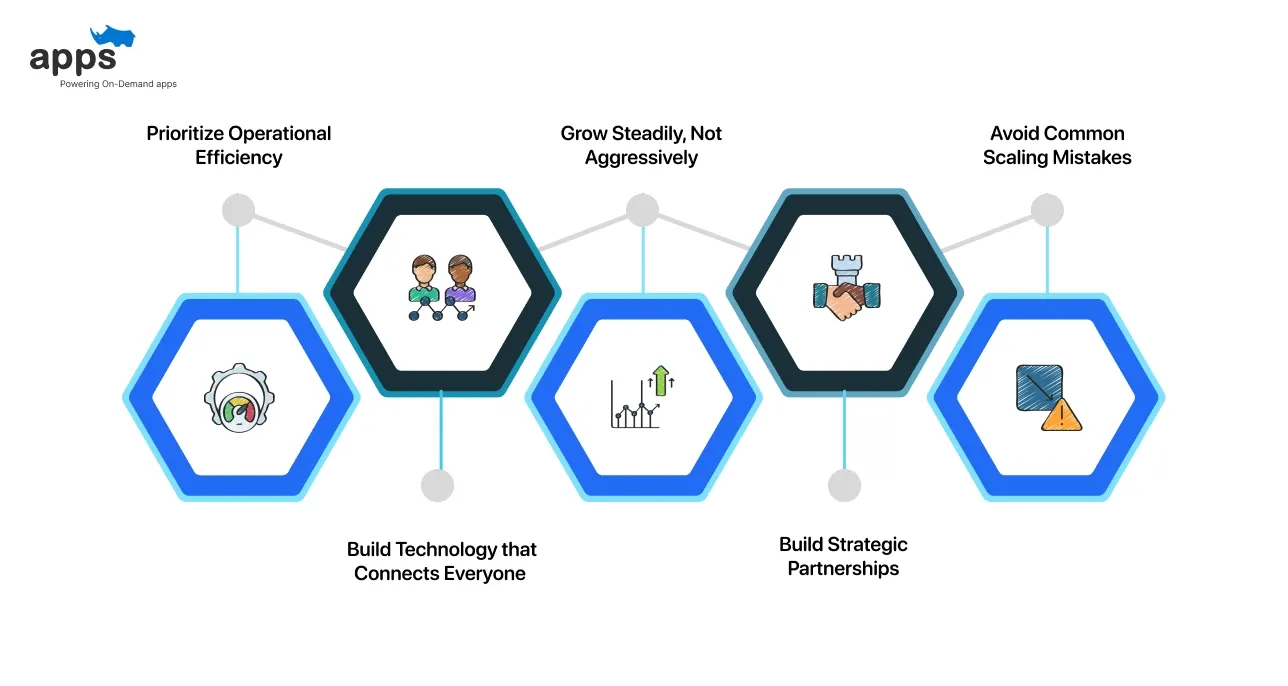
Sustaining customer trust starts with consistent performance. Seamless optimized its operations by integrating automation and analytics across all delivery stages.
Key practices to adopt include:
Success depends on building a unified system that links every participant in the supply chain.
Essential technologies for an app like Seamless include:
Seamless didn’t scale overnight; it expanded strategically while maintaining service quality.
Startups can learn to:
Collaboration was key to Seamless’s long-term success. Strategic alliances with Aramark, Spectrum Equity, and restaurants strengthened its delivery infrastructure.
Entrepreneurs can follow this by:
Every startup faces challenges when growing fast, but most are preventable.
Here’s what to avoid:
By learning from the Seamless business model and it’s approaches, balancing technology, efficiency, and partnerships, startups can design operations that truly run “seamlessly.”
The next wave of the seamless business model will be shaped by three forces: AI-driven logistics, payments, and platform automation, and sustainability by design.
Grubhub has already signaled where things are headed through recent product and partnership moves, proper signals for what “seamless operations” will look like in practice.
Grubhub, the parent company of Seamless, is taking a bold step toward automation by expanding robot delivery into its central marketplace, a shift aimed at cutting last-mile costs and improving efficiency.
Grubhub is steadily embedding AI and Machine Learning across its ecosystem to optimize operations, improve restaurant efficiency, and personalize the customer experience.
This push toward predictive intelligence and personalization reflects the next evolution of the seamless business model: data-driven, customer-first, and operationally optimized.
Grubhub is strengthening its seamless operations by integrating advanced payment systems with restaurant management tools, simplifying partner workflows, and improving the customer checkout experience.
By connecting restaurant operations and digital payments into a single ecosystem, Grubhub is evolving into a more innovative, more integrated food delivery marketplace, setting a new benchmark for seamless delivery experiences.
After its acquisition by Wonder Group Inc. in early 2025, Grubhub is reshaping its strategy to expand reach, strengthen partnerships, and align with its parent company’s multi-restaurant ecosystem.
These strategic moves highlight Grubhub’s shift toward a more diversified, partnership-driven seamless business model, reinforcing its adaptability and long-term growth focus.
The Seamless business model proves that when technology, convenience, and smart operations come together, great things happen. It’s not just about food delivery anymore; it’s about creating experiences that feel effortless for users, drivers, and restaurants alike.
From automation to AI-powered decisions, Seamless shows how innovation can make business truly “seamless.”
If you’re inspired to build something similar or want to take your delivery app idea to the next level, AppsRhino is here to help. We design innovative, scalable, and easy-to-manage platforms that help your business grow faster.
Custom Development
7 Apr 2026
Tell us what your business actually runs on today, and we will map what it takes to make it one system.