
Custom Development
Alcohol Delivery Market Share and Trends: Size, Growth, & Business Opportunities
7 Apr 2026
Been in the medical industry for quite some time but still can’t find ways to deliver quality services to your customers? This inefficiency results from the rise of telemedicine applications that offer features that serve the individual needs of their target audience.
Telemedicine applications are virtual tools that have numerous features in store, providing comfort and convenience to both patients and healthcare providers. In recent times, telemedicine applications have evolved from a technological advancement to a basic necessity in the world of healthcare.
For a better understanding of this virtual wonder, let us explore the guide provided below. It explains the benefits of adopting this practice into your system, along with the revolutionary changes it has brought in the world of healthcare.
Healthcare organizations can even take a look at different types of telemedicine applications available in the market and go with the one that best suits their needs. So, let’s dive in and unlock the current trends of healthcare.
Telemedicine applications offer a range of benefits to both patients and healthcare providers, which are as follows:
For this, they need not travel to their nearest healthcare organizations time and again. It is through these applications that healthcare institutions have been able to eliminate the geographical restraints that are used to restrict patients from receiving quality healthcare services.
Telemedicine applications allow patients to schedule virtual appointments at their convenience, actively communicate with healthcare providers through this platform, and even request prescription refills whenever they wish to.
These tools track the vital signs and the daily activities of the users, record live data, and even send it to their respective healthcare providers. The medical professionals can observe this information and draft medical aid accordingly. The live chat platform also allows patients to communicate with their providers in terms of need.
Patients showing the slightest symptoms are kept under observation and offered the immediate medical aid that will best suit their needs. This interdisciplinary collaboration enhances the overall quality of care provided and leads to improved healthcare outcomes.
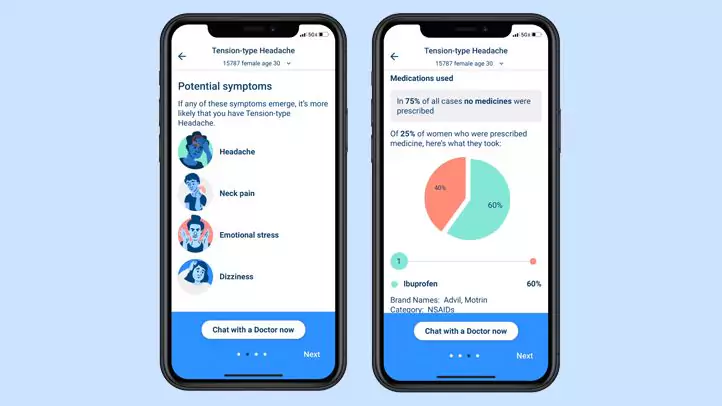
When it comes to developing telemedicine applications, there are two choices available for healthcare organizations. One is off-the-shelf applications, and the other is developing an application that serves the individual needs of its target audience.
Both applications have their own sets of strengths and weaknesses. Let us look into the different features offered by them:
Off-the-shelf applications are developed and ready-to-be integrated solutions. The features included in these applications have been included by considering the entire population as a whole. Off-the-shelf applications have been successful in eliminating the pain points of the users and enhancing customer satisfaction.
These applications might not be the ideal choice for organizations that are looking for a more personalized approach. Off-the-shelf applications have not been able to align with the workflow or practice of a few healthcare organizations.
However, it is comparatively a cost-effective solution and is pre-built; therefore, all set to be put to use.
On the other hand, telemedicine applications providing customized solutions require a modular approach. Before beginning the development process, professionals need to conduct extensive research to identify what features would best fit their target audience. This process takes a lot of time and can be very challenging.
Additionally, custom telemedicine applications are more costly than regular off-the-shelf applications.
At the same time, the developed applications have a lot of potential. The application can adapt and evolve to the growing demands of its users. Custom telemedicine applications are more likely to enhance user experience as they are more in tune with the needs and preferences of their target audience.
Thus, healthcare organizations must consider all factors before choosing either of these solutions.
Custom telemedicine apps can be developed with a range of key features that enhance the user experience for both healthcare providers and patients.
Implementing custom telemedicine apps involves several considerations that must be carefully assessed to ensure efficient and effective deployment.
Custom telemedicine apps have several benefits over off-the-shelf solutions, including tailored functionality, improved patient care, and enhanced communication and data management.
However, the implementation of custom telemedicine apps requires careful consideration of cost, compliance with regulations such as HIPAA, and staff and patient training.
Adequately addressing these considerations can allow medical practices to successfully implement custom telemedicine apps that improve patient outcomes and streamline workflows, maximizing the benefits of remote healthcare delivery.
Telemedicine applications have a lot of potential in terms of surviving in the near future. Incorporating features like artificial intelligence can enhance the overall outlook toward healthcare.
Healthcare organizations can even consider application solution providers like AppsRhino. These institutions will work on your behalf and deliver you the telemedicine application of your choice by utilizing its years of market experience and expertise.
Suggested Reading:
Custom Development
7 Apr 2026
Tell us what your business actually runs on today, and we will map what it takes to make it one system.