
Custom Development
Alcohol Delivery Market Share and Trends: Size, Growth, & Business Opportunities
7 Apr 2026
Want to strike chords with pocket-friendly flower delivery apps?
Floral bouquets and surprises are the easiest way to impress or uplift our mood. However, offline florists are becoming a dodo in the digital economy like any other physical retailer.
Don't be a dodo.
The consumer behaviors and landscapes have largely changed, and the businesses that adapt to changes can only do well. Moreover, the flower delivery app business is an unexplored market vertical.
The telephone flower delivery app company, 1-800Flowers, has recently crossed the $2 billion mark. Isn't that amazing? Further, The United States has a handful of flower delivery apps.
You can understand what I mean. A lot of opportunity lies in flower e-commerce.
But how is the floral market tipped for a johnny come lately? How much does it cost to develop a flower delivery app? How to cut prices in app development? This blog answers the question and mentions ways to strike a bargain.
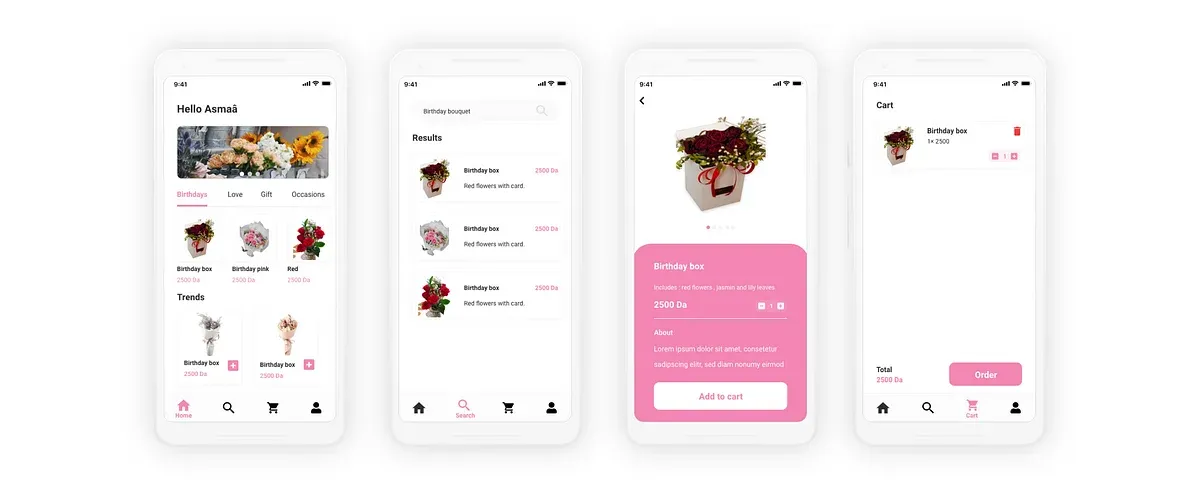
Hunting for gold pots? Flower delivery can be a business to look for. But why?
Let us consider the phone number, 1-800-Flowers.
In the third quarter of 2021, the net income of the flower delivery app company increased from $59.1 million to $118.4 million, or $1.78 per share, compared to the same time the previous year.
Adjusted EBITDA climbed $17.8 million to $15.4 million in the same quarter, compared to a loss of $2.4 million the year before.
However, adjusted net income climbed 88.6% to $122.6 million, or $1.84 per diluted share, in the fourth quarter, compared to $65.0 million, or $0.98 per diluted share, in the prior year.
In the full year ending June 27, 2021, overall revenues climbed by 42.5 percent to a record $2.12 billion, compared to $1.49 billion the previous year.
Adjusted EBITDA climbed $17.8 million to $15.4 million in the same period, compared to a loss of $2.4 million in the previous quarter.
So, isn't a flower delivery app that can own you a unicorn?
In addition, the global market survey reported that the floriculture market would show a compound annual growth of 5.7 percent year on. All above, the market revenue will potentially grow to $70.85 bn by 2027.
The revenue figures are overwhelming. Each company generates millions annually, and revenue is expected to grow.
But a flower delivery app generates revenue from only three primary monetization channels.

The commission is paid at a specified rate based on defined criteria.
Typically, the client must pay a higher commission rate for a top listing on the flower delivery app. At the same time, a lower commission percentage is charged for a dropped listing.
The flower delivery app company ties with several hundred flower vendors. This strategy generates recurring money for the companies and is a significant source of revenue.
In addition to increased exposure, the digital marketplace's partners earn substantial profits through appropriate commission deductions, processing hundreds of orders each day.
Listing with a special emphasis. On the display window, this provides the desired ranks.
Businesses or suppliers pay the app owners to improve their ranks and attract more users. Because the fees are substantially higher than under the prior affiliate marketing model, the app's revenue is flat.
Suggested Reading: A Comprehensive Guide on Developing A Flower Delivery App
Ad campaigns are another revenue stream for a flower delivery app. It offers new bouquet chains and floral marketing promotions through its app.
The flower delivery app promotes its brand to ensure it ranks at the top of search results. It increases daily order volume, resulting in direct revenue for the app company.
Similarly, its marketing strategy attracts additional customers and revenue. Advertisements on social media and search engines attract more clients and create new business opportunities.
And, making money with your flower delivery app begins with AppsRhino, the home of custom mobile app development.
With over 300+ projects completed, 70+ top vetted developers, and a presence in 50+ countries, you can count on AppsRhino to deliver tailored solutions that exceed expectations.
And that's not it! With expertise in various industry verticals, AppsRhino can help you launch your app in just 7 DAYS!

We had a fantastic read on how the flower delivery app brings revenue and how much they see. But the app development cost can make or break the deal.
Is the cost of developing a flower delivery app significantly less, or is it significantly higher? Read on.
After you have completed sufficient brainstorming on your market, business objectives, and operating model, you are now developing a budget. A significant amount is allocated to app development.
There are several ways to estimate the cost of your app project, and the most reliable is to contact app developers. However, without references or details, you may end up with ambiguous pricing.
For your reference of the flower delivery app, 'Uber for X' can be great. Uber, a ride-hailing service, serves as the most prominent reference.
'Uber for X' has three stakeholders: partners (Here, florists and flower vendors), customers, and administrators. And so the screens.
But your 'Uber for Flowers' may have four screens if you include delivery partners. So, two or three mobile apps and a web app for the admin. At a rough estimate, developing a flower delivery app like Uber may start from $50,000.
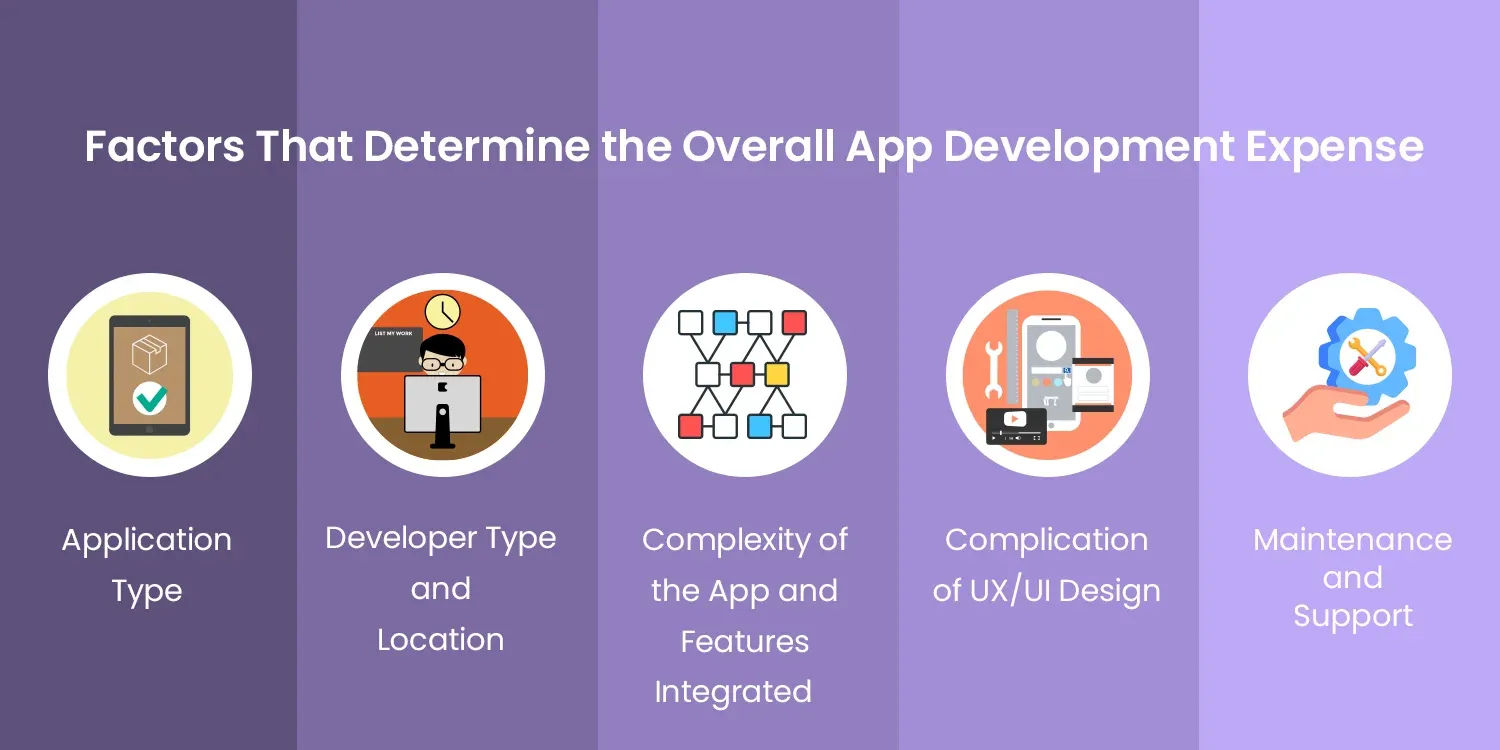
However, several key factors to consider in your flower app project increase the cost.
Anyhow, the calculation of a flower delivery app development is simple. It is the number of hours spent on the app project * the per-hour rate of the developer.
The more heavily coded apps, the better their user interface is, so more hours are required. However, there are several tips to cut down the cost of developing a flower delivery app.
You can go for a cheaper location when choosing the region app development. For example, the United States has the priciest app developers. They charge around $120 to $150 for an hour. In contrast, programmers in India charge around $30 to $40 per hour.
You can also offer a price cut for unnecessary or advanced features. While cost-cutting on features, you can not compromise on the usability and functionality of the flower delivery app.
Your app must include some prominent features like:
While some advanced features include:
You know how much money you need to spend on flower delivery app development. Still, you have to choose a developer team.
In our view, mobile app development is a booming sector. Nearly 30,000 iOS apps and 100,000 apps are launched every month on the App Store and Google Play Store. There are many development teams to choose from.
But who is the most suitable for you?
The skill level of the developer team, the programming language they use, and the number of specialists involved are crucial to your flower delivery app development project.
You must use AppsRhino to create your own Flower delivery app! AppsRhino is an app-building platform for building your next app. Contact us today and learn more about creating an ideal app and boosting your business!
Suggested Reading: On demand flower delivery apps and features
Custom Development
7 Apr 2026
Tell us what your business actually runs on today, and we will map what it takes to make it one system.